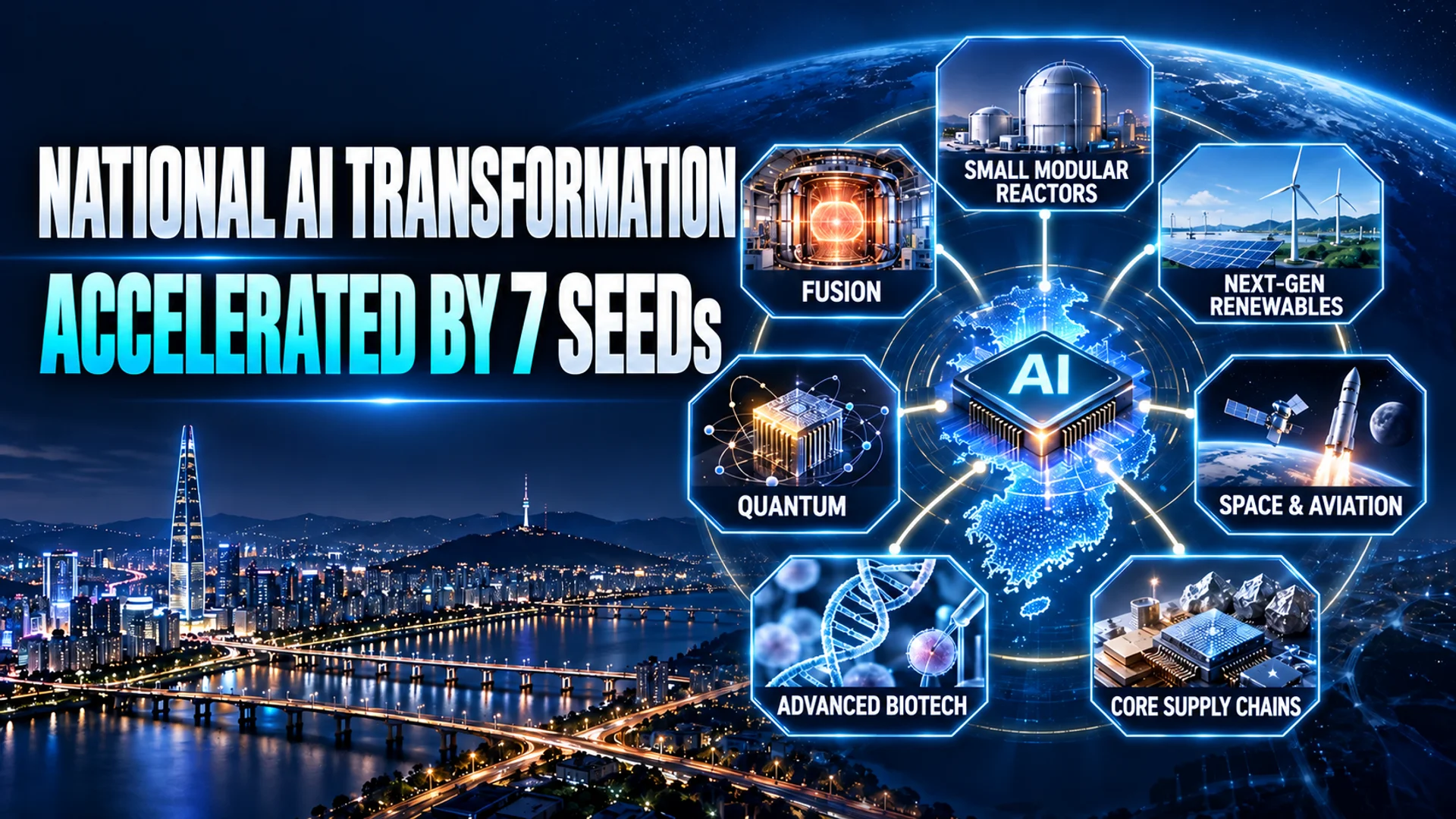
These measures emphasize establishing a promotion system that strategically links individual ministries’ programs and investments around core missions, moving away from an individual-program-centric approach. 1
Deputy Prime Minister and Minister of Science and ICT Bae Kyung-hoon emphasized at this joint meeting that South Korea's AI competitiveness has received high international recognition, and based on this, he presented "accelerating national AI transformation (AX)" and "securing future core technologies" as the two main pillars. This is interpreted as a strong will to restructure programs around "core missions" to achieve key goals for 2030 and 2035, departing from the traditional model of individual ministry-led support.
Deputy Prime Minister Bae Kyung-hoon emphasized that South Korea has been included in the group of leading AI nations, having ranked first in Asia and fourth in the world for two consecutive years in the Global Innovation Index
To achieve the core goals for 2030 and 2035 for the seven SEED projects, the government has decided to move away from an individual-program-centric approach and establish a promotion system that strategically links individual ministries’ programs and investments around core missions. 1
Deputy Prime Minister Bae Kyung-hoon emphasized, "We must accelerate the national AI transition to improve people's quality of life and push ahead with securing future core technologies through the seven SEED projects." 1
Deputy Prime Minister Bae Kyung-hoon stated that he would pool the capabilities of science and technology with economic policy through this joint meeting to create new growth engines. 1
The original materials do not specify the list of the seven areas concretely, but the inclusion of the "Maritime and Fisheries AX Strategy" as an agenda item for the meeting indicates that AI transformation across industries, not just specific advanced technologies, is interconnected. 1
| Category | Key Content | Goals and Significance |
|---|---|---|
| Securing Future Core Technologies | Promotion of the seven SEED projects | Achieving key goals for 2030 and 2035 and strategic linkage of programs and investments across ministries |
| Public-Private Collaboration Platform | Establishment of the 'Frontier Board' | Reflecting private sector demand and resolving prerequisite challenges such as regulations and permits |
| Policy Governance | Institutionalizing joint meetings between economy and science & technology | Integrating science and technology policies with economic and industrial policies and ensuring consistency |
3. The Seven SEED Projects for Securing Future Core Technologies
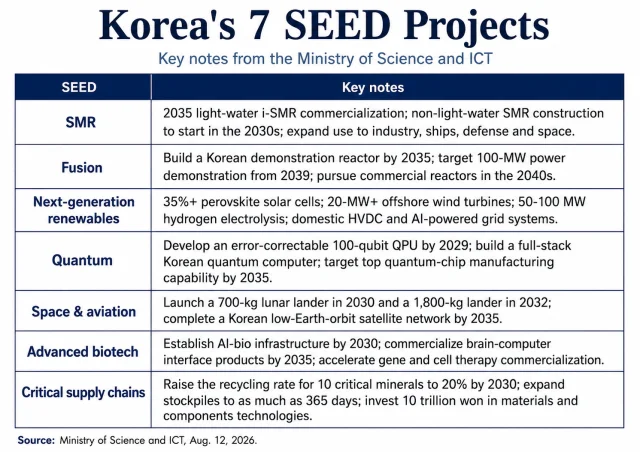
The currently provided original materials do not detail the specific names of the seven SEED areas. However, the discussion of the "Maritime and Fisheries AX Strategy" as a meeting agenda confirms that AI transformation across industries, including the maritime sector, is included. 1
4. The 'Frontier Board': Overcoming Regulatory and Permit Hurdles

Regulatory and permitting issues arising at the stage just before industrialization after technology development has been completed have been identified as major bottlenecks for the commercialization of advanced technologies. Accordingly, the government plans to establish the "Public-Private Joint Frontier Board" to resolve these issues. 1
This platform is expected to function not merely as a mechanism for gathering opinions, but as an institution that implements institutional support actually needed by industry on the ground.
5. Integrating Economic and Science & Technology Policies: The Role of Joint Meetings
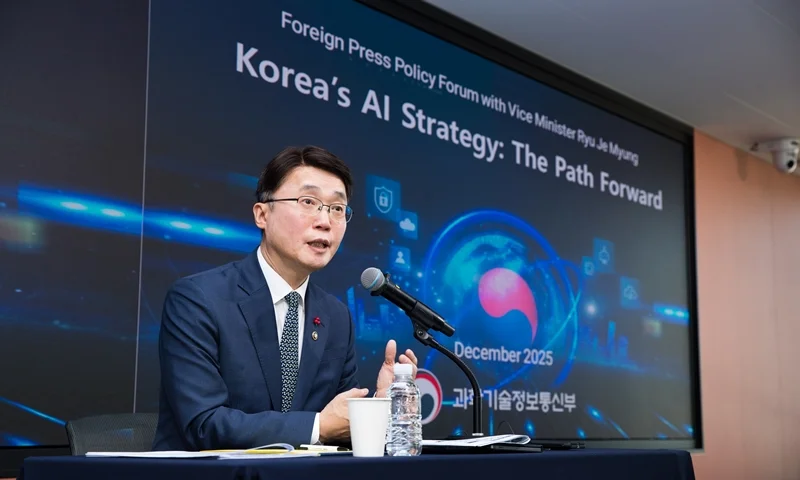
A total of eight agenda items were discussed at this joint meeting, with the key items directly related to science and technology being as follows: 1
- Direction for Promoting the Seven SEED Projects and Inter-Ministerial Collaboration Plan: Establishing a cross-ministry collaboration model for securing future core technologies.
- Maritime and Fisheries AX Strategy: Measures for integrating artificial intelligence technology into the maritime and fisheries sectors.
- Plan for Building Next-Generation Common Local Administrative Systems: Transitioning aged systems to AI and cloud-based infrastructure.
- Regional Vitalization Investment Fund: Promoting investment for cultivating advanced industries (including measures to swiftly promote Project No. 9).
6. Conclusion: From the Vision of a 'Technology Powerhouse' to a 'Realizable Roadmap'
Deputy Prime Minister Bae Kyung-hoon's recent remarks are interpreted as a declaration that South Korea will go beyond its position as a leading AI nation and accelerate national AI transformation to make it a practical growth engine. 1 The two pillars, the seven SEED projects and the Frontier Board, will function complementarily by handling "achievement of technological goals" and "elimination of institutional bottlenecks," respectively.
Future points of interest will be the concrete implementation strategies for the seven SEED projects and how swiftly the Frontier Board can drive regulatory innovation on the ground. Since the government aims to pool the capabilities of science and technology with economic policy through joint meetings to create new growth engines, policy linkage and execution capability will become increasingly important going forward. 1
References
- 이형일 "성장 목표는 국민 삶 개선…양극화 완화에 역량 집중" | 연합뉴스 · yna.co.kr↩