Did you know that simply putting down your smartphone could restore your brain's cognitive functions to levels seen 10 years ago?
As you read this text, do you ever find yourself scrolling through endless short-form videos, only to be suddenly hit by a sense of emptiness, wondering, "What am I doing right now?" Or have you ever felt an inexplicable sense of anxiety or inferiority while looking at the glamorous lives of others on social media?
To get straight to the point: it is not because you lack willpower. It is because our brains have been exposed to constant stimulation, falling into a state of "dopamine overload." The Digital Detox craze spreading among the MZ generation is not just a passing trend; it is a desperate and wise survival strategy to reclaim the broken balance of our brains.
1. The Era of 'Dopamine Farming': Why are we trapped in a cycle of stimulation?
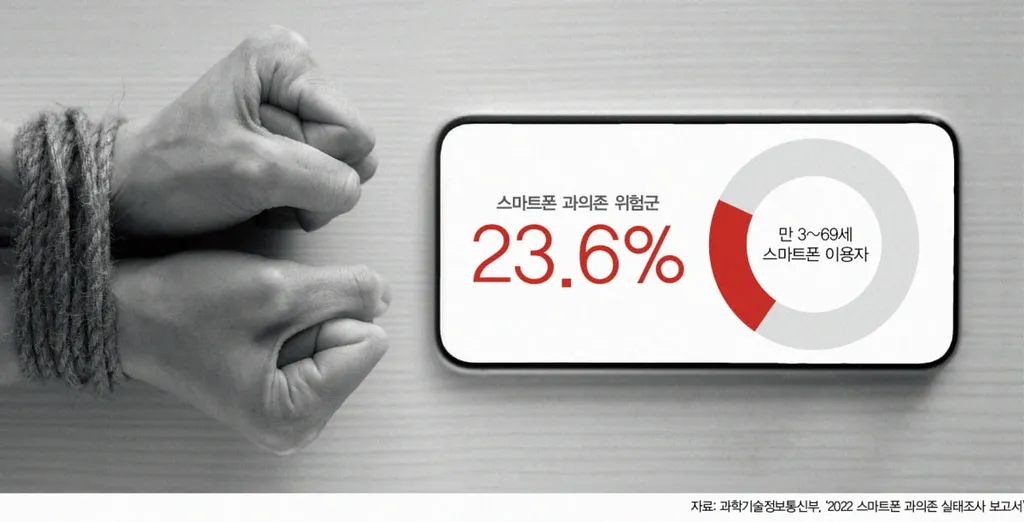
We are living in the era of "Dopamine Farming" (Dopamine + Farming). Short-form videos lasting around 15 seconds, constant notifications, and the emotional rollercoaster of seeing "Like" counts all work to abnormally activate our brain's reward system.
One of the words recently selected by the Oxford University Press, "Brain rot," most vividly describes this phenomenon. Indiscriminately consuming only short, stimulating information causes the brain functions responsible for deep thinking to gradually degenerate. In fact, the average daily digital usage time for Koreans reaches about 5 hours, meaning approximately one-third of our waking hours are mortgaged to screens.
The bigger problem is the psychological impact. According to a survey of Japan's Generation Z, 7 out of 10 people report fatigue caused by social media. In particular, "self-attention" stress—being excessively concerned about how others react—erodes self-esteem and intensifies anxiety. We are connected, yet paradoxically, we fall into an irony where that very connection makes us feel the most isolated and distressed.
2. An Era of Buying Self-Control: The Emergence of Detox Cafes

As this fatigue reaches its peak, an era has arrived where people are willing to pay for "forced disconnection." At a certain book cafe in Gangnam, Seoul, visitors must place their smartphones and tablets in a lockbox upon entry. Thanks to this unique system where devices can only be retrieved after a set amount of time, the cafe remains fully booked on both weekdays and weekends.
Some places sell "silence" itself. Noiseless cafes, where all conversation is prohibited except for orders or essential communication and interaction must occur via Post-it notes, offer the MZ generation a refreshing shock alongside an experience of deep immersion.
Why do people endure such inconvenience? It is to reclaim focus and tranquility. When the hand that habitually reaches for a phone stops, and instead, one turns a page or sinks into contemplation, they finally feel the sensation of returning to "themselves." Digital detox has now moved beyond simple rest to become a lifestyle for recovering self-control.
3. The Amazing Effects of 'Digital Fasting' Proven by Science
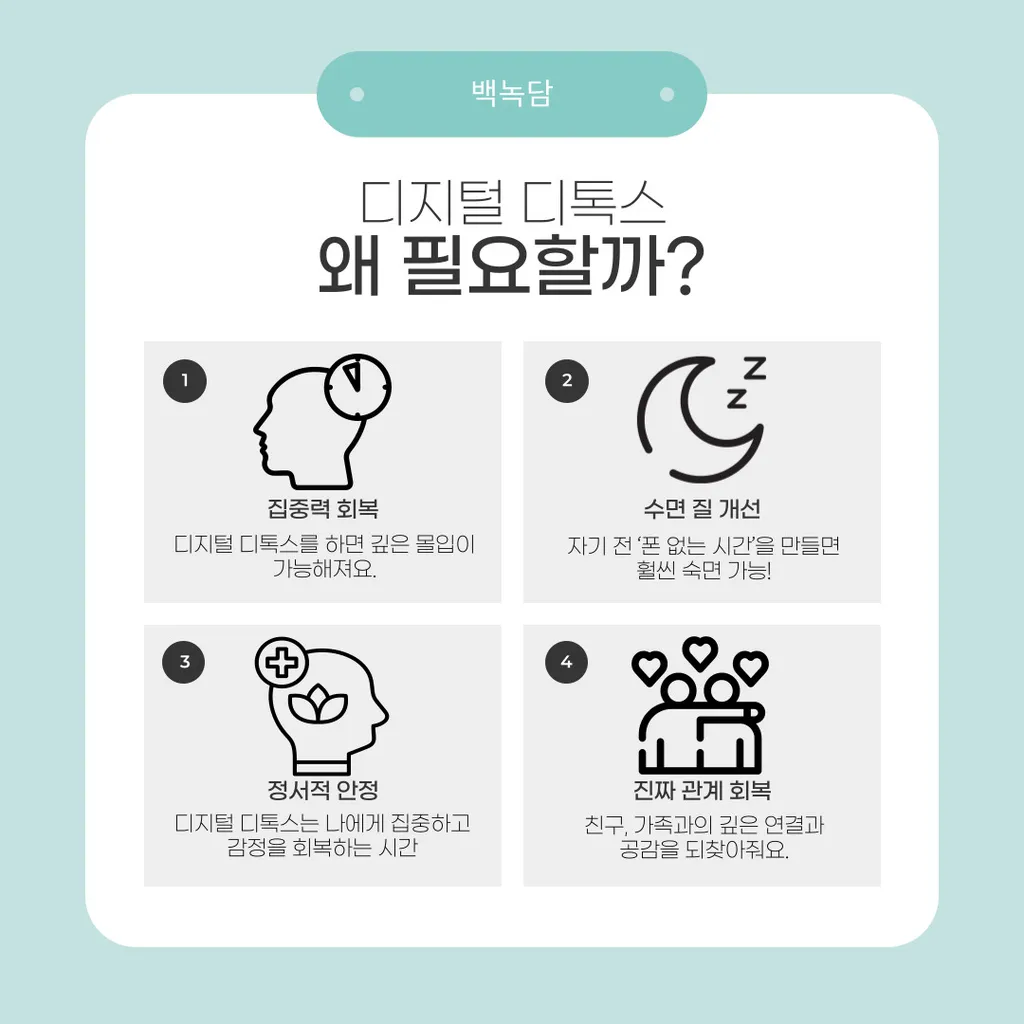
You might wonder, "Will my life really change just by not looking at my smartphone?" However, the scientific evidence is very clear.
According to an experiment conducted by a joint research team from the United States and Canada, limiting smartphone use for two weeks (allowing calls/texts but restricting internet use) resulted in dramatic improvements in participants' mental health and concentration. Remarkably, this effect was powerful enough to revert cognitive decline caused by aging to levels seen approximately 10 years ago.
The specific changes brought by a digital detox are as follows:
- Restoration of Concentration: As scattered attention is organized, "Deep Work" becomes possible.
- Improved Sleep Quality: Exposure to blue light before bedtime decreases, normalizing the circadian rhythm.
- Emotional Stability: By stepping away from comparisons with others and focusing on "self," depression and anxiety decrease.
- Increased Depth of Human Relationships: You rediscover the joy of making eye contact and conversing with others instead of looking at a smartphone screen.
Of course, there is a precaution. Rather than the mere act of turning off the device, "what you fill that remaining time with" is the key to success. The emotional void and boredom that follow when you turn off your device without any plan can actually induce stress. Therefore, it is important to prepare new "analog pleasures," such as reading, walking, exercising, or hands-on hobbies.
4. A Realistic 'Customized Detox' Guide for You
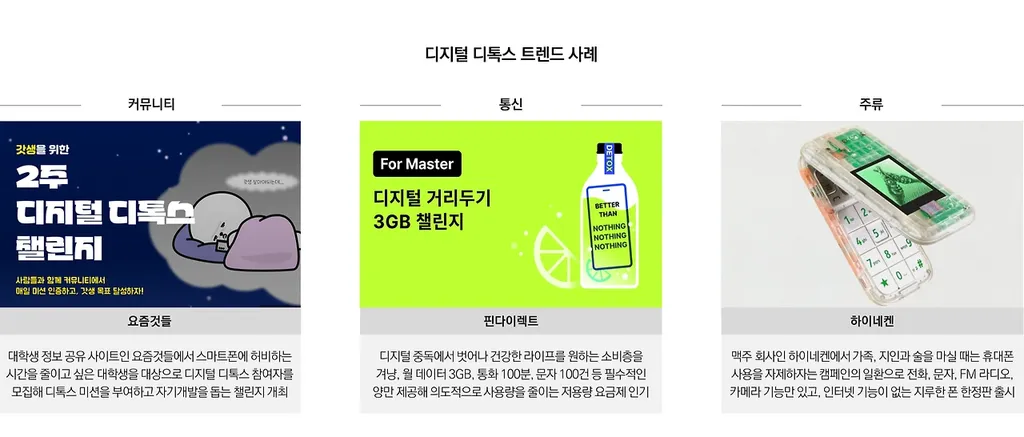
Complete disconnection is realistically impossible because we still have to live in a digital world. Therefore, experts recommend "healthy distancing" rather than unconditional abstinence. Here are three steps to establishing a Digital Detox strategy that fits you.
First, find your 'Goldilocks Zone'. You don't need to delete every app. You should find your own appropriate level of use, such as setting time limits for specific apps that cause you the most stress (e.g., Instagram, TikTok) or turning off notifications during certain times.
Second, set 'Digital Fasting Hours'. The most recommended method is keeping your smartphone away for one hour after waking up and one hour before going to sleep. During these times, you must ensure your brain is protected from external stimuli so it can start and end the day properly.
Third, pre-plan 'Alternative Activities'. You must prevent the emptiness that follows putting down your smartphone. Pre-determine activities that can stimulate your brain's reward system in a healthy way, such as pottery, knitting, or a light walk.
Ultimately, digital detox is not a movement to reject technology. It is a "self-recovery project" to proactively control technology and reclaim your attention as your own.
Will You Be the Master of Your Brain, or a Slave to the Algorithm?
So far, we have looked at why we feel digital fatigue and how we can overcome it. Digital detox is not just the act of turning off a smartphone; it is an essential choice to protect your mental health and quality of life amidst the flood of indiscriminate information.
Let go of the obsession that you must cut off devices completely. Instead, how about putting your smartphone away for just 30 minutes before you go to sleep tonight and enjoying a cup of tea? That small start will reawaken your brain and help you regain your lost concentration.
What 'analog activity' do you want to choose instead of your smartphone today? Please share your small resolutions in the comments!
References
- “자극 피로에 지쳤다”…MZ세대, '디지털 디톡스' 카페로 몰린다 · mk.co.kr
- “스마트폰 멀리 하니 세상이 새롭게 보인다”... '디지털 디톡스' 실험 ... · civicnews.com
- “SNS가 괴롭다” 日 Z세대 확산 '어텐션 디톡스'란[이세계도쿄] - 국민일보 · kmib.co.kr
- [548호] '뇌 썩음' 시대, 디지털 디톡스로 균형 찾기 - 한밭대학교 · hanbat.ac.kr
- A Comprehensive Review on Digital Detox: A Newer Health and ... · pmc.ncbi.nlm.nih.gov
- 디지털 디톡스 효과 있나? 긍정적 영향과 반대 의견 분석 - 네이버 블로그 · m.blog.naver.com
- “2주 끊으니 10년 젊어졌다”… '디지털 디톡스'의 인지 개선 효과 · m.health.chosun.com
- [전자책] SNS 중독 완화를 위한 디지털 디톡스 명상 | 밝은 마음 연구소 · yes24.com