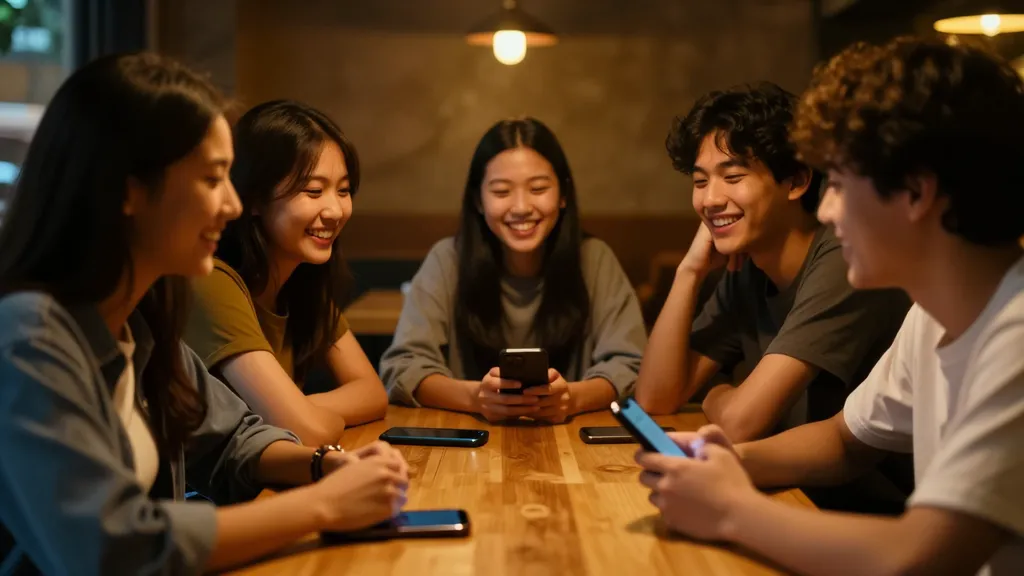
"I won't bring my phone to the meeting today. Let's just actually talk."
Have you recently heard a suggestion like this, or perhaps made it to yourself? In the past, it was a common sight to see people gathered at a cafe, spending time 'together yet separate' while staring at their respective smartphones. However, as of 2026, this landscape is changing rapidly.
This is because time spent putting down the smartphone and making eye contact—namely, 'Phone-free interaction'—has instead become a 'premium experience' for which one must pay the highest price. Why is it that even amidst the convenience provided by technology, we constantly desire to escape from the digital realm? In today's article, we will delve deep into a topic that goes beyond the cliché of 'digital detox,' exploring the new internet culture led by Gen Z and Gen Alpha and the psychology hidden behind it.
Why Do We Feel Lonelier the More Connected We Become? : The Paradox of Digital Excess
We are the most connected generation in history. With a single finger, we hear news from the other side of the globe and remain connected to someone 24 hours a day. However, paradoxically, as our connections increase, our mental energy becomes depleted.
As Professor Jae-won Kim of Seoul National University Hospital recently pointed out, the constant notifications from SNS and the psychology of comparing oneself to others are decisive factors increasing depression and anxiety disorders among adolescents and young adults. According to 2025 research data, the rate of experiencing online risks (fake news, violent threats, etc.) continues to rise.
Here, we face one fundamental problem: 'The fatigue of a surveillance society.'
Much like the 'Panopticon' described by Michel Foucault, we live in a surveillance environment where smartphones, AI, and CCTV are ubiquitous. The fear that a single photo uploaded or a single comment left can be permanently etched onto the internet to serve as a yardstick for judging us. In particular, the era of 'Cancel Culture,' where a single mistake can lead to social liquidation, makes us constantly self-conscious.
Ultimately, the fatigue we feel is not simply caused by 'looking at screens too much.' The core issue is the psychological pressure of being unable to fully reveal oneself in a 'world where everything is recorded and everything is evaluated.'
'Presence Premium': An Era Where the Freedom Not to Be Recorded Becomes Valuable
This psychological pressure has created an interesting economic phenomenon: the emergence of the 'Presence Premium.'
Ian Park, a Silicon Valley investor, recently provided a very interesting diagnosis. As of 2026, the demand for phone-free interaction has surged by a staggering 567% compared to the previous year. In the United States, it grew explosively by 913%, and in the UK, by a massive 1,441%.
What does this figure signify? People are now tired of 'showing more.' While in the past, people sought out famous restaurants and pretty cafes specifically to take photos for SNS, they are now willing to pay a price for the 'freedom to leave no digital footprint.'
This is not merely a matter of 'wellness.' It is a new market created by the longing to protect oneself from cancel culture and to exist in the 'here and now' without being conscious of anyone's gaze. In other words, while online visibility has become common, complete absence in the offline world (the absence of digital traces) has become the most scarce and expensive value.
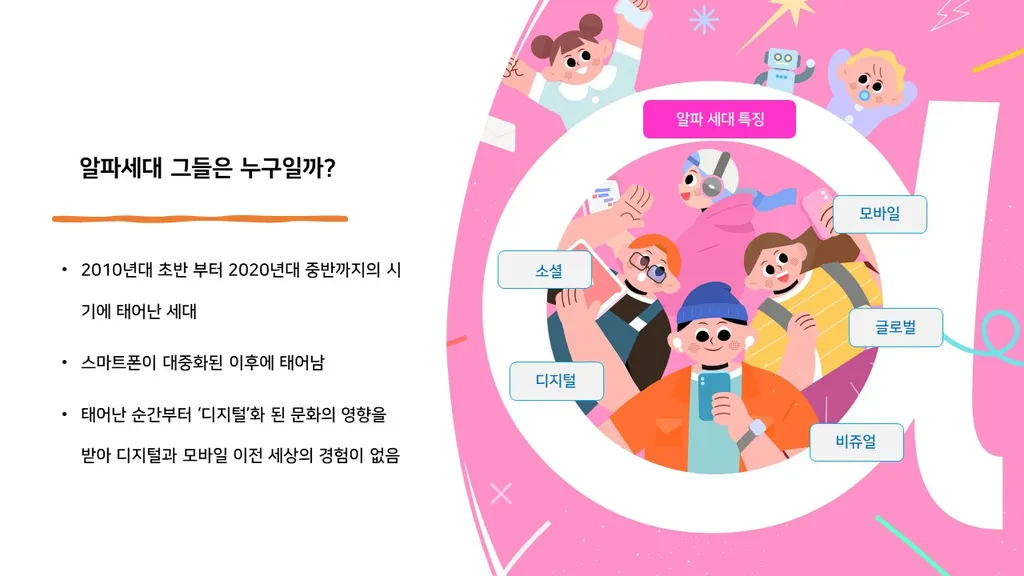
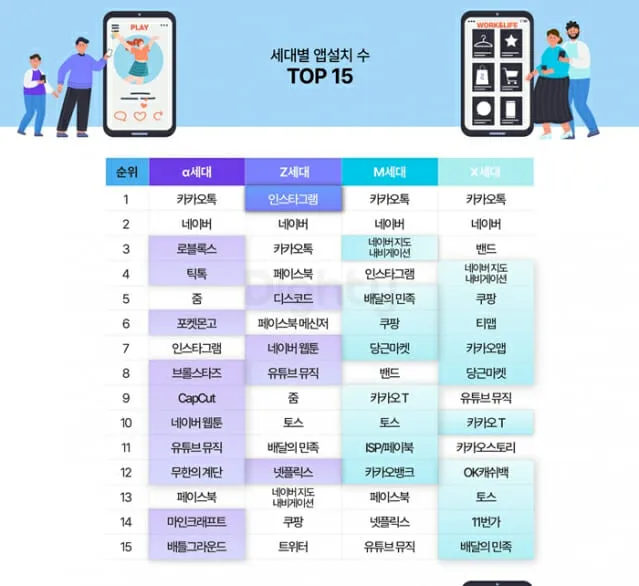
Gen Z and Gen Alpha are leading this change at the forefront. As digital natives, they understand the convenience of technology better than anyone, but simultaneously, they are the generation that feels the resulting fatigue most acutely.
Gen Z's New Survival Strategy: Meta-sensing and Liquid Content
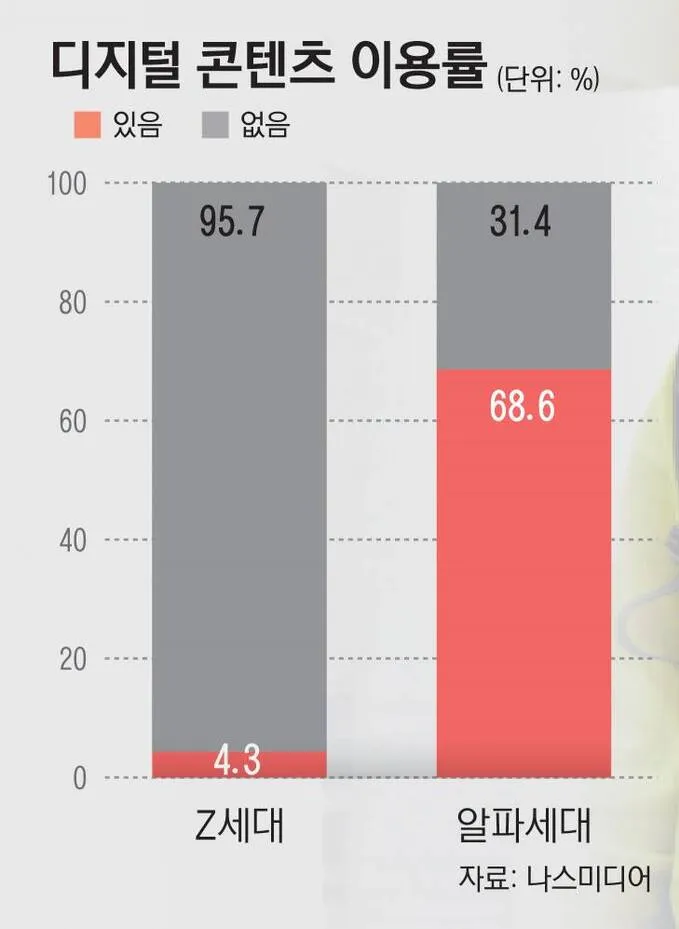
Then, how are they living while protecting themselves in this chaotic digital world? We can look into their survival strategies through the keywords penetrating the trends of 2026.
The first keyword is Meta-sensing. Gen Z focuses on their own internal emotions and emotional states rather than external stimuli or the gaze of others. "How am I feeling right now?" has become more important than "How do I look to others?" This is not simple meditation, but a new lifestyle that prioritizes one's own emotional stability as the highest value.
The second is Liquid Content. They do not insist on fixed platforms or formats. They entrust themselves to the flow of algorithms, flexibly consuming and letting go of various types of content depending on the situation. Rather than 'possessing' or being 'obsessed' with content, they enjoy it like a flow, matching their mood and circumstances.
The third is Timely Consumption. Rather than designing a distant future, they focus on maximizing satisfaction and experience in the present moment. This is also a clever response strategy to offset anxiety about an uncertain future with 'certain experiences of the present.'
Ultimately, they are not completely rejecting the digital, but rather finding their own balance through 'healthy digital addiction' or 'selective connection.' They act as 'hybrid natives' who break down the boundaries between digital and analog and move freely between the two worlds.
The Direction We Must Take: A New Coexistence of Technology and Humanity
Now, we must move away from the dichotomous thinking of 'digital detox.' The answer is not to discard the smartphone, but to contemplate how to use technology without losing 'oneself.'
Future businesses and social systems must move in two directions.
First, the provision of 'digital safe zones.' Companies and platforms should not merely be preoccupied with collecting and exposing user data, but should design physical and cultural spaces where users can retreat from the digital world at any time. Only brands that understand the 'Presence Premium' will be chosen by future generations.
Second, the strengthening of 'Cultural Intelligence (CQ).' In the reality of 2026, where AI replaces many human tasks, the ability to communicate deeply and empathize with diverse people becomes a more powerful weapon than anything else. Ironically, as technology advances, the most 'human' qualities—the ability to read others' emotions and connect sincerely—will become the core competitiveness.
Ultimately, what matters is 'Authenticity.' The authenticity spoken of by Gen Z is not a perfectly curated image. It is a 'hybrid authenticity' that acknowledges imperfection and honestly reveals one's emotions, even in a world where surveillance and staging are daily occurrences. We should use technology as a tool, but we must not allow that technology to encroach upon our souls.
Today, we examined why modern people are enthusiastic about 'phone-free time' and how Gen Z is maintaining its own center within the digital world.
Ultimately, the core lies in 'control.' Not being swayed by technology, but having the choice to connect when I need to and to be isolated when I want to. Isn't that the true digital wellbeing we should pursue as we live through 2026?
Have you had a moment today to focus entirely on yourself or a loved one without your smartphone?
What does your digital life look like? Please share your own 'digital distancing' know-how in the comments!
References
- 폰 없는 대면이 가장 비싼 시간이 됐다. Phone-free events 작년 +567 ... · instagram.com
- 2026 트렌드 긴급 점검, 주목해야 할 Z세대의 특성과 ... - 시빅뉴스 · civicnews.com
- SNS 때문에 우울해지는 우리 아이들 [더(The)건강] 서울대병원 소아 ... · instagram.com
- 새로운 연구: 디지털 웰빙 증진에 따른 2025년 Z세대의 온라인 활동 ... · values.snap.com
- 2024년, 잘파(Zalpha) 세대가 온다 - 제일 매거진 · magazine.cheil.com
- MZ세대는 가고 - 잘파(Zalpha)세대가 온다 - 월간 방송과기술 · tech.kobeta.com
- Z세대는 무엇을 진짜라고 믿는가 - 르몽드디플로마티크 · ilemonde.com
- AI, ChatGPT, Sovereign AI, Singularity, 알파 세대 알고리즘, 예술의 ... · m.blog.naver.com