Would you believe it if I told you a single developer built a product in just 8 hours and walked away with a $15,000 prize?
As of 2026, AI coding tools have evolved beyond simply writing code for you. The overwhelming performance demonstrated by a solo developer at a recent Anthropic hackathon proved that the development paradigm has shifted completely.
At the heart of this miraculous feat lies not just a simple AI tool, but ECC (Everything Claude Code)—an "Agent Hub" that pushes AI agent performance to its absolute limits. Today, we will dive deep into this powerful open-source framework that every developer must pay attention to.
What is ECC, the engine behind the 8-hour miracle?
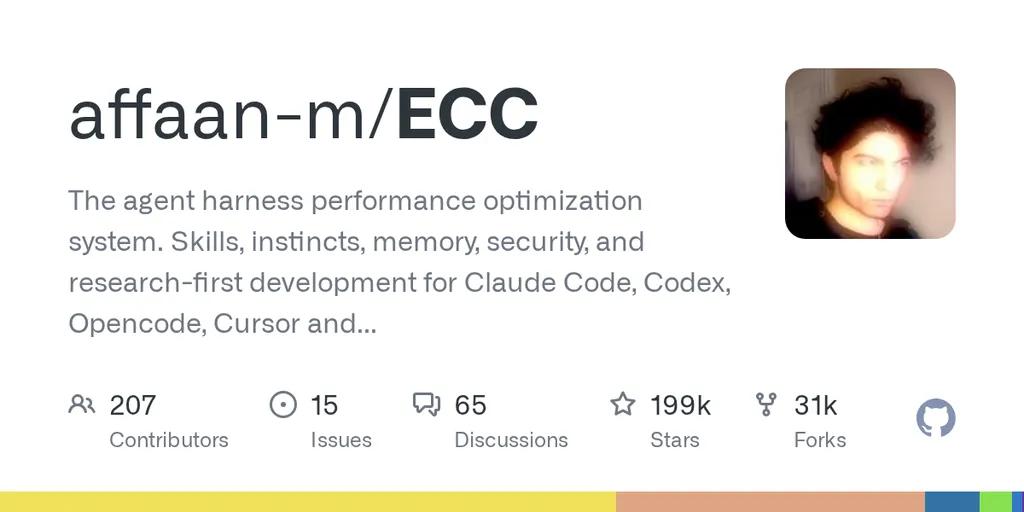
There is a project on GitHub that has been growing at a terrifying speed, amassing over 180,000 stars: affaan-m/ECC. This project is not merely a plugin to assist 'Claude Code.'
ECC is an "AI Agent Harness" optimization system designed around five core pillars: Skills, Instincts, Memory, Security, and Research.
To use an analogy, if traditional AI coding tools were "smart assistants," ECC is the system that transforms that assistant into a "professional engineering team" by handing them specialized textbooks (Skills), inputting experience data (Memory), and equipping them with ethical guidelines (Security).
The true charm of this tool lies in its universality. It works consistently across more than 12 major AI agent environments, including Claude Code, Cursor, Codex, Gemini, and GitHub Copilot. It essentially acts as a standard, much like an "** .editorconfig for AI coding**" that runs on any operating system.
In particular, it uses a single configuration file called AGENTS.md to ensure all tools understand the same rules and context. This allows developers to control all AI under a single command structure without needing to configure each tool separately.
Beyond simple automation to system engineering

What is the biggest frustration many developers face when using AI? It is that "it forgets what was just said" and "code is generated without context." ECC attempts to solve these problems not through prompt engineering, but through the engineering structure itself.
1. Autonomous Multi-Agent Workflow
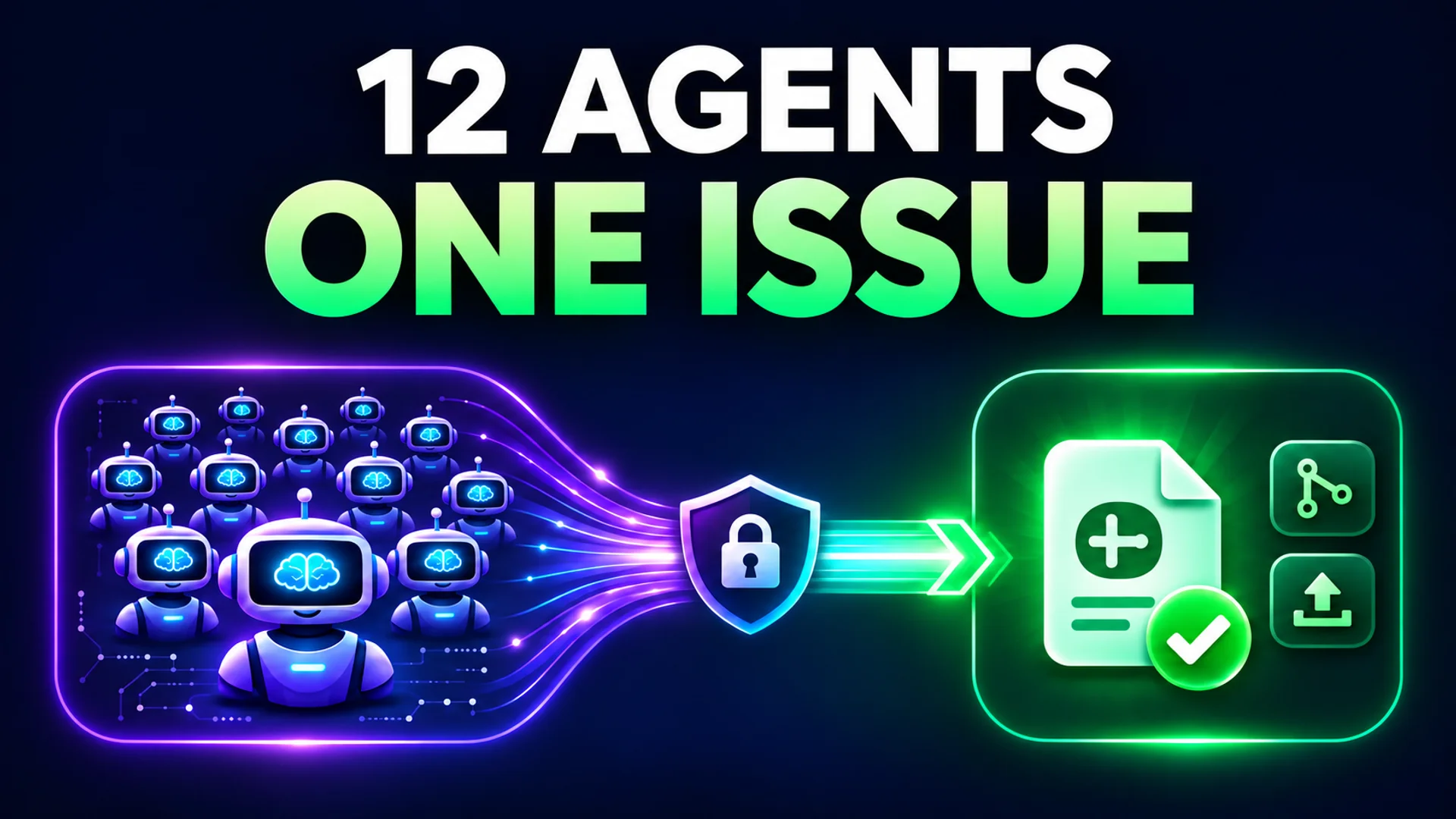
ECC does not rely on a single AI model. It integrates over 300 agents, functions, and commands to distribute complex tasks among multiple agents. For example, one agent writes the logic, another creates test cases, and a third scans for security vulnerabilities. This creates the effect of a highly skilled team collaborating on a large-scale project.
2. A Revolution in Memory: SQLite-based Memory Persistence
To prevent "context loss," a chronic issue with AI, ECC utilizes an SQLite-based memory mechanism. This allows the project context to be maintained even when sessions change, enabling you to pick up exactly where you left off the previous day.
3. Rigorous Quality and Security Management
ECC enforces a Test-Driven Development (TDD) process. It guides agents so that code is not considered complete unless the tests pass. Furthermore, it features a security scanner called AgentShield to proactively block vulnerabilities in agent-generated code and includes a robust security hook system to prevent accidental commits of secret keys.
Of course, no tool is perfect. ECC is currently in a very active stage of development; the recent 2.0 alpha version is undergoing structural changes, such as introducing a Rust-based control plane prototype. Additionally, technical challenges like path compatibility issues in certain environments (e.g., Windows + Git Bash) or session key convergence issues are constantly being reported through GitHub issues. However, these "growing pains" serve as evidence of how practical and dynamic this project truly is.
Practical Application: How to integrate ECC into your workflow

So, how can you utilize this powerful tool in real-world development? Depending on your development style, you can imagine the following scenarios:
Scenario A: The Solo Founder You need to turn ideas into products quickly. Leverage ECC's multi-agent capabilities. When you command, "Build a Django REST API," ECC's skill packs will set up the structure, the TDD agent will write the test code first, and the security agent will check the API endpoints for vulnerabilities. Even alone, you can achieve both speed and quality as if you had a team of five.
Scenario B: Enterprise-level Large-scale Project Teams Standardization is key. Use ECC's AGENTS.md to unify the code of conduct for all AI agents used by the entire team. It doesn't matter whether every developer uses Cursor or Claude Code; thanks to the consistent rules provided by ECC, code review time is drastically reduced, and code quality is standardized at a high level.
Scenario C: Finance/Infrastructure Development where Security is Critical Actively utilize AgentShield and security hook features. Before code is committed, the AI automatically performs security scans and blocks the exposure of sensitive information. You are essentially building an "automated security guard" where the AI monitors security loopholes in real-time that humans might miss.
In reality, to fully utilize ECC, you need more than just inputting commands; you need "Agent Orchestration" skills to configure the 63 provided agents and 249 skills to suit the nature of your project.
Summary and Conclusion: A New Weapon for Developers in the AI Era

The ECC we have explored is more than a simple coding assistant; it is closer to an "operating system" that binds AI agents into a single organic system.
- Integratability: Controls various AI agent tools with a single standard configuration.
- Intelligence: Pushes AI performance to the limit through memory, skills, and instincts.
- Stability: Guarantees engineering-grade code quality through TDD and security scanning.
Development in 2026 will not be a battle of "how well you write code," but a battle of "how efficiently you command an army of AI agents." ECC is the tool that places that command in your hands.
That overwhelming productivity that made someone an Anthropic hackathon hero can now be reproduced in your local environment.
What 'skill' would you like to teach an AI agent first? Share your ideas in the comments!
References
- ecc - Claude Code Plugin | ClaudePluginHub · claudepluginhub.com
- Issues · affaan-m/ECC - GitHub · github.com
- Everything Claude Code hits 100K stars: what developers should ... · augmentcode.com
- affaan-m/everything-claude-code Plugins · claudemarketplaces.com
- 이 사람 혼자 앤트로픽 해커톤 우승함. 그리고 스택 오픈소스로 공개 ... · reddit.com