"Why doesn't my smartphone immediately realize what I want?"
The hotel you searched for yesterday, the meeting preparations you planned this morning, and even music that perfectly suits your taste. We have countless conversations with our smartphones every day, but ironically, smartphones still remain "passive tools" that only move when we give them specific commands.
Have you ever dreamed of a smartphone that acts like a secretary, organizing your schedule automatically or preparing necessary materials in advance without being asked? As of 2026, we are finally standing on the threshold where that dream is turning into reality. This is because the innovations known as Edge AI and Agentic AI have entered the small devices in our hands.
Smarter AI, but why does my phone get hot and the battery drain so fast?
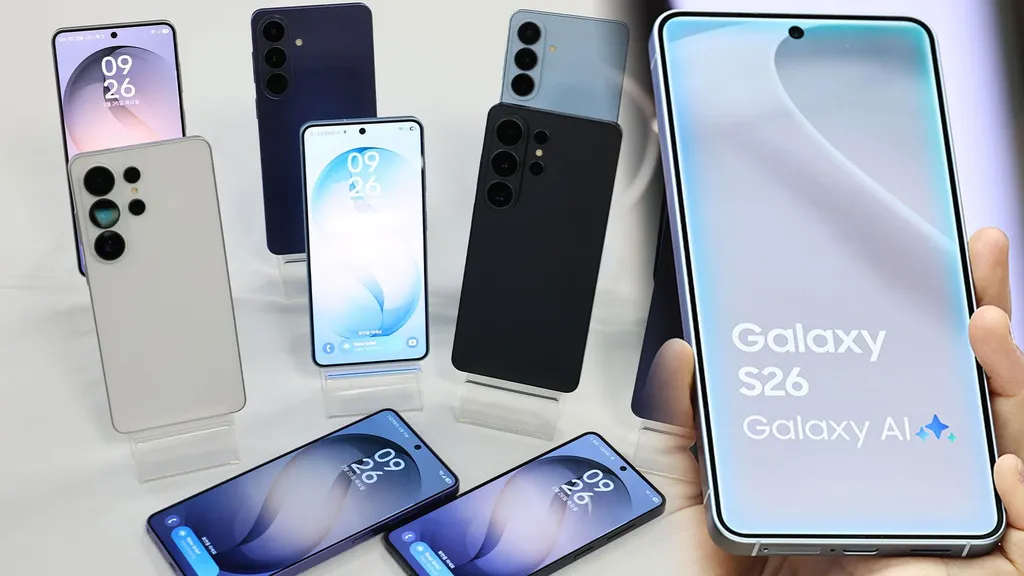
If you are using the recently released Galaxy S26 series or the latest iPhone, you might have felt it at least once. You know the phone has become much smarter with added AI features, but strangely, the battery seems to drain faster than before, and the back of the device feels hot.
The reason for this phenomenon is clear. Most existing AI operated by borrowing the power of a massive data center called the "Cloud." When we asked a question, the data would fly over to a server beyond the clouds, be calculated, and then return. However, the trend in 2026 is different. For the sake of data security and response speed, the paradigm has completely shifted to On-device AI, where all computations are processed directly inside my smartphone.
This is where the problem arises. Because the chipset inside the smartphone tries to perform complex AI computations as if it were a massive supercomputer, it hits physical limits.
- Memory Bandwidth Limits: Compared to a data center's GPU, the memory bandwidth (the width of the path data travels) of a smartphone is 30 to 50 times lower. Because the path is narrow but it tries to process a massive amount of AI data all at once, a bottleneck occurs.
- Power Consumption and Heat: Continuously performing complex computations generates immense heat, which leads to decreased battery life.
- Resource Constraints: No matter how good a smartphone becomes, it has physical limits in size and battery capacity.
Ultimately, the question of "How can we implement intelligence comparable to the cloud in this small device while also making the battery last longer?" has become the core challenge of AI technology in 2026.
Technology Breaking Through Limits: The Magic of NPU and Model Optimization
However, technological progress always blooms amidst crisis. To overcome these physical limits, engineers have shifted their strategy from "unconditionally fast computation" to "efficient computation."
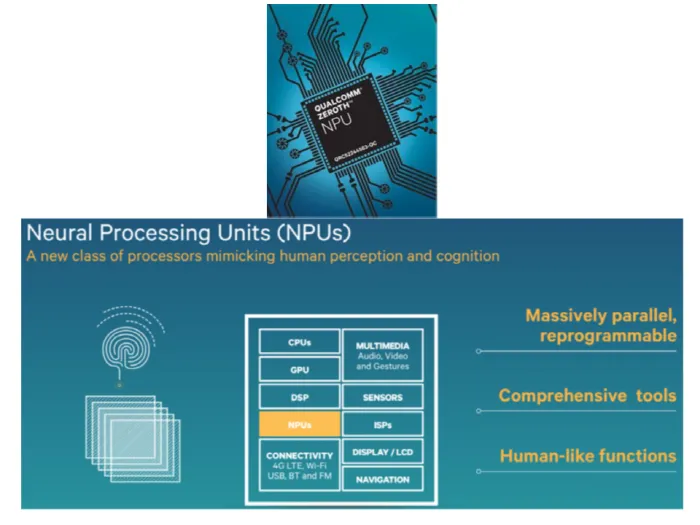
The most noticeable change is the evolution of the NPU (Neural Processing Unit). In the past, GPUs specialized in graphics processing assisted AI computations, but now the NPU, born specifically for AI, has taken the lead. Looking at recent technology trends, the NPU is 4 to 6 times more power-efficient than existing GPUs. In other words, it has become possible to perform the same amount of AI tasks while using much less battery and generating less heat.
To this, "model dieting" technology is added. We cannot simply put an oversized AI model into a smartphone. To solve this, three magical technologies are used:
- Quantization: A technique that drastically reduces the weight of data by finely adjusting the precision of the AI model. It is similar to compressing a high-resolution photo into a small JPEG file while minimizing loss of image quality.
- Pruning: The process of cutting away unnecessary connection paths in the AI's neural network that do not significantly impact the result. By removing unnecessary paths, computation speed increases.
- Knowledge Distillation: A method of efficiently transferring the knowledge of a massive "Teacher AI" to a small "Student AI (Small Language Model, SLM)." Thanks to this, even small models inside smartphones can perform 80–90% of the functions of large-scale models.
Thanks to these efforts, the latest chipsets, such as Samsung Electronics' Exynos SoC, have laid the foundation to smoothly run heavy generative AI models internally within the device.
Now is the Era of 'Agentic AI': Meeting a True Secretary in Your Hand
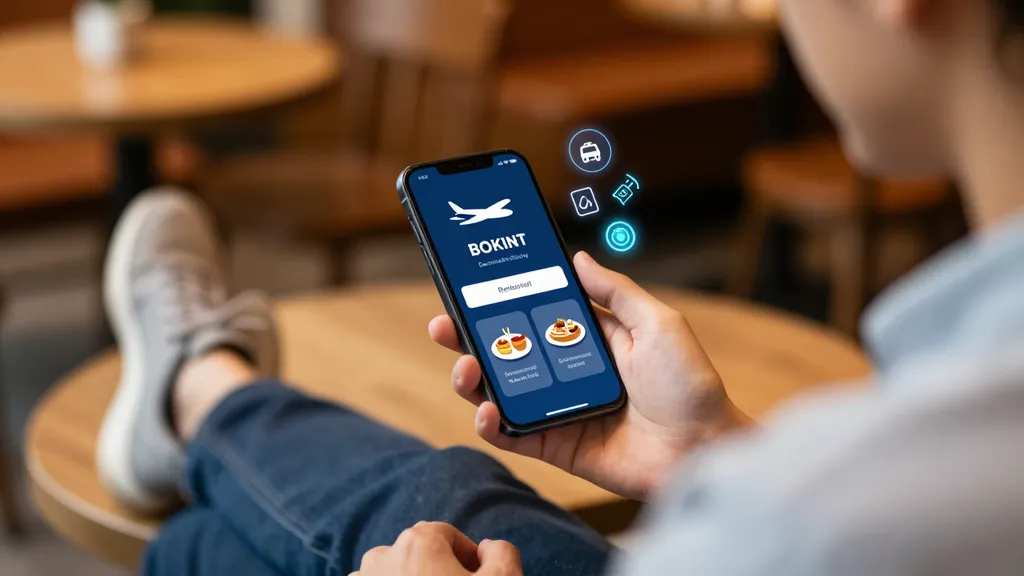
So, how will this technological advancement change our daily lives? The key keyword declared by Samsung Electronics through the Galaxy S26 series in 2026 is Agentic AI.
If AI until now was a "smart dictionary" that answered when asked "How is the weather today?", Agentic AI is a "secretary that acts directly" by inferring the user's intention.
For example, suppose you say, "Plan a trip to Jeju Island for next week." Existing AI would have stopped at providing a list of famous restaurants and tourist attractions. But Agentic AI is different. It analyzes the user's usual travel style, preferred airline, budget, and the schedule registered in the calendar. And it doesn't just make a plan; it searches for actual flights, checks available reservation times, and asks, "Should I reserve this time slot?" When the user says "Yes," it completes the entire process itself right before the payment step.
This is possible thanks to the Hybrid AI strategy pursued by Samsung Electronics. This "division of labor"—where complex and vast data processing is performed in the cloud, while real-time, immediate judgment or privacy-sensitive personal data processing is performed on-device (edge)—has finally been perfected.
In particular, Samsung is focusing on building a "trust-based infrastructure" that safely processes user data within the device so that it is not leaked externally. The assurance that my private conversations or schedules are not stored on cloud servers but remain only inside my phone is the most important prerequisite for Agentic AI to become deeply integrated into our lives.
The Future of Smartphones: From 'Computational Performance' to 'Sustainable Efficiency'
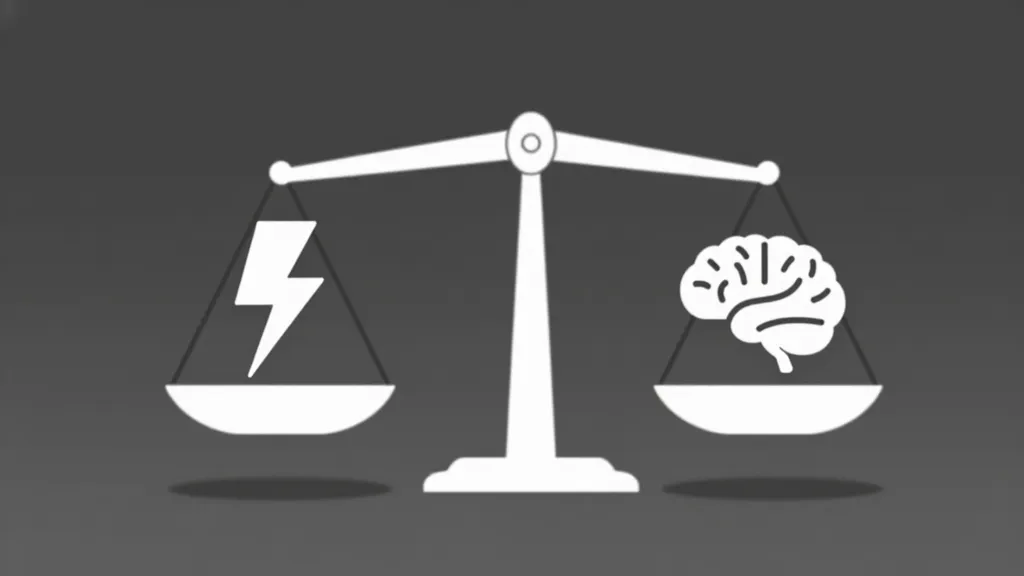
Ultimately, the smartphone competition in 2026 is no longer a fight over "who has higher computational power numbers?" The true winner will be the manufacturer that answers the question: "Who can be smarter while maintaining battery life longer?"
Until now, we have sacrificed hardware for the sake of AI. However, through the development of NPUs, model lightweighting technology, and the combination of hybrid architectures, we have entered the era of "Sustainable Intelligence."
The smartphone is now evolving beyond a simple communication tool into an intelligent partner that understands my patterns, protects my security, and executes my commands on my behalf.
What does your smartphone look like right now? Is it merely a tool to run apps, or is it a reliable assistant preparing your next move in advance?
In a future where Agentic AI is realized, which feature would you want to use first? Please share your thoughts in the comments!
References
- [갤럭시 언팩 2026] “진정한 에이전틱 AI의 시작” 갤럭시 공개 현장 ... · samsung.com
- 2026년 기업 기술을 혁신하는 주요 첨단 AI 트렌드 - LinkedIn · kr.linkedin.com
- 2026년, 온디바이스 AI의 전성시대가 열렸지만, 그 이면에는 숨겨진 ... · instagram.com
- 2026년 온디바이스 AI 스마트폰 NPU 성능 비교 및 배터리 최적화 방법 · aibevy.com
- 클라우드를 넘어, 온디바이스 AI 기술 혁신을 심층 분석하다 | 삼성반도체 · semiconductor.samsung.com
- 삼성 스마트폰 전략 변했다… 갤럭시S26, AI는 '에이전틱(A)'과 '인프라(I)' · contents.premium.naver.com
- 2026년 삼성 갤럭시 S26 시리즈 심층 분석 보고서: 폼팩터 진화와 에 ... · blog.naver.com
- "엣지 AI 시대, GPU보다 전력 효율 앞선 NPU가 주도할 것"[KIW 2026] · hankyung.com