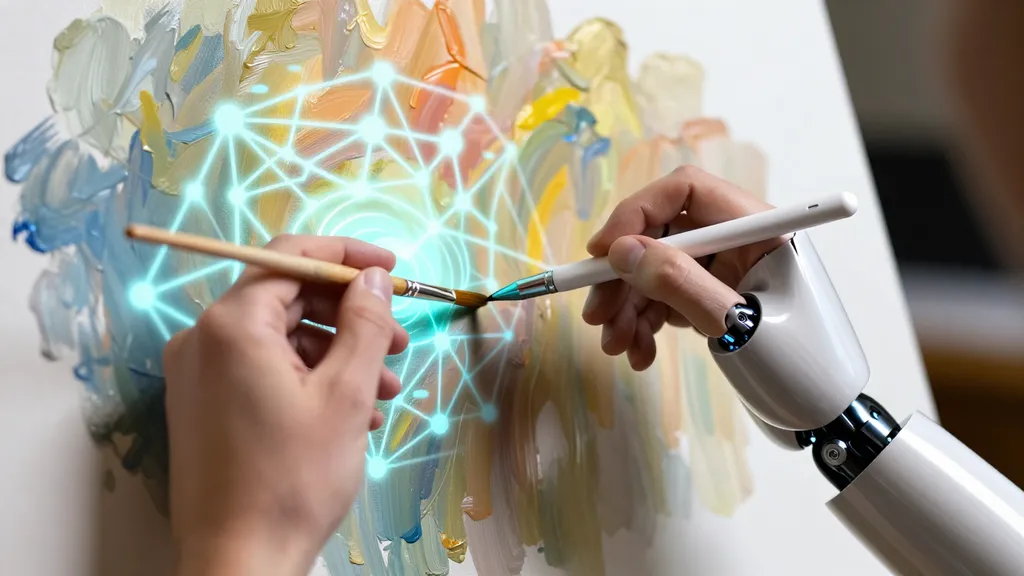
To get straight to the point, whether generative AI is "stealing" art is a matter of massive social consensus that depends on how we define "learning" versus "copying." While AI proponents argue for "transformative use"—claiming that AI statistically analyzes existing works to extract patterns—creators argue it is "intellectual property infringement," where their unique styles are used without permission to replace them in the market. Ultimately, for technological advancement not to destroy the artistic ecosystem, we must establish a new ethical framework centered on transparent data disclosure and fair compensation systems, rather than relying on simple regulation or total laissez-faire.
🎨 Reinterpretation of Inspiration or Sophisticated Theft?
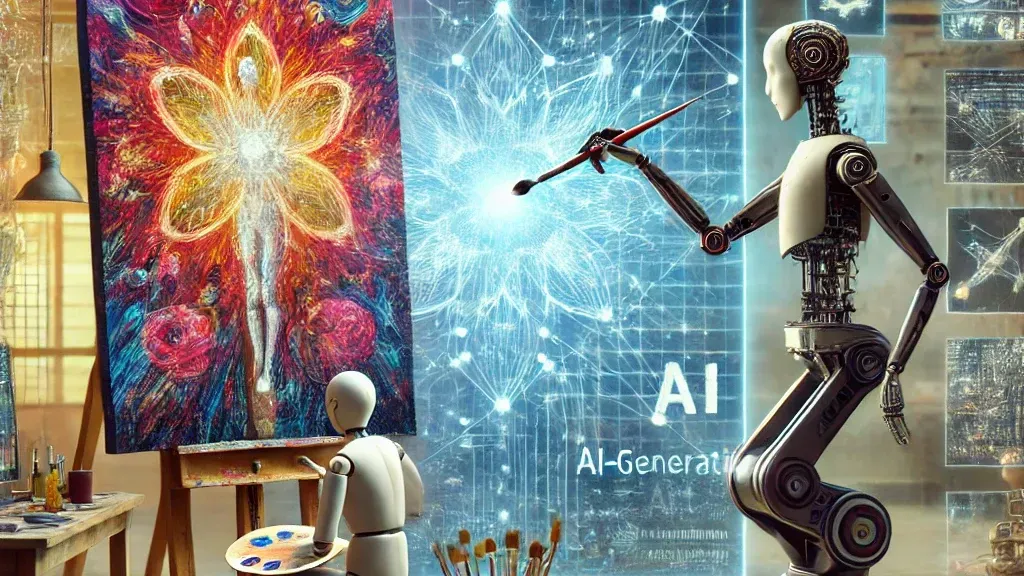
We often say an artist was "inspired" when they create a new work. It is a perfectly natural part of the creative process for Picasso to study Matisse's color palettes, or for a modern graphic designer to reference the composition of classical masterpieces. But a crucial question arises: "If that 'study' is performed not by a human, but by an algorithm that swallows billions of data points in an instant, can we still call it learning?"
Critics' perspectives are clear. They argue that when generative AI collects vast amounts of artwork, using that data for commercial profit without the original creator's consent constitutes a massive "intellectual property theft" occurring in the digital space. In particular, there is deep concern that the ability to perfectly replicate a specific artist's style is no different from unauthorizedly duplicating an artist's unique identity and the value of their labor.
On the other hand, those with a technical perspective tell a different story. They emphasize that AI does not store copies of individual works, but rather abstracts and recombines the rules and styles inherent in the data. Their logic is that this is fundamentally no different from us visiting an art museum to view thousands of paintings and learning a "style." However, this subtle line between "learning" and "copying" has emerged as the hottest topic in courtrooms worldwide.
⚖️ AI in Court: Fair Use or Copyright Infringement?
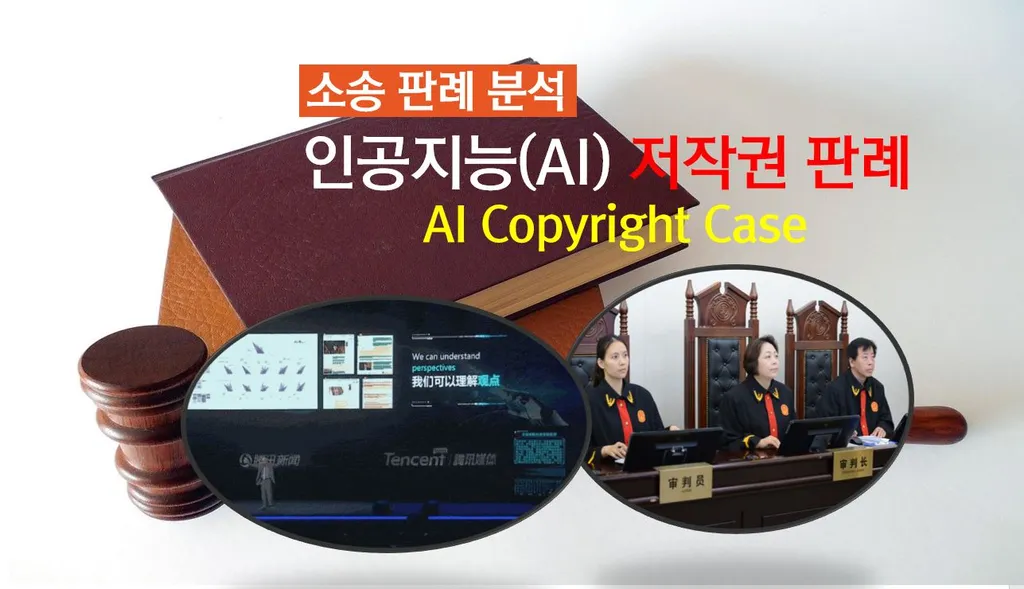
Currently, copyright lawsuits against AI companies are surging like a storm in courts across the globe, including the United States. As of June 2025, the scale is massive, with approximately 47 generative AI-related copyright lawsuits underway in the U.S. alone. The core issue here is the principle of "Fair Use."
U.S. copyright law allows copyrighted works to be used without the holder's permission under certain conditions for purposes such as education, research, and criticism. AI companies use this shield to argue that their activities constitute "transformative use," which creates new value. However, recent judicial precedents are beginning to crack this shield.
For example, the 2025 ruling by the U.S. District Court for the District of Delaware in Thomson Reuters v. Ross Intelligence is highly significant. The court suggested that if the output generated by AI directly replaces the market for the original work, it would be difficult to recognize it as fair use. In short, it is a warning that if an AI-generated image undermines the economic value of the original creator, it can no longer be called "learning" but rather "infringement." Furthermore, as seen in the lawsuit filed by Getty Images against Stability AI, legal risks for AI companies are higher than ever as issues like trademark infringement and source confusion become entangled.
💰 A 20-Billion-Dollar Market and the Place of "Humans"
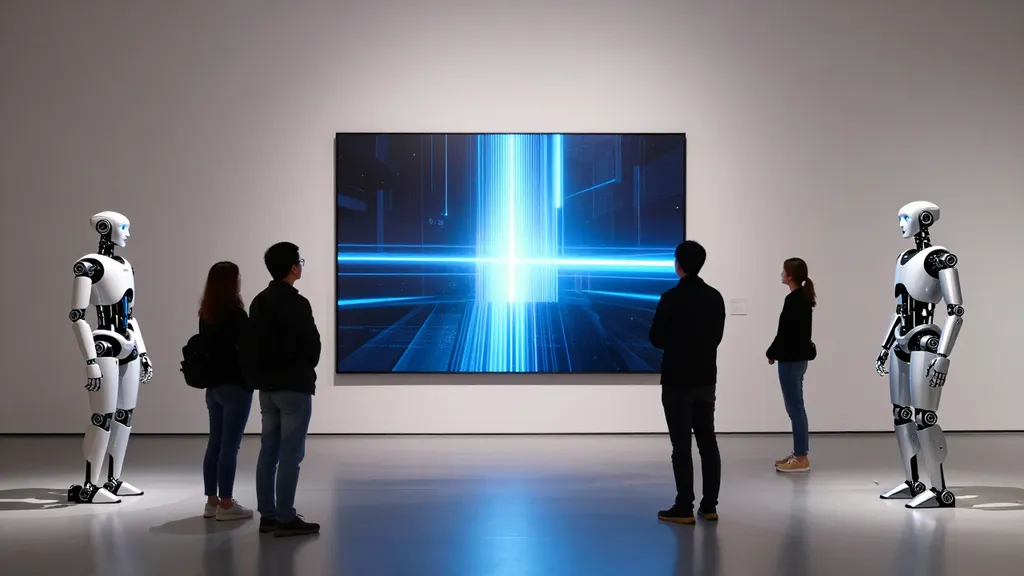
Technological advancement is proving the value of art through numbers. The generative AI-based art market is projected to grow to approximately $20.7 billion (about 27 trillion KRW) by 2026, and the era where AI-drawn pictures are auctioned for hundreds of thousands of dollars is already a reality. However, behind the flashy growth of the market follows a sorrowful question regarding the "essence of art."
Can we truly call the output of an AI "art"? Art is a vessel that contains the resonance of the soul, including human agony, sadness, and joy. This is why skeptical views exist regarding whether a combination of pixels calculated by the statistical probability of data can trigger human emotional resonance.
A more practical issue is, "Who owns the copyright?" Recently, the U.S. Supreme Court refused to register a copyright for a painting generated by the AI system "DABUS," reaffirming the principle that "an author must be a human." Of course, there is a trend toward recognizing human copyright in exceptional cases if the user has provided a "substantial level of creative contribution," such as through sophisticated prompt engineering or modifying the results. This is a symbolic event showing that even in the AI era, the central axis of art still remains with "human intention."
🛠️ A Roadmap for Coexistence: How Should We Solve This?
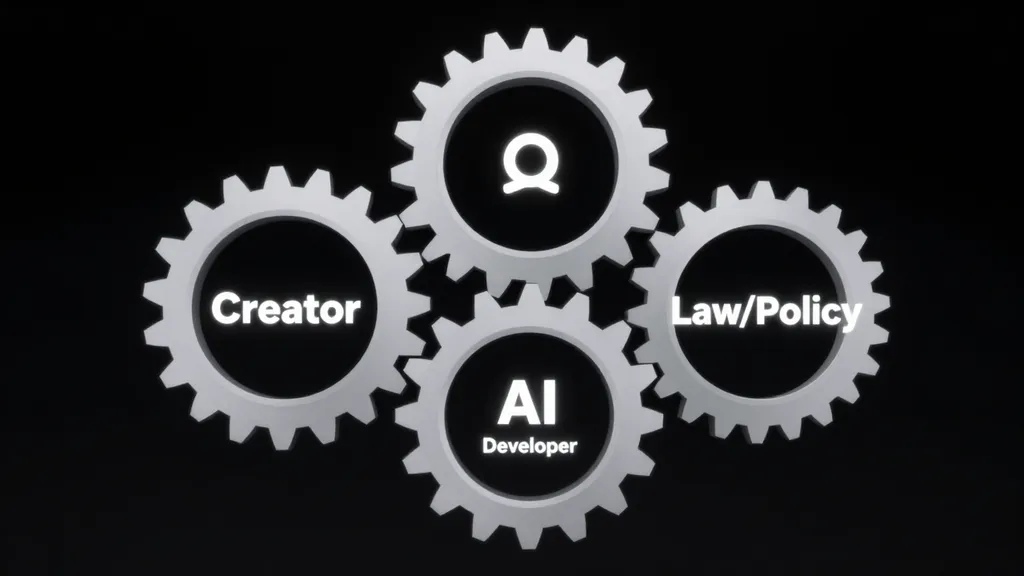
So, how should we navigate this chaotic era? Simply banning the technology is impossible, yet total laissez-faire without any regulation will cause the creative ecosystem to wither away. Experts agree that the following three pillars are necessary:
- Ensuring Transparency in Data Collection: AI models must clearly disclose what kind of data they were trained on. We must know what they "ate" to grow in order to judge the legitimacy of their outputs.
- Fair Remuneration System: If an original creator's work is used as training data, a system must be established to provide corresponding licensing fees or compensation. This is the key to transitioning from "theft" to "fair trade."
- Ethical Guidelines and Legal Liability: Platform operators must bear a "duty of care" to filter data that is highly likely to infringe on copyrights. The era where companies can simply say, "We only provided the tool," as an excuse for immunity is coming to an end.
Ultimately, generative AI can either be a tool that steals art or a powerful partner that infinitely expands human creativity. That choice depends not on the technology itself, but on the laws and ethical standards we create.
✍️ Closing: At the Intersection of Technology and Soul
The conflict between generative AI and art is not a mere technical debate. It is a massive philosophical question of our time: "What does it mean to be human?" and "How will we protect the value of creation?"
Can the wonder we feel before a perfectly composed AI-generated image replace the traces of agony poured out by a human trembling at the tip of a brush? Technology makes us convenient, but if that convenience undermines "inspiration"—which is someone's livelihood—we will not be able to welcome that technology wholeheartedly.
What do you think? Can you recognize a picture drawn by AI as true art? Or do you still believe it is a unique domain belonging only to humans? Please share your thoughts in the comments. 😊
References
- 생성 AI가 예술을 "훔치는" 건가요? : r/AskComputerScience · reddit.com
- AI 창작 시대, 예술의 본질과 윤리적 딜레마 · consumerpost.co.kr
- [IT 트렌드 바로읽기] 생성형 AI와 미술계 - 모비인사이드 · mobiinside.co.kr
- 인공지능 예술 윤리 : 네이버 블로그 · blog.naver.com
- [판례 분석] 생성형 AI 서비스 제공자의 저작권 침해 책임 인정 · copyright.or.kr
- 생성형 AI 그림 저작권 논란, 2026년 기준 반드시 알아야 할 ... · wikidocs.net
- AI 학습을 위한 저작물의 공정 이용: 미국 판례 동향 분석 · hwawoo.com
- '생성형 AI의 학습 데이터 사용 및 출력물에 관한 저작권 침해' ... · shinkim.com