"It's clearly written by AI, so why is it so hard to read and artificial?"
Have you recently felt this way? Perhaps you used Claude or ChatGPT to draft something to boost your work efficiency, only to feel a sense of tension the moment you see the result because of that characteristic "mechanical smell."
The grammar is correct and the logic isn't bad, but strangely, the writing feels hollow. It’s like being stuck in an "Uncanny Valley," where a well-structured robot recites a fixed manual, causing us discomfort. In 2026, in an era where AI-generated content is flooding the market, this "AI-ness" has become a fatal weakness that undermines content credibility, going beyond mere personal preference.
Why does AI-written text feel so 'cheap'?
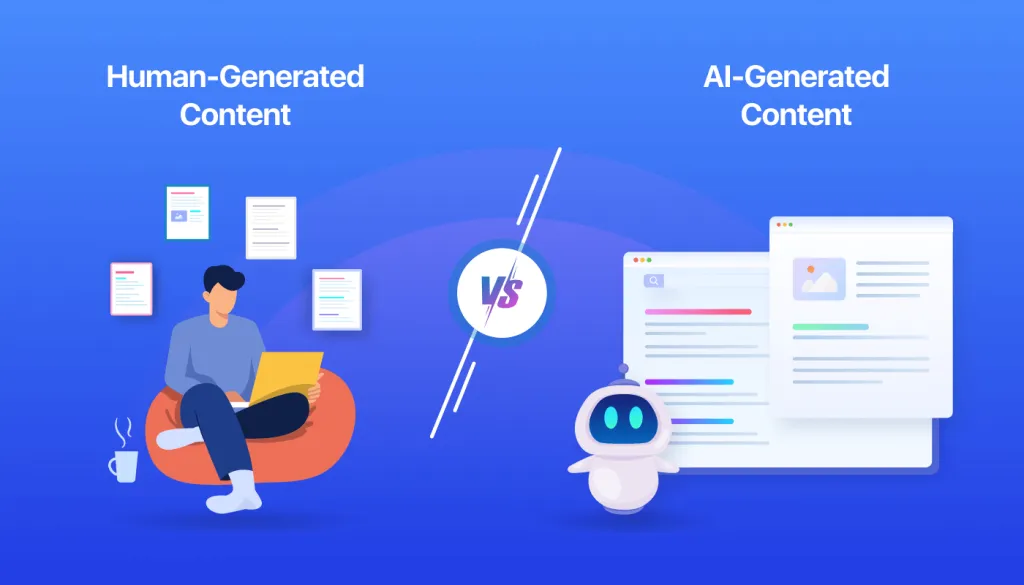
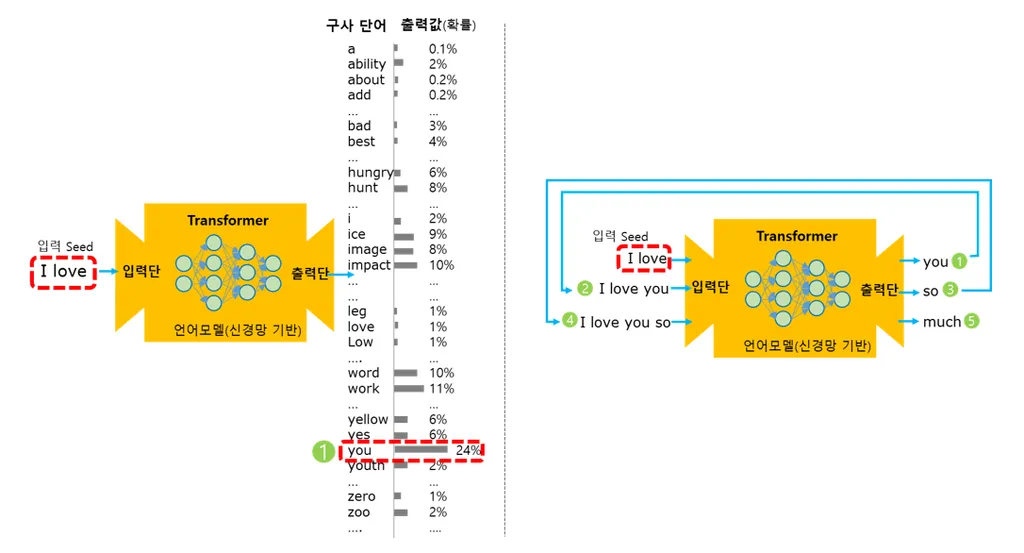
What is the reality behind that "discomfort" we feel? It's not just a gut feeling. Because AI is designed to select the most statistically probable words and sentence structures, it inevitably repeats predictable patterns.
Experts have started calling this "AI Slop." It refers to writing that is full of repetitive patterns and looks polished on the surface but lacks any real substance—much like unrefined sludge.
Analyzing the causes, they can be divided into three main categories.
The first is "Throat-clearing openers." This is the habit of delaying the main point with unnecessary introductions like "Actually," "Of course," "Clearly," or "The important thing here is..." It is a primary culprit that disrupts the reader's focus.
The second is "Structural clichés." When dealing with complex problems, AI enjoys using dichotomous contrasts like "It's not A, but B," or has a habit of always listing three elements (Tripling). When these patterns repeat, the reader ends up reading the pattern rather than the content.
The third is "Passive and vague tone." It frequently uses passive voice sentences with unclear subjects or uses broad, vague expressions like "It is a structural problem" without providing specific substance. This is a decisive factor that lowers the density and credibility of the writing.
The Solution: The Escape Route Proposed by 'stop-slop' Skills
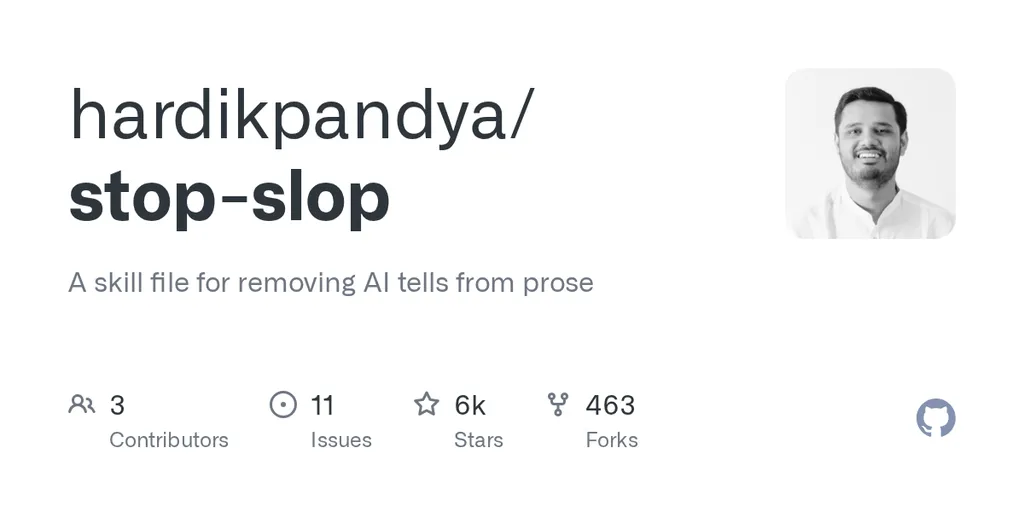
To solve these concerns, developer Hardik Pandya has released a powerful weapon: the open-source project stop-slop.
Beyond simply asking "Write well for me," this project is a "Skill" file designed to systematically identify and remove the bad habits inherent in AI. By injecting these rules into modern AI models like Claude, the AI can finally break out of its "mechanical mold."
The core strategies applied by stop-slop to improve writing quality are as follows:
1. Removing Unnecessary 'Fillers'
The first task is deleting "filler" phrases that weigh down the text. It filters out adverbs forced in for emphasis or business jargon used habitually regardless of context. It completely blocks clichés like "Here’s the thing" or "Let that sink in," which, once spotted, feel like they appear all over the internet.
2. Breaking Sentence Rhythm and Structure
To break the monotony unique to AI, it intentionally mixes sentence lengths. It creates rhythm by alternating short and long sentences and dismantles stylized frameworks that AI loves, such as "listing three things" or "asking a question and immediately answering it." In particular, it strictly regulates concluding sentences like "In summary..." that always appear at the end of paragraphs, as they can feel as if they are insulting the reader's intelligence.
3. Assigning Active Agency
Instead of passive expressions like "The problem will be solved," it mandates the use of the active voice with clear human subjects, such as "We must solve the problem." It prevents bizarre expressions where inanimate objects act as if they have will and aims for concrete descriptions that directly invite the reader into the scene of the writing.
Practical Application: How to Measure Your Writing's 'Human Index'
If this tool only said, "This is a bad sentence," it would be only half-effective. The true power of stop-slop lies in its scoring system, which allows users to quantify and review the quality of their writing.
To check if a piece of writing is truly "human," assign a score from 1 to 10 across the following five dimensions:
- Directness: Does it get straight to the point?
- Rhythm: Is the flow of sentences natural and varied?
- Trust: Does it tell the truth without exaggeration or euphemisms?
- Authenticity: Does it contain a unique voice without mechanical clichés?
- Density: Is it packed with information without unnecessary modifiers?
There is an important guideline here: If the total score of the five items is less than 35 out of 50, the text must be rewritten. This serves as a strong standard: instead of blindly copying and pasting AI-generated results, they must be transformed into a "final version" through human editing.
If you are using Claude, you simply need to upload this stop-slop.md file to your Project Knowledge or add it to your system prompt. It works like hiring a highly competent editor.
Closing: 'Human-Centric' Writing Walking Alongside AI
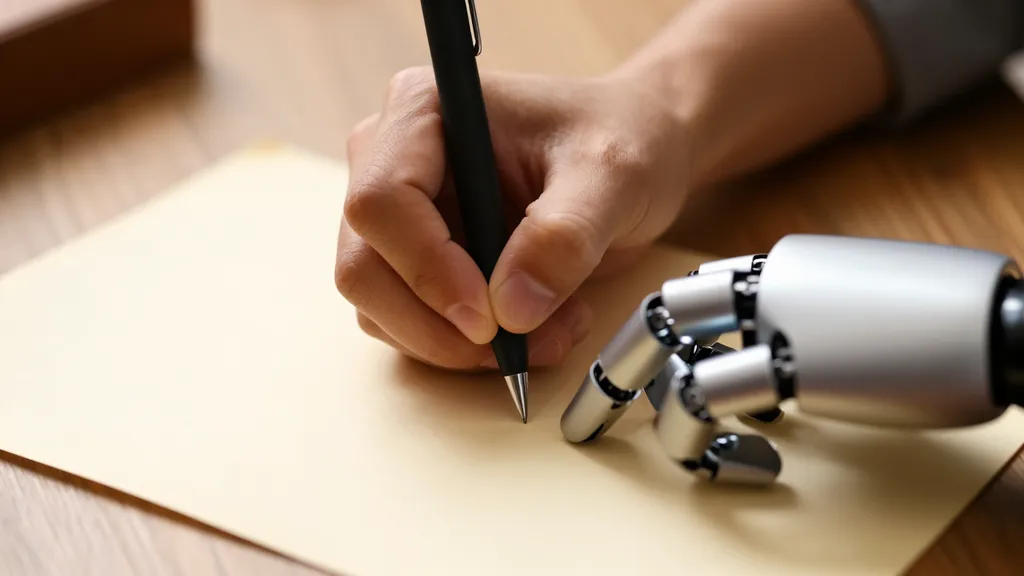
Ultimately, technological advancement poses a question to us. In an age where AI writes faster than humans, what is the role of the human?
The emergence of tools like stop-slop is not a result of trying to use AI to replace humans, but rather a contemplation of how to use AI more "humanely" to convey our messages clearly. Moving beyond the stage of simply generating text, the process of "refining" and "humanizing" generated results will become a core competency in future content creation.
If you want to take the efficiency of AI while discarding its characteristic stiffness and boredom, try integrating this "skill" into your workflow now. The moment you translate the language of machines into the language of humans, your content will finally be able to settle in the hearts of your readers.
When you read AI-written text, what part do you feel the most resistance to? Or, do you have your own "AI smell removal method"? Please share your thoughts in the comments!
References
- SKILL.md - hardikpandya/stop-slop - GitHub · github.com
- New Claude Skill: Stop AI Slop in Your Content - Hardik Pandya · hardik.substack.com
- Stop Slop - Skills - Claude Code Marketplaces · claudemarketplaces.com
- Claude 코드의 5단계 (그리고 각 단계에서 한계에 도달했는지 아는 방법) · reddit.com