When the red notification numbers pile up on your smartphone, is your heart truly at peace?
We are clearly more connected than ever, so why do we feel a deeper sense of isolation and fatigue than at any other time? As of 2026, the landscape of South Korea's MZ generation is unusual. Instead of flashy Instagram feeds or endless short-form videos, they are ironically heading toward quiet bookstores and static nature.
Beyond a simple trend, the Digital Detox craze has become a survival strategy. Today, we aim to look deeply into the underlying reasons why we are disconnecting ourselves and stepping back out into the "real world."
Constant Stimulation: Our Brains are Already in a State of 'Burnout'
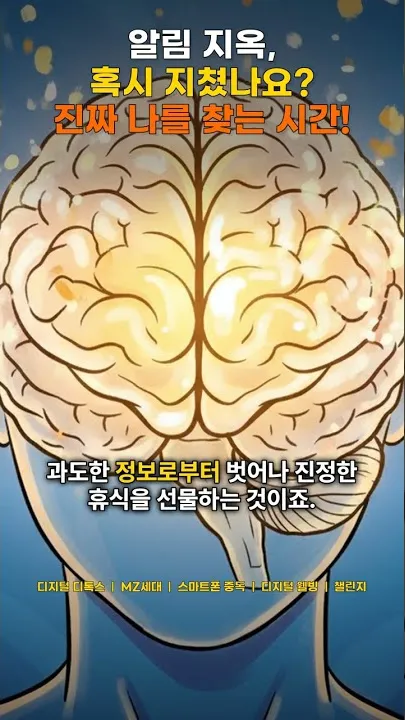
Do you feel an inexplicable sense of anxiety the moment your smartphone leaves your hand? FOMO (Fear of Missing Out)—the anxiety of "Am I missing something important?"—has now become an everyday emotion for the MZ generation.
In 2026, we live in the most densely connected era in human history. It is a hyper-connected society where 6.9 billion smartphone users worldwide exchange data in real-time. However, while the volume of connection has increased, the quality of relationships has instead hit rock bottom. Algorithms trap us in "information bubbles" by showing us only what we are likely to enjoy, and the glamorous displays of social media force us to constantly compare ourselves with others, eroding our self-esteem.
Experts call this "cognitive overload." The incessant notifications fragment our attention and drive our brains into a state of constant arousal. Ultimately, we have ceased to be the masters of our digital devices and have become digital slaves who must react constantly. As of May 2026, the extreme digital fatigue felt by many has exploded at this very point.
Active Disconnection: Not Just Turning Off, but a Process of Turning 'Myself' On
If the digital detox of the past was a form of "asceticism"—simply staying away from smartphones—the 2026 approach is much smarter and more active. Rather than simply enduring, the MZ generation utilizes technology as a tool to manage their mental health.
Look at AI-based screen time management apps like 'Focus Plan' or 'Root' that have recently gained great popularity. These apps go beyond merely limiting usage time; they analyze individual patterns to design an environment that enhances concentration. The trend of using "lock boxes" to physically lock away smartphones follows the same logic. This is not an act of avoidance, but an act of reclaiming agency—the feeling that I am in control of myself.
In fact, those participating in digital detox challenges experience remarkable changes:
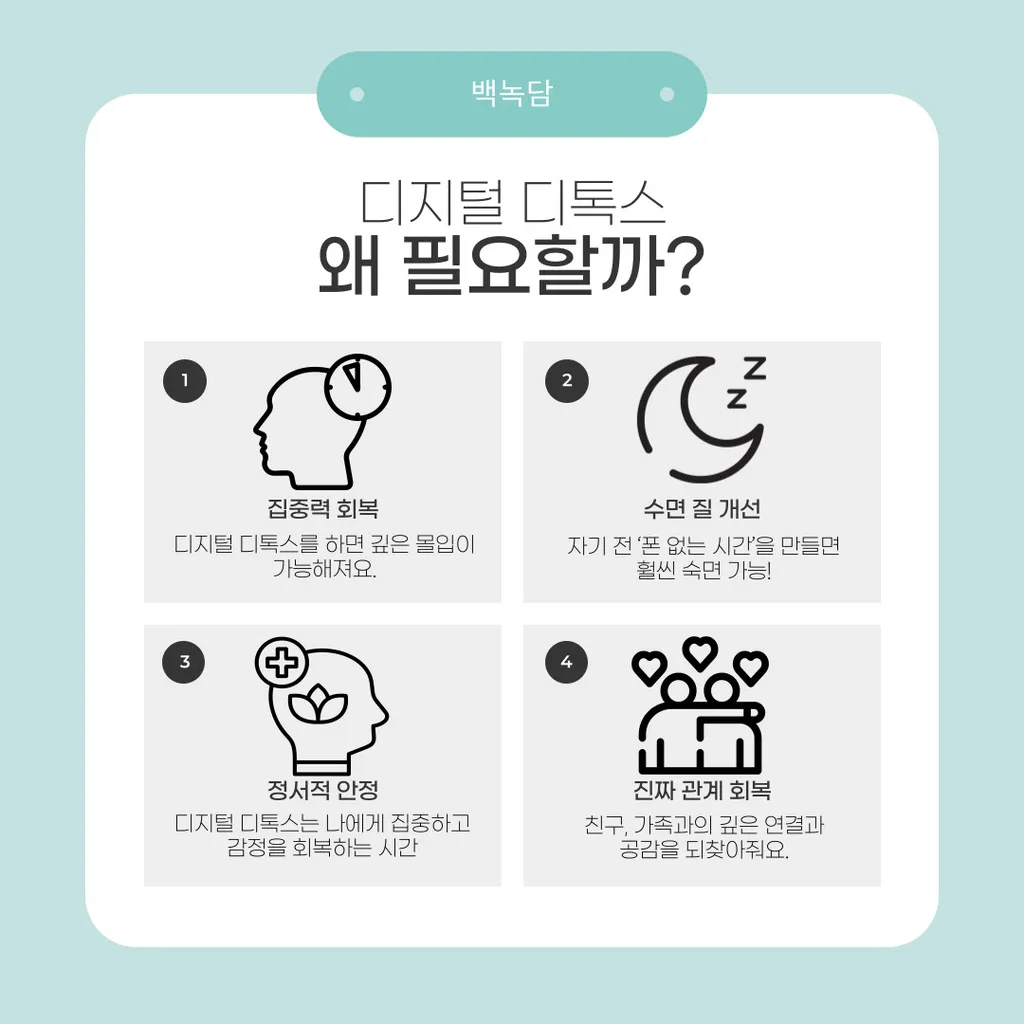
- Recovery of Concentration: By blocking unnecessary notifications, time available for deep work or reading increases.
- Stress Reduction: By stepping away from the gaze of others and listening to one's inner voice, psychological stability is found.
- Maximization of Creativity: New ideas and inspiration fill the empty spaces created by escaping the flood of information.
It is not simply turning off a screen. It is a philosophical journey of turning off notifications to turn myself on—reclaiming a lost identity by blocking out external noise.
Why the 'Bookstore' Again: The Choice of the MZ Generation Craving Slow Relationships

An interesting fact is that the destination of the digital detox is not online, but rather "bookstores," very old offline spaces. Why are these digital natives flocking to bookstores in search of the texture of paper books?
Bookstores serve as a rare "psychological safe zone" in modern society. On social media, one must constantly prove and be evaluated for what they do and what they think. But in a bookstore, there is no need for that. Which bookshelf you linger near and which book you pick up reveals your inner self most honestly and quietly.
Furthermore, bookstores restore the "chance encounters" that algorithms have erased. While Instagram's recommendation algorithms select only what you are likely to like, a book discovered by chance while strolling through bookstore aisles can provide a shock that expands your world.
This is also why bookstores are evolving beyond simple retail spaces into complex cultural spaces that integrate book cafes, reading clubs, and cultural lectures. Instead of volatile "likes," the MZ generation is now craving the depth of "slow relationships" shared in physical spaces with people of similar tastes. This can be seen as a very clever social experiment to preserve humanity amidst the acceleration of technological civilization.
How to Gift a 'Comma' to Your Daily Life
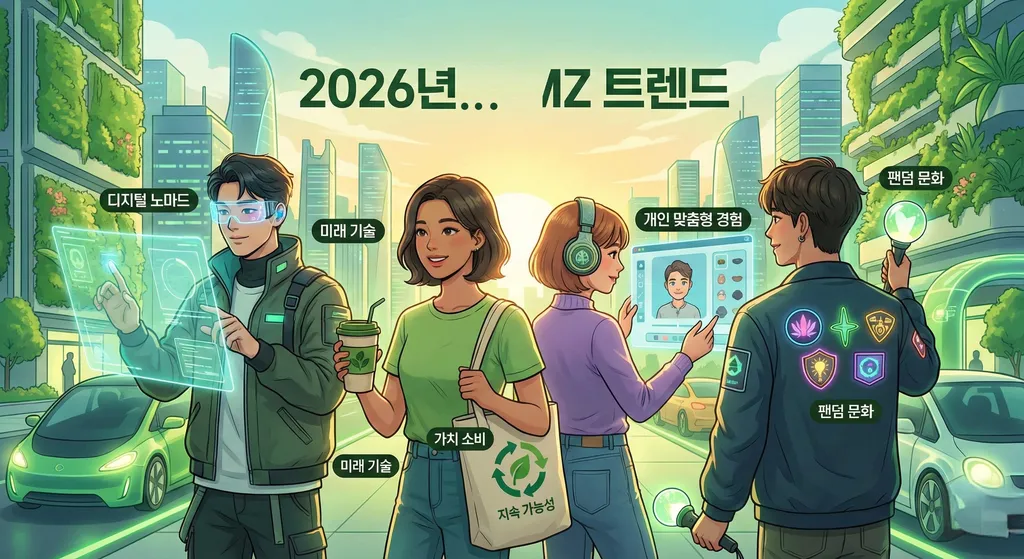
Digital detox does not require grand resolutions. Small changes that can be implemented right now accumulate to create a significant improvement in quality of life. Trendsetters of 2026 are already practicing the following routines:
- Notification Diet: Boldly turn off all SNS and app notifications except for essential contacts.
- Bedroom Clean Zone: Instead of holding a smartphone before sleep, place a book by your bed.
- Secure Blackout Time: Even for just a few hours during the weekend, head into nature without a smartphone or immerse yourself in a favorite hobby.
- Utilization of Tools: When concentration is needed, actively use the aforementioned screen time management apps or meditation apps to aid in "smart disconnection."
Of course, completely cutting off digital devices is impossible and practically very difficult. We are, after all, beings who must continue to live within a digital world. What matters is not 'disconnection' itself, but developing the ability to maintain a "healthy distance" between digital devices and yourself.
Ultimately, digital detox is not a movement to reject technology. It is a subjective attitude toward life—to not let technology dominate our lives, but to tame technology back into being our tool.
If the noise of the digital world has become too loud and you can no longer hear your own voice, try turning off the screen and closing your eyes for a moment. In that silence, you might finally be able to meet the real you.
How free from your smartphone were you today? If you have your own digital detox methods, please share them in the comments!
References
- 2026 MZ세대 필수! 과부하된 뇌를 위한 '디지털 디톡스 챌린지' · youtube.com
- 2026 MZ세대, 스마트폰 끊고 '이 앱' 썼더니 인생 역전? 디지털 디톡스 ... · youtube.com
- 2026 MZ세대가 스마트폰 버린 이유?! 디지털 디톡스 챌린지! - YouTube · youtube.com
- 디지털 디톡스 챌린지 : 잃어버린 '나' 되찾기?! (ft. 2026 트렌드) · youtube.com
- 2026년 MZ세대가 열광할 트렌드: 당신은 이미 알고 있나요? · sinkkiman.tistory.com
- 알림을 끄고 나를 켜다: 디지털 디톡스의 필요성 - 소비라이프Q - DBpia · dbpia.co.kr
- MZ세대는 왜 서점으로 모일까 - 미래한국 · futurekorea.co.kr
- 선규 - 왜 MZ세대는 서점이라는 '오래된 광장'으로 모이는가, 초연결 ... · facebook.com