To put it bluntly, OpenAI and Anthropic have moved beyond the stage of being merely 'novel technologies' and have fully entered the realm of 'Product-Market Fit (PMF),' where corporations and individuals must use them even if they have to pay for it.
Recently, the industry has heard news that Anthropic is approaching its first profitable quarter, alongside stories of companies facing 'billing bombs' due to the surge in AI usage. Paradoxically, this means their models are no longer just tools for fun, but have established themselves as core infrastructure for business processes.
💸 "Token costs are higher than the subscription fee" : The emergence of profitable AI
The atmosphere in the AI market recently is completely different from two years ago. While people previously wondered, "Is this technology actually useful?", the hot topic in 2026 has shifted to "Should we keep using this even while bearing these costs?"
The situation becomes very clear when looking at a case study of a developer. While paying a monthly subscription of about 1,200 based on Anthropic's Claude Code and nearly $980 based on OpenAI's Codex.
What does this mean? It means users are extracting far more value (or usage) than the subscription fee they pay. In other words, this phenomenon occurs because AI has moved beyond a simple assistant to become the 'engine of work.'
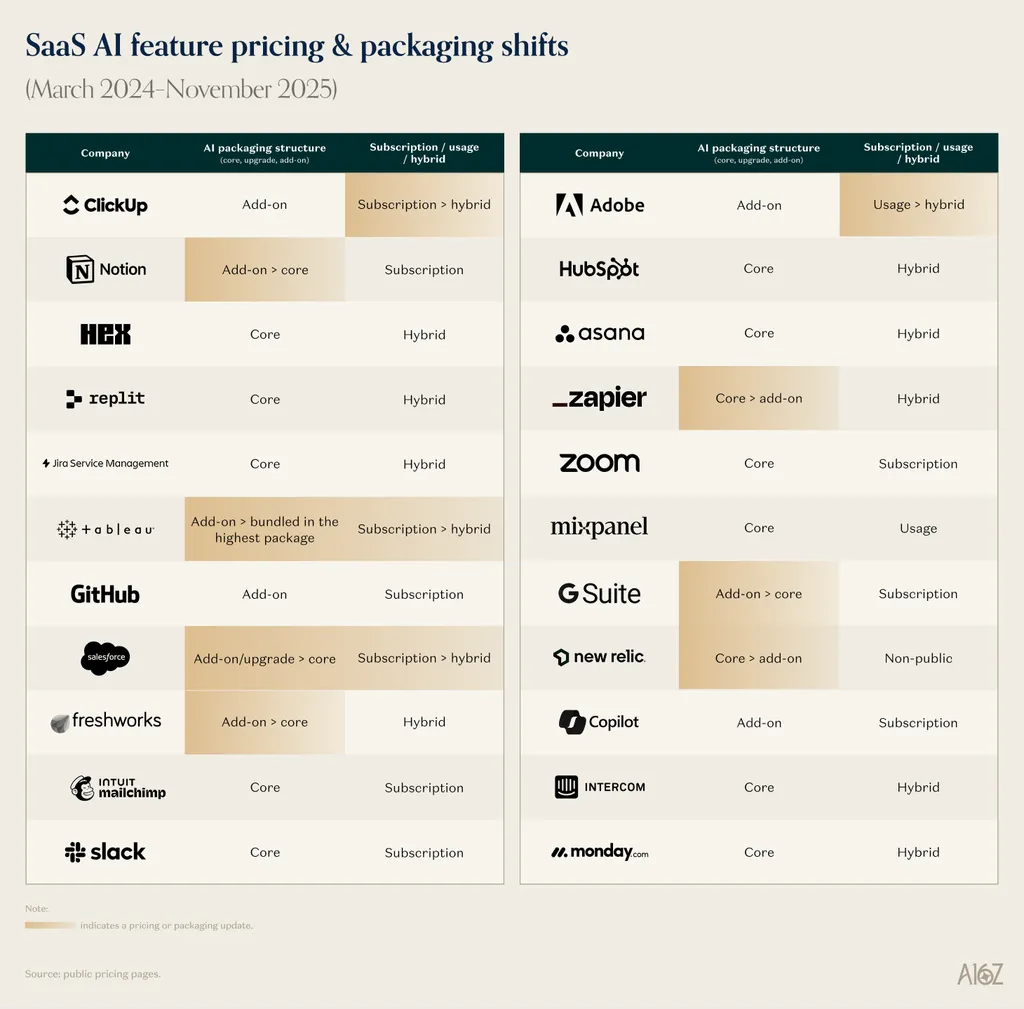
Thanks to this powerful demand, both companies are aggressively revising their pricing policies. While they previously offered massive discounts to increase market share, they are now aiming for practical monetization by transitioning enterprise plans to usage-based API billing. This is a strong signal that they have moved beyond technical superiority to complete a structure capable of making money in the market.
🤖 Coding Agents: The 'Game Changer' that determined AI's PMF

So, what led them to such a powerful economic model? The answer lies in Coding Agents.
While ChatGPT gained massive popularity and amassed over 900 million active users, critics pointed out that the proportion of paid subscribers was too low to cover infrastructure maintenance costs. However, as technology progressed, the emergence of 'agent-class' models changed the story.
For skilled developers, AI coding agents have become a daily essential tool rather than an option. Beyond simply writing a line of code, agents analyze and execute problems themselves, consuming massive amounts of tokens.
- Anthropic's Strategy: They targeted the enterprise market by emphasizing safety and logical reasoning capabilities. In fact, Anthropic has shown its strength by capturing a 42% share of the code generation market, outpacing OpenAI (21%).
- OpenAI's Strategy: They are focusing on maximizing revenue through latest models like GPT-5.5 while maintaining their user base through their overwhelming ecosystem and versatility.
Ultimately, as AI moved beyond improving human work by 20–40% to proving actual productivity innovation in specific professional domains (coding, data analysis, etc.), companies began to willingly open their wallets.
⚖️ Monopoly or Necessity? The debate surrounding price hikes
Of course, not all perspectives are positive. There is significant criticism regarding recent rapid changes in pricing policy, with some questioning, "Are they using their technical monopoly to pressure users?"
Analysts suggest that much like how Uber increased fares after securing market dominance, OpenAI and Anthropic are undergoing a process of testing market limits to find an 'appropriate profit margin.'
This brings us to an important question:
"Are users buying this product because they 'need' it, or are they forced to buy it because there is 'no alternative'?"
If the user churn rate (Loss Rate) remains low after a price hike, it will serve as evidence that true PMF has been achieved. On the other hand, if users turn to other open-source models or low-cost models due to high prices, the current revenue model might be nothing more than a temporary monopoly profit.
Particularly in Anthropic's case, the fact that a significant portion of its revenue is concentrated in a few large customers (such as Cursor, GitHub Copilot, etc.) also represents a risk indicating future instability in its revenue structure.
🇰🇷 Changes in the Korean Market: AI is no longer a 'Spec' but 'Survival'

An interesting point is that this global trend is also appearing very dynamically in the Korean market.
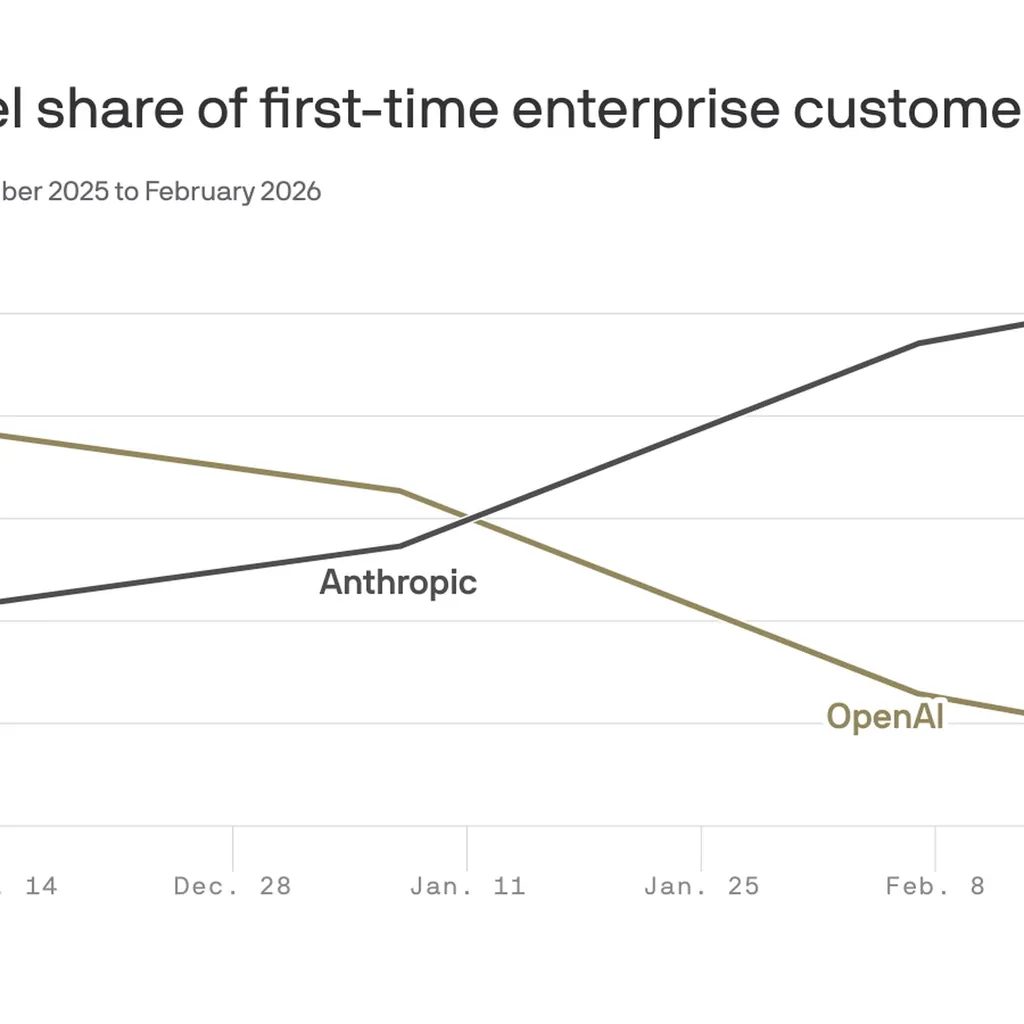
As of 2026, the generative AI market in Korea is showing explosive growth and has become an essential life tool for professionals. Notably, news has emerged that Anthropic's Claude has begun to overtake ChatGPT's market share in Korea.
Korean professionals in their 20s and 30s are actively integrating AI into all aspects of work, including document writing, data analysis, and coding. Now, AI literacy (the ability to utilize AI) has moved beyond simple 'self-development' to become a core career indicator that determines hiring and promotions.
The fact that AI subscription spending by Korean workers is hitting record highs suggests that AI has been incorporated as a key infrastructure that raises the productivity index of our society.
🚀 Summary and Future Outlook

To summarize today's findings in three lines:
- OpenAI and Anthropic have achieved practical PMF through high-value services like coding agents.
- Companies now perceive AI not as a simple experimental tool, but as essential infrastructure that must be used even at a high cost.
- The future battleground of the AI industry depends on 'sustainable revenue models' and 'practical proof of productivity' rather than just model performance.
The AI industry has shifted from a battle of 'who can make a smarter model' to a battle of 'who can build a more economical and reliable work environment.'
What do you think? Do you feel that the AI services you are currently using are truly increasing your work efficiency 'several times over,' or are they merely convenient tools?
Please share your thoughts in the comments!
References
- I think Anthropic and OpenAI have found product-market fit · simonwillison.net
- I think Anthropic and OpenAI have found product-market fit · news.ycombinator.com
- 최근 Menlo Ventures 자료를 보면, 2년 전 50%에 육박하던 ... · facebook.com
- Anthropic revenue tied to two customers as AI pricing war ... · venturebeat.com
- Anthropic's Claude overtakes ChatGPT in South Korea's ... · kedglobal.com