Have you ever asked an AI to "make me a cool website"? The result was probably a boring, predictable layout filled with purple gradients that looked like something you've seen somewhere before.
To get straight to the point, a game-changer called 'Taste-Skill' has emerged, elevating AI's design sense to the level of a human designer.
This framework rejects the uniform and cheap-looking designs generated by AI, known as 'Slop'. Instead, it is an innovative tool that injects 'Taste' into AI by precisely controlling design variance, motion, and density.
The Chronic Illness of AI Design: Why does 'Slop' occur?
We are currently experiencing a decline in the quality of content being poured out by AI. While technically functional, interfaces are overflowing with visual unappeal. Developers often refer to this as 'Slop'—low-quality digital garbage.
Why is this happening? Existing LLMs (Large Language Models) are trained on massive amounts of data to produce the most 'average' results. When given a command like "make a website," the model pulls the most probable—meaning the most common and boring—templates.
In this process, the core elements of design—subtle typography adjustments, spacing, and lively motion—are all ignored. Consequently, while the functions work, the resulting product lacks the 'emotion' required to move a user's heart. As of 2026, the paradigm of AI coding is rapidly shifting from "does the code run?" to "how beautiful is it?"
Taste-Skill: How to teach AI the 'Texture' of design
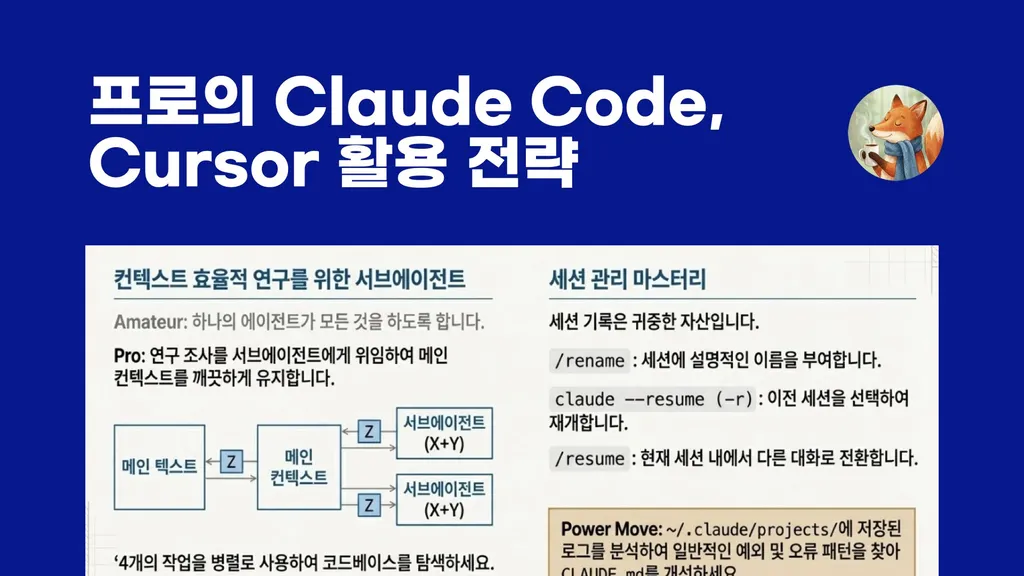
Taste-Skill shines exactly at this point. This project is not merely a tool for writing code, but an 'Anti-slop' frontend framework that helps AI agents understand the grammar of design.
The most amazing aspect of this system is that it provides AI with 'Three Dials' to decide design details. Much like adjusting an audio equalizer, developers can instruct the AI to make fine adjustments such as:
- DESIGN_VARIANCE: Adjusts the originality of the layout from 1 (perfect symmetry) to 10 (artistic chaos).
- MOTION_INTENSITY: Controls the liveliness of the interface from 1 (static) to 10 (cinematic physical effects).
- VISUAL_DENSITY: Sets the density of information placement from 1 (gallery-like openness) to 10 (information-packed cockpit).
Through these dials, we can completely redefine the character of the AI's output, ranging from a 'minimalist Notion style' to an 'intense Brutalist style.' Now, AI will no longer overindulge in predictable purple gradients but will instead speak the design language we desire.
Beyond simple code generation: An image-based workflow
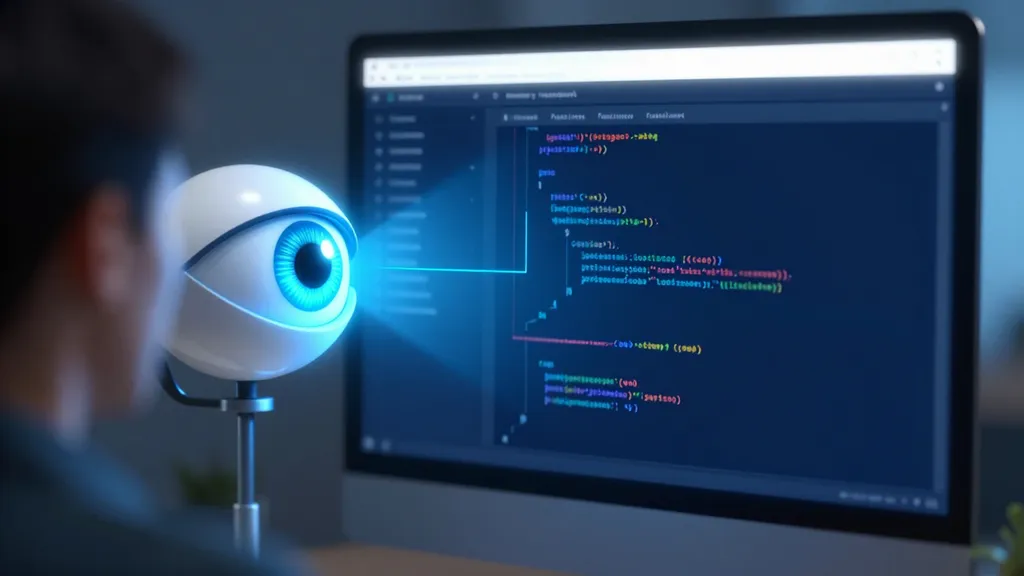
Taste-Skill does not operate solely through text commands. This framework supports an image-to-code-skill pipeline, physically expanding the boundaries of design.
The workflow is highly intuitive and powerful. First, a user generates or retrieves a reference image of a website with the desired atmosphere. Next, Taste-Skill analyzes this image to infer the design language.
The AI identifies questions like "What color palette does this image use?", "How wide is the spacing?", and "What is the vibe of the font?", and then implements these into actual code. This is remarkably similar to the process of a skilled designer coding a perfect website after looking at a sketch.
In particular, by using specialized skills like gpt-taste, one can force the code generated by GPT or Codex to follow stricter design rules. This demonstrates that AI agents are evolving into 'intelligent designers' that can follow design guidelines autonomously.
Practical Application: How to apply it to your project?
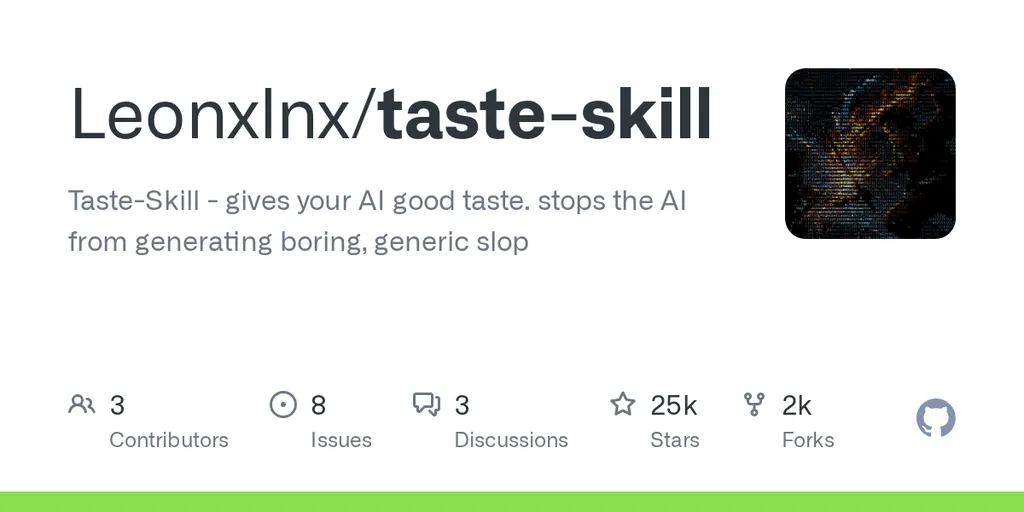
Using this powerful tool is surprisingly simple. Developers can install it immediately through the familiar CLI (Command Line Interface).
The most basic installation command is:
npx skills add https://github.com/Leonxlnx/taste-skill
If you want a specific style, you can select a desired persona using the --skill flag. For example, install soft-skill for a luxurious feel, or minimalist-skill for extreme minimalism.
Pro Tip: Before blindly asking for code, always go through the 'Brief Inference' stage. Taste-Skill is designed to first analyze the page type, mood keywords, and brand assets to understand the user's intent before coding.
Provide a clear Design Read to the AI, such as: "This is a B2B SaaS landing page for technical buyers, using a minimal language in the style of Linear." This single sentence makes the decisive difference in the quality of the final result.
Evolution driven by community: The power of Open Source

Why has Taste-Skill been able to grow so rapidly? It is thanks to the active open-source ecosystem led by an exceptional builder named Leonxlnx (Leon Lin).
As of May 2026, this project has recorded over 25,000 stars on GitHub and is attracting intense interest from developers worldwide. The community goes beyond simply fixing bugs; they are designing the future of the project together.
- Svelte 5 Porting Requests: There are movements to maximize performance through transition to the latest frameworks.
- Global Localization: Active discussions are happening to accommodate design patterns unique to Chinese-speaking AI.
- Enhancing Accessibility: Proposals continue to emerge to add accessibility skills so that all users can enjoy beautiful UIs.
This means Taste-Skill is growing beyond a simple personal project into a platform that is establishing the design standards of the AI era.
Closing: AI will now begin to resemble your 'Taste'
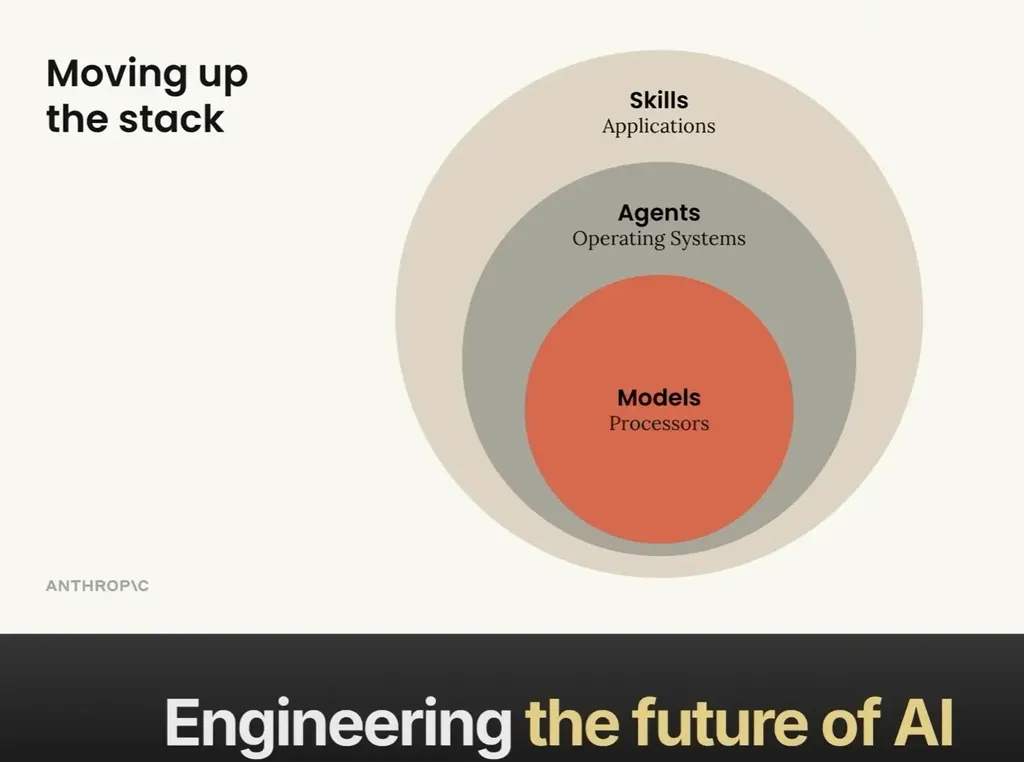
AI is no longer a machine that only performs 'functional implementation.' Through tools like Taste-Skill, AI is learning our aesthetic sense and evolving into a digital partner that reflects our taste.
Break free from boring and predictable 'slop' designs and inject your own unique design philosophy into the AI. When the code generated by AI meets your sensibility, a true 'work of art' will finally be born.
Which part of AI-generated design has disappointed you the most? Or what 'taste' would you want to teach the AI first? Please share your thoughts in the comments!
References
- Taste-Skill - gives your AI good taste ... · github.com
- Taste Skill | The Anti-Slop Frontend Framework for AI Agents · tasteskill.dev
- leonxlnx/taste-skill - Claude Code Marketplaces · claudemarketplaces.com
- Frontend Solved with images-taste skill? : r/codex · reddit.com
- Leon Lin Leonxlnx · github.com
- Leonxlnx/taste-skill · github.com
- Issues · Leonxlnx/taste-skill · github.com