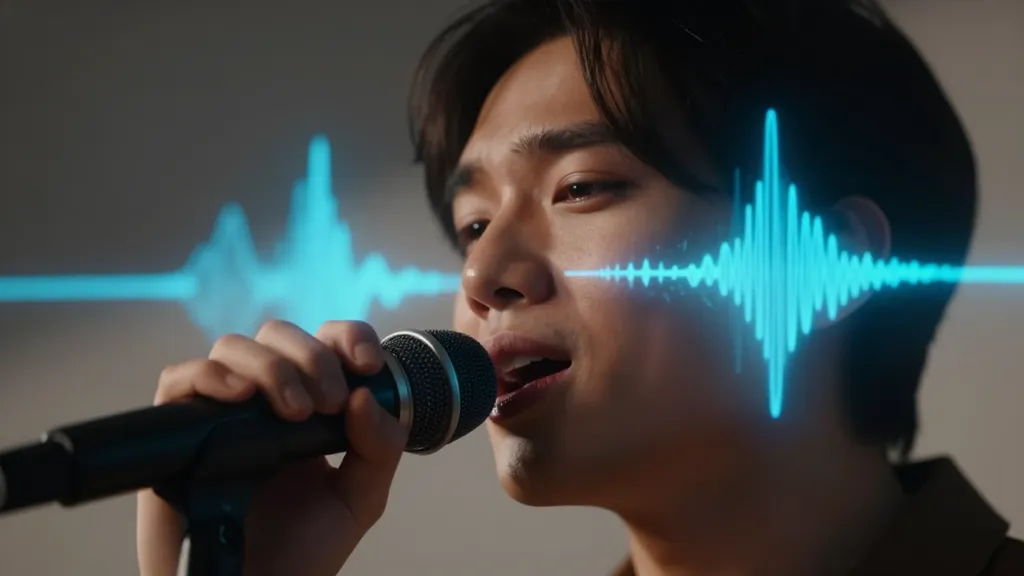
"The song I just heard—was it sung by a human, or created by an AI?"
As of 2026, this is a question that any music-loving listener has likely asked themselves at least once. AI has moved beyond simply keeping time and hitting notes; it has reached a stage where it can exquisitely replicate the human voice, even mimicking its characteristic tremors.
However, as technology becomes more perfect, we are paradoxically driven to ask: What moves our hearts more—the smoothness of an AI vocal with perfect pitch, or the raw breath of a human vocal that sometimes misses a note? In today's post, we will examine the current state of the AI vocal era and compare the three musical paths we face.
2026: The Paradox of the 'Perfect Fake' Created by Technology
The current music market is truly an "era driven by AI." In 2026, AI has evolved beyond a simple auxiliary tool to become a partner in decision-making and, at times, a primary agent of creation. In fact, according to a recent survey by a global streaming platform, most consumers find it extremely difficult to distinguish between AI-generated music and human music by ear alone. It seems the sophistication of the technology has outpaced human discernment.
However, the reaction from communities is somewhat different. Recently, interesting complaints have been surfacing in the Reddit AI music community (r/SunoAI). The question is: "Why does every AI vocal sound like the same person?"
This is precisely the core limitation currently facing AI technology. While AI has succeeded in maximizing the accuracy of pitch and rhythm, it still struggles to capture the "aesthetic of imperfection" unique to human vocals. This is because elements such as subtle breaths in the middle of a song, tonal shifts triggered by emotion, and impromptu ad-libs are very difficult to quantify as data. Because algorithms pursue "perfection" too aggressively, a paradox occurs where all voices converge into a flat, overly smooth sound.
Ultimately, we stand at a crossroads between a "perfectly calculated answer" and an "imperfect but vibrantly emotional feeling."
Three Options: Paths to Determine the Future of AI Vocals
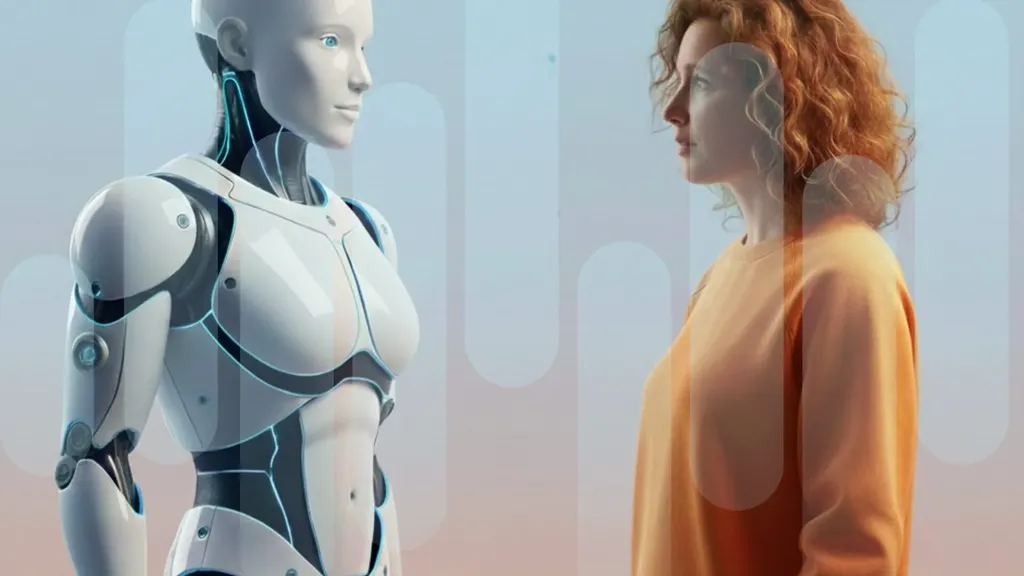
As AI vocal technology advances, the music industry is moving forward by choosing one of three major directions or by blending them. Let's look at the characteristics, pros, and cons of each option.
1. Ultra-Precision AI Vocals: The Pinnacle of Perfection
This path aims for AI to perfectly learn the human voice through data to produce a sound that is more human than human (or more perfect than human).
- Pros: Productivity is overwhelming. It can instantly generate any desired genre or vocal tone, overwhelming existing artists in terms of cost and time. It is already exerting powerful influence, particularly in the Lo-fi hip-hop and background music (BGM) markets.
- Cons: There is a high risk of "loss of individuality." As mentioned earlier, if all models only learn optimized data, a "homogenization of timbre" occurs where all voices sound similar due to standardized quality. This makes listeners doubt its "authenticity."
2. Human-Centered Hybrid: Creativity Using Technology as a Tool
A trend prominently seen in the recent K-content industry, this method utilizes AI not as a replacement for humans, but as a partner for "Vibe Producing."
- Pros: Creators can delegate repetitive and technical tasks (mixing, generating basic choruses, etc.) to AI, allowing them to focus more on their inherent roles of "storytelling" and "emotional expression." The combination of unique human sensibility and AI efficiency creates new hybrid genres.
- Cons: The gap in the quality of the output can be large depending on the level of technical proficiency. A "technology dependency" phenomenon may occur, where technology hinders rather than assists creative intuition.
3. Pure Human Vocals: The Value of Imperfection
In the face of the AI onslaught, this traditional approach emphasizes "what only humans can do," prioritizing vocal texture and emotional depth.
- Pros: It possesses irreplaceable "authenticity." Human singing contains subtle tremors mixed with life experiences, sadness, and joy. This "imperfect beauty" is a realm that is difficult for AI to mimic no matter how much it refines its algorithms, and it serves as the core driver for forming fandoms.
- Cons: Economic and operational efficiency is low. It requires massive physical time and cost for studio rentals, artist recruitment, and repetitive practice.
Conclusion: Ultimately, Music Belongs to the "Feeler"
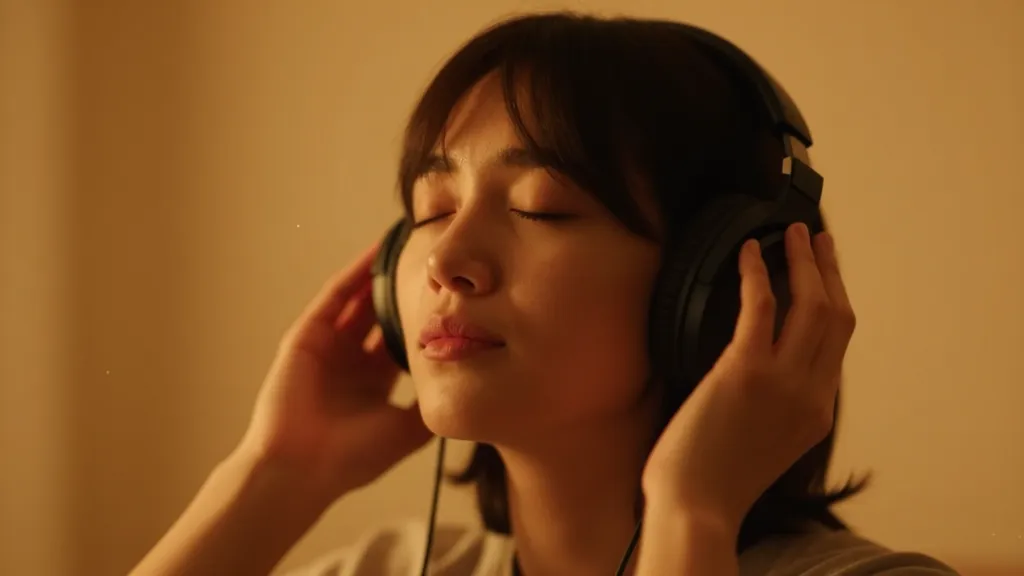
So, which future should we choose? I believe the second path, the "Hybrid Model," will create the most realistic and enriched future.
The horizons of music expand when AI functions not as a mere replacement for humans, but as an "intelligent instrument" that assists human emotional expression. For example, if AI provides a sophisticated background arrangement, the human vocal can complete it by layering their one-of-a-kind breath on top. When a division of labor is achieved—where technology handles "accuracy" and humans handle "meaning"—we can finally enjoy both the convenience of technology and the moving power of art.
Of course, there are many tasks to be solved in this process. Copyright infringement issues caused by AI cover songs, ethical issues regarding the unauthorized replication of specific artists' voices, and the urgent need for social consensus on how to legally protect "voice rights" are paramount. No matter how much technology advances, if the rules governing that technology (Social Contract) are not designed to respect human value, the future of music may end up as a hollow repetition of algorithms.
Ultimately, the essence of music lies not in the algorithm, but in the "person" who listens to that music and sheds tears. This is because no matter how sad a chord an AI finds, it is our hearts—listening to that song and projecting our own lives onto it—that complete that sadness.
What are your thoughts? Between a perfectly smooth AI song and a human song that is a bit clumsy but feels sincere, which one fills your playlist?
Let us know your musical preferences in the comments!
References
- AI가 달리는 시대, 인간의 선택은?... 2026 트렌드 톺아보기 | SBS Korean · youtube.com
- 왜 모든 AI 보컬리스트는 똑같은 사람처럼 들리는 걸까? : r/SunoAI · reddit.com
- AI가 만든 음악도 감정이 있을까? — 인간의 마음을 닮은 알고리즘의 ... · patchpink0000.tistory.com
- 'AI 음악' vs '인간 음악', 몇 명이나 구별할까 - 지디넷코리아 · zdnet.co.kr
- AI 커버곡과 목소리에 대한 보호 - 한국학술지인용색인 · kci.go.kr
- K-콘텐츠, 문화와 기술의 융합이 여는 미래 · webzinekoita.or.kr