"Is this review actually written by a human?"
This is the first question we ask ourselves when looking at star ratings on shopping malls or recommended videos on YouTube. In 2026, we live in an era overflowing with more information than ever before, yet paradoxically, we suffer from immense mental fatigue as we struggle to doubt the "authenticity" of that information.
Sophisticated fake reviews, "hidden ads" that feel as natural as if written by AI, and even graphs that distort the data itself. The digital world is transforming into something akin to a massive illusion film. However, it is too early to despair. As fakes become more sophisticated, AI technology designed to catch them is also evolving at a speed beyond imagination.
In this article, we will take a deep dive into how AI is currently, in 2026, holding back the waves of fake reviews and manipulated information, and how our "digital sovereignty" is being restored in the process.
The Evolution of Fakes: How AI Deceives Our Eyes
Only a few years ago, fake reviews were easy to spot. They had awkward writing styles or repetitive content. But now, things are different. Due to the advancement of generative AI, AI can perfectly mimic emotional tones and contexts, as if a real user were chatting right next to you.
Recently, even more cunning methods have emerged, such as "empty box marketing," where fake purchase reviews are written without even possessing the product. This practice, where companies hire part-timers to create a flow of fake data, has moved beyond consumer deception to become a serious crime subject to legal punishment.
The problem isn't just text. Distorted graphs or infographics created by subtly twisting statistical data induce us to make incorrect judgments. We are essentially fighting a "sophisticated illusion" created by technology every single day.
The Emergence of the Shield: The AI "Eyes" That Catch Fakes

But as the spear becomes sharper, the shield also becomes thicker. AI technology in 2026 has moved beyond simply checking words.
The first weapon is user behavior pattern analysis. No matter how perfect the content of a review is, AI does not lower its guard. It analyzes subtle patterns that humans perform unconsciously, such as the frequency with which a specific account posts reviews, the way they upload photos, and the speed at which they click "like." Major platforms like Baedal Minjok are already using real-time monitoring systems to cross-reference order records with app usage status to filter out suspicious accounts in real time.
The second weapon is deep analysis of context and emotion. The latest NLP (Natural Language Processing) models that analyze YouTube hotel reviews or e-commerce product reviews evaluate the "authenticity" of the text. A review isn't good just because it contains many positive words. AI reads the context of the sentences to distinguish whether it is an artificially manufactured extreme praise or a natural opinion stemming from a real experience.
The third weapon is data integrity verification. According to recently published research, technology that detects distorted graphs and automatically corrects them boasts an accuracy of up to 98%. This technology, which prevents the distortion of visual information, is becoming a powerful means of protecting media literacy.
Corporate Strategy: How Technology is Converted into Trust
Technological advancement is demanding new survival strategies from companies. Consumers no longer open their wallets based on how flashy a company's advertisements are, but rather on how transparently it operates.
1. Transparency is Satisfaction According to a global survey by COPC, consumers' satisfaction was actually 34 points higher when they were clearly aware that they were interacting with an AI. In other words, being honest by stating, "We are using AI," is the first step in building trust. The key is not to exaggerate the capabilities of the technology, but to provide clear guidance and a smooth escalation process to human agents.
2. The Value of Verified Experiences Services like 'V-Review' collect video reviews that can only be written by actual purchasers through AI chatbots. This method, which fundamentally blocks "hidden ads," provides truthful marketing material for companies and reliable information for consumers.
3. The Social Responsibility of Platforms Companies like Karrot or MarqVision use AI to filter prohibited items or catch counterfeit goods in the global market in real time. For them, AI is not just a tool for efficiency, but a guardian that protects the "trust" which is the foundation of their service.
Rights in a New Era: Digital Sovereignty and Literacy
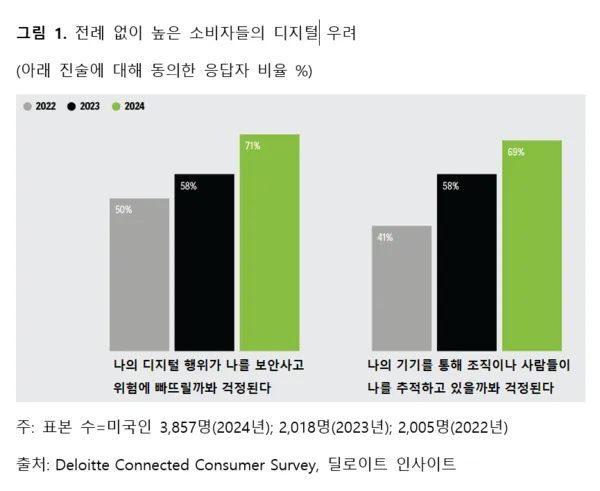
Ultimately, the key keyword of 2026 is "Digital Sovereignty." This means more than just not being fooled by fakes; it refers to the ability to think and choose independently, breaking free from the frameworks set by algorithms.
The initiative of trust is now shifting from corporations to consumers. Consumers are demanding mandatory "AI-generated" labels for content created by AI and are striving to verify information directly through blockchain-based source authentication technology.
We are no longer passive recipients of information. We are transforming into active agents who use the powerful tool of AI to filter out fakes and demand the truth. When technology tries to deceive humans, humans have built an "intelligent shield" by using that very technology to protect themselves.
Closing: Technology Must Ultimately Aim Toward Humanity

So far, we have looked at the AI-based review manipulation detection technology of 2026 and the resulting changes in trust. To summarize:
- Evolution of Fakes: Sophisticated review manipulation and data distortion using generative AI have intensified.
- Technological Response: Behavior pattern analysis, NLP-based context comprehension, and data correction technologies are catching fakes in real time.
- Redefining Trust: A new digital ecosystem is being formed through the combination of corporate transparency and consumer digital sovereignty.
No matter how much technology advances, the purpose of using that technology must ultimately be to protect "the true voices of humans." More important than the speed at which AI finds fakes is the question of values: what do we want to protect through technology?
Have you had any recent experiences where you used the help of AI to verify the truth while encountering online shopping or information? Or do you still feel helpless in the face of the illusions created by technology?
We are curious about your thoughts. Please let us know in the comments!
References
- "AI가 그린 가짜에 속지 않을 권리", 2026년 ... · iconsumer.or.kr
- 고객 서비스에서 AI에 대한 소비자의 진짜 생각 · copc.com
- 유튜브 기반 사용자 콘텐츠에서의 리뷰 이상 탐지 · koreascience.kr
- Journal Archive · ki-it.com
- 별점 조작 AI가 찾아낸다 – 이커머스 부정 리뷰 계정 방지 기술 · alchera.ai
- '인공지능'으로 가짜 찾기 나선 IT스타트업 · platum.kr
- (광고)'가짜 리뷰' 중 '진짜 리뷰'만 노출하는 AI시대😲 · stibee.com