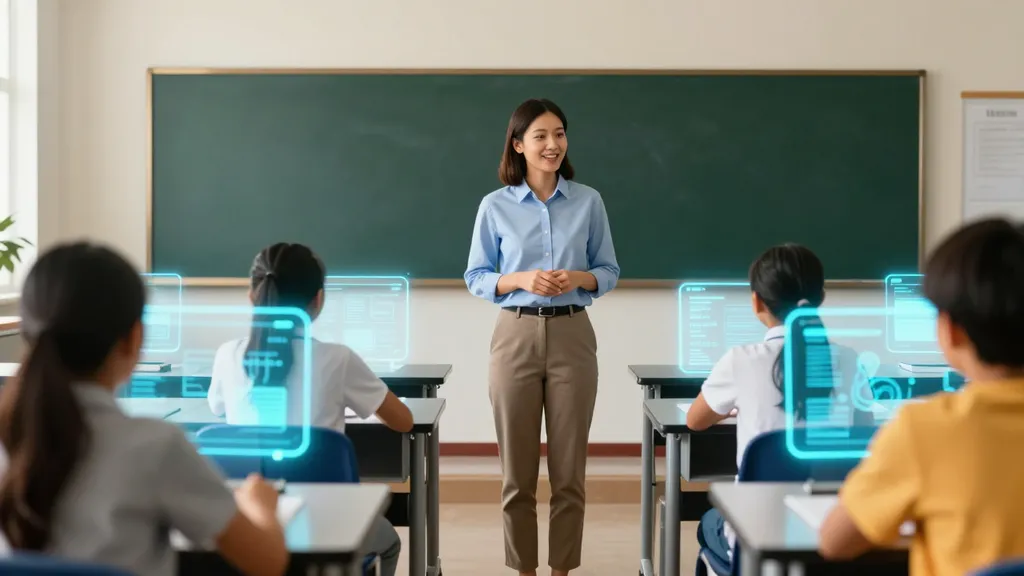
"Teacher, I think AI knows my grades better than I do now. Then, what will you be teaching in the future?"
This poignant question, recently heard in classrooms, is not merely a student's thoughtless joke. One year after the introduction of AI digital textbooks in 2025, we stand in the midst of a 'Digital Great Transformation' in 2026, where artificial intelligence performs a significant portion of the teacher's role in delivering knowledge.
Many are worried. They wonder why the profession of 'teacher' is still necessary in an era where AI tutors pinpoint a student's weaknesses, provide customized problems, and even design career paths. Today, I want to explore how the role of the teacher is being 'redefined' rather than 'replaced' amidst this flow of change, touching upon the essence of this transformation.
The Infiltration of Technology: The Crisis Faced by Teachers as Knowledge Providers
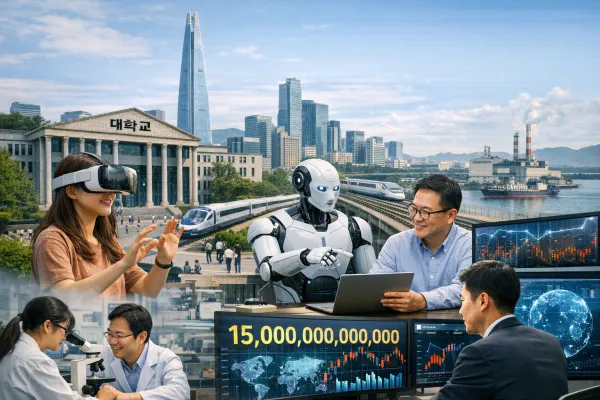
The vague anxiety we felt has become a tangible reality. As the High School Credit System is fully implemented and the college admissions structure becomes more complex, students face the task of finding their 'own customized path' beyond simply learning textbook knowledge.
In this process, AI has infiltrated at an astonishing speed. For example, AI platforms like 'MyFolio' analyze a student's student records and interests to recommend optimal research topics and reading lists. In effect, AI is democratizing the realm of college admissions consulting, which previously required high costs.
The problem arises here. Because teachers are spending too much energy analyzing student academic data, comparing requirements for various admission types, and handling numerous administrative tasks, the time for 'real education'—where they should be making eye contact with students and reading their hearts—is steadily decreasing. In the realms of knowledge delivery and data analysis, AI has already begun to outpace human speed.
Why AI Cannot Take 'Everything' from Teachers
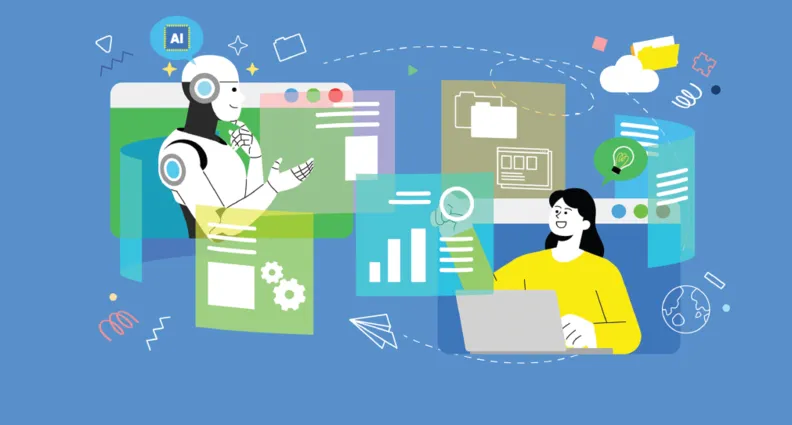
So, can AI completely take the teacher's place? To get straight to the conclusion: it is impossible. This is due to the technical limitations of AI and the essential nature of education.
First is the issue of data reliability and ethical responsibility. As of 2026, technical errors, such as AI grading systems assigning scores to blank answer sheets, have been reported. AI provides answers based on probability, but it does not take 'responsibility' for the results. This is precisely why human teachers are essential as 'final decision-makers' who review AI-generated outputs and make pedagogical judgments for final approval.
Furthermore, the sensitivity of personal information and data presents a significant barrier. A student's school records are highly sensitive information. No matter how smart an AI platform is, there are clear limits in terms of security and ethics when it comes to perfectly understanding a student's complex inner world, family environment, and social context to handle data.
The most decisive reason is 'emotional connection'. Education is not merely the process of stuffing information into a head. The warm comfort offered when a student feels frustrated, the intellectual joy felt during discussions, and the social values learned within a community are domains that cannot be converted into data. This is why the core keyword emphasized by the Ministry of Education and the Korea Education and Research Information Service (KERIS) in 2026 is 'High-Touch'.
Redefining Roles: From Administrative Experts to 'Learning Designers'
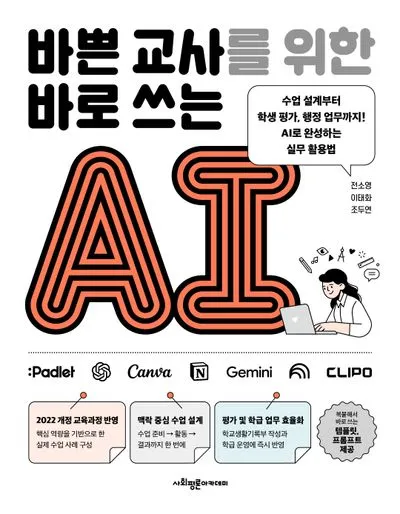
Now, we must redefine the role of the teacher. If technology has taken over knowledge delivery and repetitive administration, where should teachers spend the time they have secured? Future teachers will possess three major new identities.
First, they are Data-Driven Learning Designers. If past teachers were people who read textbooks aloud, they are now people who interpret the vast amounts of learning data provided by AI. Once AI analyzes each student's weaknesses, the teacher decides what kind of project-based classes to design or what discussion topics will aid student growth based on that data. In short, 'how to design the learning experience' becomes the core competency rather than 'what to teach.'
Second, they are High-Touch Mentors who support emotional growth. Thanks to AI reducing administrative workloads by more than 30%, teachers are able to communicate more deeply with students. 'In-depth counseling' to care for students' career concerns, peer relationship conflicts, and emotional anxieties will become a core task for teachers. If AI prepares basic counseling materials through 'Agentic AI' technology, teachers can focus on the human connection that touches the student's heart based on those materials.
Third, they are Validators who guide technology and ethics. The role of an 'ethical watchdog' becomes important—judging whether the career paths suggested by AI are biased toward certain backgrounds and whether the results graded by AI are fair. Rather than blindly trusting technology, the important duty of the future teacher will be to detect technical errors and ensure fairness.
Preparing for Change: The Power to Make Technology a Tool
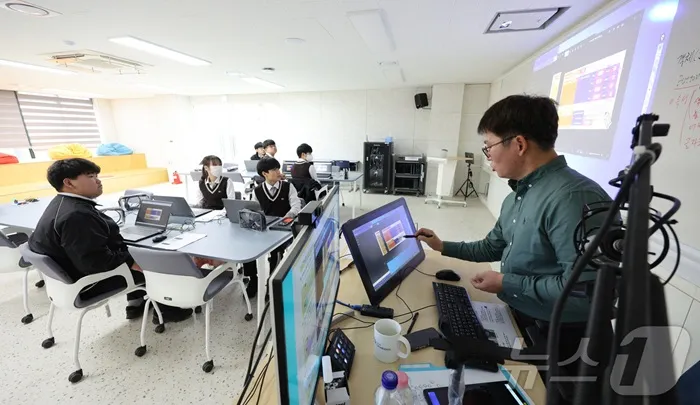
This massive change is not simply a 'future that arrives just by waiting.' There are tasks we must actively prepare for.
First, strengthening teachers' Digital Literacy is essential. Beyond simply being able to operate devices, there is a demand for the ability to critically read and pedagogically utilize the data produced by AI. This is why various provincial offices of education are strengthening teacher learning communities and job training in 2026.
Furthermore, institutional support must proceed in tandem. To ensure that the introduction of AI does not increase the workload of teachers but actually reduces it so they can return to the essence of education, it is necessary to train 'Digital Tutors' and establish stable administrative automation systems. From the design stage, fairness and transparency must be secured so that technology can be designed as a 'synergy tool' that maximizes teacher professionalism rather than replacing them.
Closing: As Technology Becomes More Splendid, Humans Must Shine Brighter

Ultimately, the classroom of 2026 should not be a place of 'AI vs. Human' confrontation, but a place for the 'completion of human-centered education utilizing AI.'
AI matches the student's learning pace, and the teacher guides the direction of the student's life. Technology handles 'efficiency,' while the teacher handles 'values.' An era has come where we can leave knowledge to AI and immerse ourselves more deeply in the dreams and growth of our students.
The teacher's role is not disappearing. Rather, it is evolving toward becoming more sophisticated, deeper, and more human. As technology becomes more splendid, the teacher's role in watching the eyes of students blooming through that technology will become more important than ever.
What kind of teacher do you expect to stand in a classroom filled with AI?
Please share your thoughts in the comments!
References
- “AI, 교사 역할 대체할 수 없어…교사·학생 간 정서적 소통 강화한 하이터치 ... · eduplusnews.com
- 고교학점제 시대, AI가 학생 진로까지 설계…관건은 '생기부 ... · news.mtn.co.kr
- 진로상담 부담 줄일 에이전틱 AI 도입 필요 · hangyo.com
- "행정에서 교육으로" AI 도입 1년, 교사 행정 시간 30% 줄였다 · kyobit.com
- 2026 | 04 학교 AI 혁신 지수 개발 연구보고서 · cdn.kosac.re.kr
- 학교에서 효율적으로 쓸 수 있는 AI 활용 사례 · prezi.com