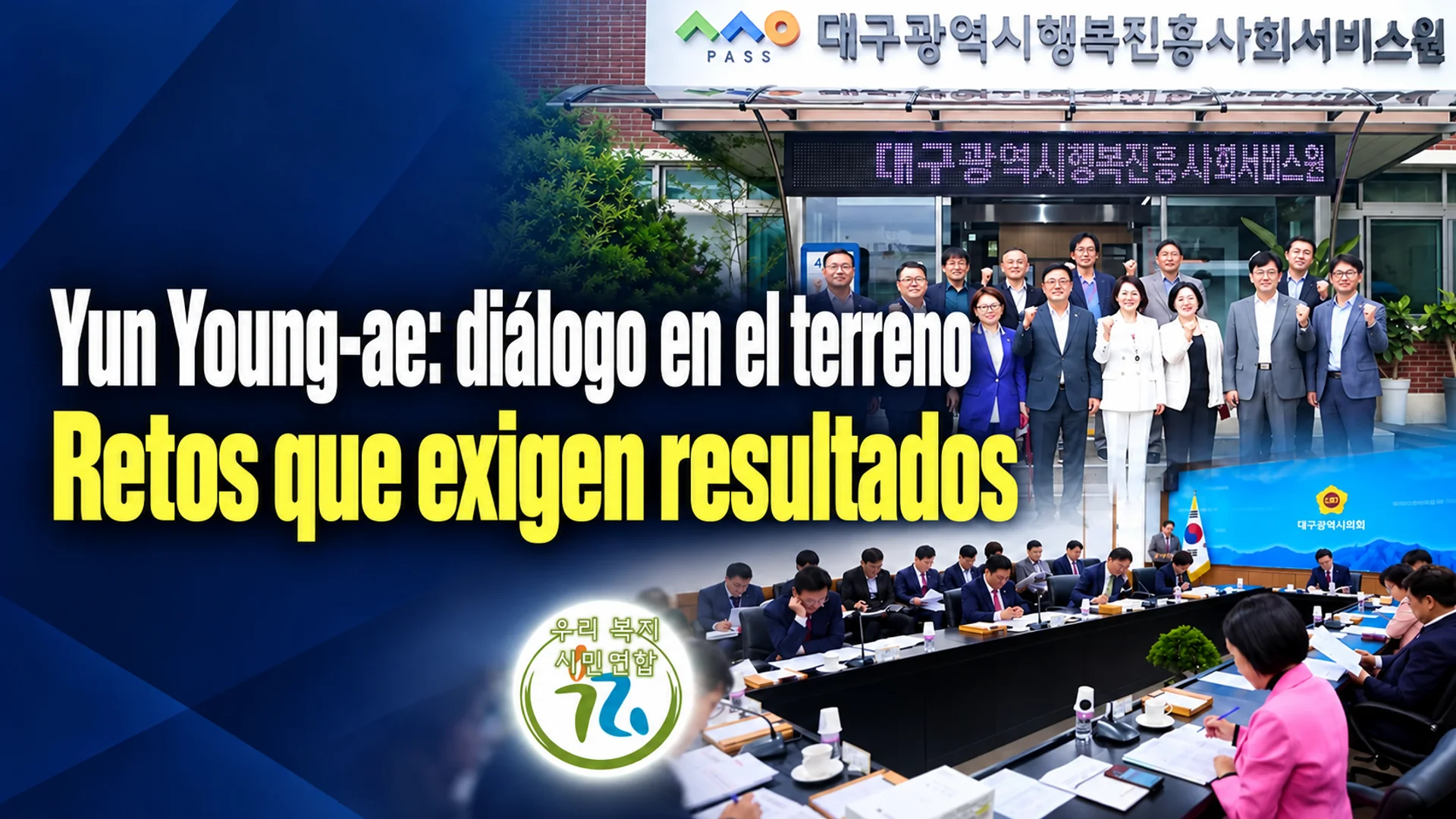
Yoon Young-ae, the newly appointed president of the Daegu Metropolitan City Happiness Promotion Social Service Institute (hereinafter Daegu Happiness Promotion Institute), officially assumed office on October 28, 2026, after receiving her appointment certificate from Daegu Mayor Choo Kyung-ho 1, 2, 3. On her first day, President Yoon skipped a formal inauguration ceremony and instead held checks on major issues by department and introductions with staff, signaling a start of work centered on practical operations 1, 3. In her inaugural message, she presented as key tasks the strengthening of 'on-site communication,' which listens to the voices of citizens and on-site workers, and 'citizen-experience services,' rejecting formal desk-based administration 1, 2, 3.
President Yoon's vision reflects the current state of Daegu's local social service ecosystem while offering clues to how she will respond to demands for verification and innovation raised immediately after her inauguration. We analyzed the potential impact of her inauguration on the institution, given her contrasting careers in welfare administration and local politics, and examined the specific tasks requested by the field.
Inaugural message opening with field-centered practical administration
In her inaugural address, President Yoon clarified that "providing customized social services that citizens can practically experience in their daily lives is the institution's top priority" 1, 2, 3. This is read as a declaration of intent to shift from the past approach of unilaterally providing services determined by policy suppliers to a 'citizen-centered' paradigm that meticulously grasps individual needs 1.
Notably, her actions immediately after inauguration stand out. President Yoon chose internal departmental issue checks and sequential visits to key affiliated facilities instead of a fancy inauguration ceremony 1, 2, 3. This appears to be a practical implementation of her will for communicative administration, rejecting formal desk-based administration and directly listening to the voices of citizens and on-site workers 1, 2, 3.
She also views the health of the internal organization as directly linked to the improvement of external service quality. President Yoon emphasized, "I will do my best to foster a healthy organizational culture where employees can work with pride, ensuring that this energy leads to high-quality services for citizens" 1, 2, 3. This suggests that the president recognizes the need for internal innovation to address structural problems in the social service sector, where workers are increasingly leaving the welfare field and job burnout is severe.
A career spanning welfare administration and local politics
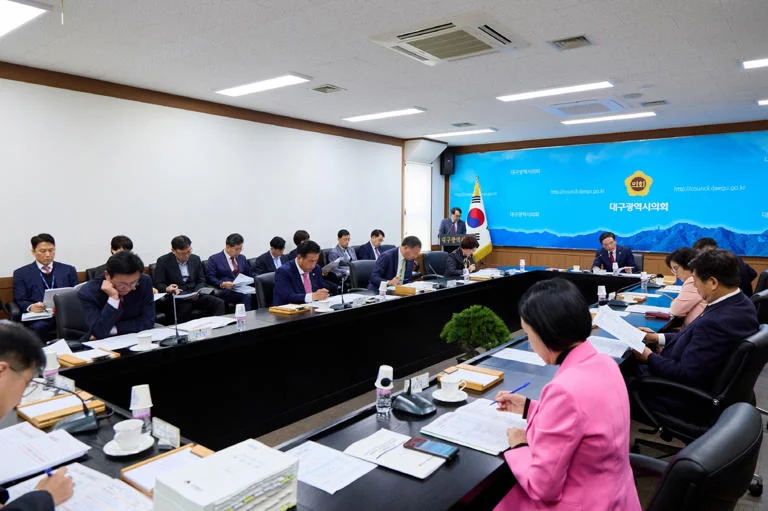
To understand the keyword 'field' emphasized by President Yoon, it is necessary to examine her career. President Yoon is a scholar who earned a Ph.D. in social welfare and a practitioner who concluded her public service at the forefront of welfare administration, serving as Head of the Welfare Support Division and Director of Resident Life at the Nam-gu Office in Daegu 4, 1, 2, 3. Subsequently, she served as a member of the Daegu Metropolitan City Council in the 8th and 9th terms, performing functions of policy formulation and oversight while gaining an understanding of overall city administration 4, 1, 2, 3.
This career has generated divergent interpretations: on one hand, praise for possessing both administrative perspectives aware of field hardships and political perspectives viewing city administration; on the other hand, scrutiny regarding the gap between her claims and her specific field activity history during her council tenure.
| Category | President Yoon Young-ae Profile and Career |
|---|---|
| Education | Ph.D. in Social Welfare, M.A. in Public Administration 4, 1, 2, 3 |
| Administrative Career | Served as Head of Welfare Support Division, Director of Resident Life at Nam-gu Office, Daegu 4, 1, 2, 3 |
| Political Career | Member of Daegu Metropolitan City Council (8th and 9th terms), Chair of Planning and Administration Committee 4, 1, 2, 3 |
| Standing Committee Affiliation | 8th Term: Planning and Administration Committee / 9th Term First Half: Construction and Transportation Committee, Second Half: Planning and Administration Committee 4 |
The crux of the matter lies in how effectively these administrative and political experiences can solve the chronic challenges facing the Daegu Happiness Promotion Institute.
Verification of expertise and controversy over patronage appointments raised by civic groups

On October 29, the day after her inauguration, the civic group 'Our Welfare Citizens Union' issued a statement raising questions about the appointment process and expertise of President Yoon 4. The group cited the absence of a 'record of activity on welfare-related standing committees' during her term as a city council member as the basis 4.
During the 8th Council, she served on the Planning and Administration Committee, and during the 9th Council, she was affiliated with the Construction and Transportation Committee in the first half and the Planning and Administration Committee in the second half 4. Consequently, there was no standing committee activity over her eight years as a council member that could verify her expertise in the welfare field. Accordingly, the group questioned whether the competency required for the president's position had been sufficiently verified, suspecting the possibility of a political patronage appointment 4.
Of course, President Yoon's career of working as a welfare department head at the Nam-gu Office for many years is an undeniable administrative foundation. However, the criticism that she has not been verified by city councilors for her macro-level welfare policy vision and operational capabilities as the institution's head contributes to initial skepticism about whether the president's 'on-site communication' vision can lead to concrete execution power.
Enlarged organization, the paradox of integrated policies
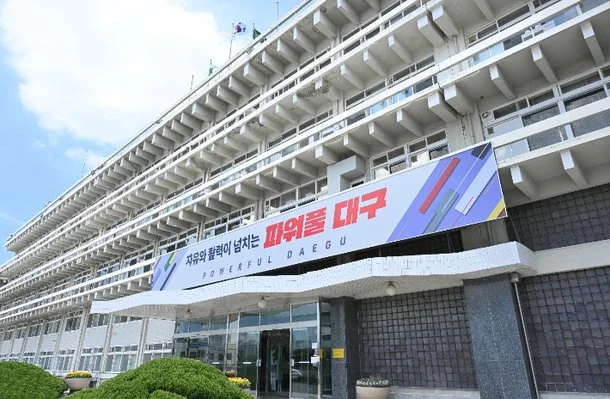
The most urgent challenge facing the newly inaugurated president is internal organizational stabilization. The Daegu Happiness Promotion Institute was launched by merging four institutions into one during the tenure of former Mayor Hong Jun-pyo to improve operational efficiency and save budget 4.
However, with the onset of Mayor Choo Kyung-ho's administration, the policy of re-splitting into three institutions has been announced, greatly shaking the effectiveness of the integration policy itself 4. It is difficult to find the synergistic effects expected at launch, and the organization has become bloated, with criticisms that the spirit of integration has been lost due to repeated early resignations of heads, audit findings, leadership controversies, and forays into politics 4.
The civic group demands that for the 'fostering of a healthy organizational culture' proposed by President Yoon not to remain just a slogan, the organization must clearly redefine its role and identity amidst the confusion of integration and separation. They also advised clarifying its role as the control tower for integrated care 4.
| Group's Points of Criticism (Daegu Happiness Promotion Institute) | President's Inaugural Vision and Tasks |
|---|---|
| Policy confusion and organizational bloating due to announced re-splitting after integration 4 | Rapid internal organizational restructuring and strengthened practical administration system 1, 2, 3 |
| President's leadership controversies and early resignation of institutional heads 4 | Enhancing employee pride and fostering a healthy organizational culture 1, 2, 3 |
'Hope Center' conversion roadmap, so it does not end as an empty promise
The issue of 'Hope Center,' a social welfare facility under the Daegu Happiness Promotion Institute, is regarded as a barometer of publicness in Daegu's social services. The Daegu City Government promised to transform Hope Center from a simple confinement facility into a 'Welfare Complex Town' by 2030 4.
However, according to points raised by the group on October 29, no distinct execution plan or outlook has yet emerged regarding this promise 4. Even if the president advocates for 'customized social services' that citizens can experience in their daily lives in her inaugural address, policy credibility is bound to decline significantly if a representative long-standing local issue like Hope Center idles without a concrete roadmap. The civic group directly demanded the establishment of a 'Hope Center Conversion Roadmap' as one of the key tasks from President Yoon and the Daegu City side 4.
Leadership's test to turn 'slogans' into 'results'
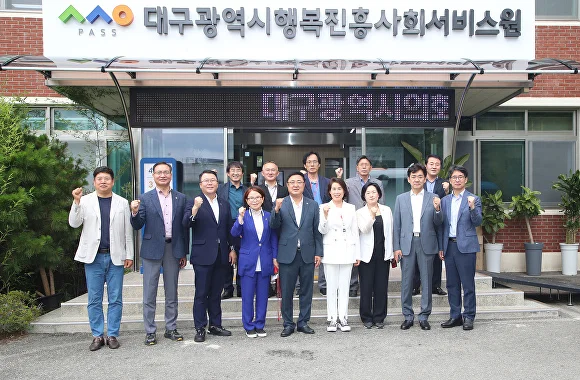
In the end, President Yoon Young-ae's keywords of 'on-site communication' and 'organizational innovation' appear to be the result of accurately diagnosing the symptoms afflicting Daegu's local social service ecosystem. These include burnout and lack of communication felt by welfare field workers, administrative waste that citizens do not experience, and facility conversion tasks showing no signs of resolution.
However, the local community's gaze toward the new head is a mix of expectation and skepticism, as seen in the expertise controversy raised by Our Welfare Citizens Union immediately after her inauguration and the confusion surrounding existing integration policies. The group warned, "For the on-site communication and organizational culture innovation emphasized by President Yoon in her inaugural address not to remain a slogan, she must prove her will and leadership with specific visions and results" 4.
President Yoon starting her first schedule with field department checks and visits to affiliated facilities may be a positive sign. Now, the crux lies in whether those visits remain formal inspections or translate into concrete administrative results that citizens can accept, such as finalizing the Hope Center conversion roadmap or establishing the role of the integrated care control tower.
Referencias
- ‘현장·체감복지’ 닻 올린 윤영애 대구행복진흥원장 취임 | 뉴데일리 · tk.newdaily.co.kr↩
- 윤영애 대구행복진흥원장 취임…“시민 체감형 복지 실현” - 더타임즈 실시간 뉴스 · thetimes.kr↩
- 대구행복진흥원, 윤영애 신임 원장 취임… 시민 체감형 복지 확대 시동 - 충청뉴스큐 · ccnewsq.com↩
- 대구행복진흥원장 임명에 시민단체 “전문성 검증 필요”…윤영애 원장, 조직 혁신 과제 직면-브.... · m.dk.breaknews.com↩