"What if the coding skills I used until yesterday suddenly become useless today?"
If you are a developer reading this right now, or someone dreaming of entering the IT industry, you have probably felt your heart sink. In 2026, we are living in an era where AI Agents—which go beyond simple AI assistance to judge and act on their own—have become commercialized.
The ability to "write one more line of code well" is no longer enough. Companies no longer want mere coding machines. Instead, they are hungry for hybrid talent who can skillfully command AI copilots while simultaneously grasping the context of the business. Today, I want to talk about a 2026-style career survival strategy that will turn your anxiety into confidence.
1. Why is 'coding skill' alone hitting a limit?
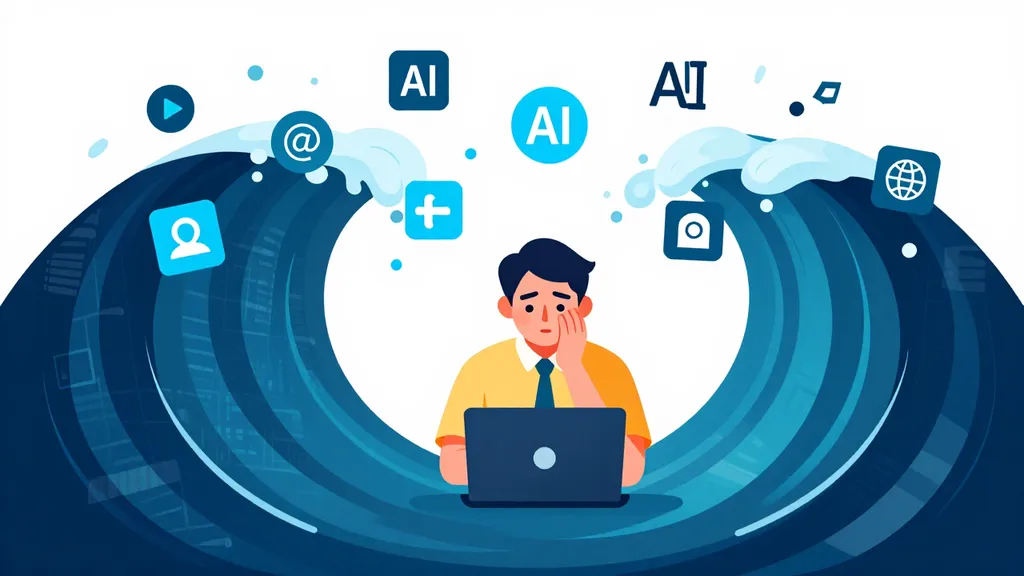
Until just a few years ago, implementing complex algorithms and performing perfect debugging were a developer's greatest weapons. However, the reality of 2026 is different. Due to the advancement of the 'BIG3' AI robot semiconductors and the widespread availability of high-performance chipsets, simple repetitive coding and optimization tasks have already moved into the realm of AI.
The core of the problem arises here. Many talents feel a sense of helplessness caused by the gap between the 'speed of tool development' and 'their own proficiency.' When the code suggested by an AI copilot is faster and more accurate than my own, it prompts a fundamental question: "Where is my value?"
The root cause of this phenomenon lies in the 'leveling' of technology. As AI lowers technical barriers, it has become difficult to differentiate oneself simply by 'knowing how to implement' something. Now, the market demands the capabilities of a designer who can decide in what business context to deploy that technology, beyond mere technical implementation.
2. The era of Pincette Hiring: The image of 'true' talent companies want
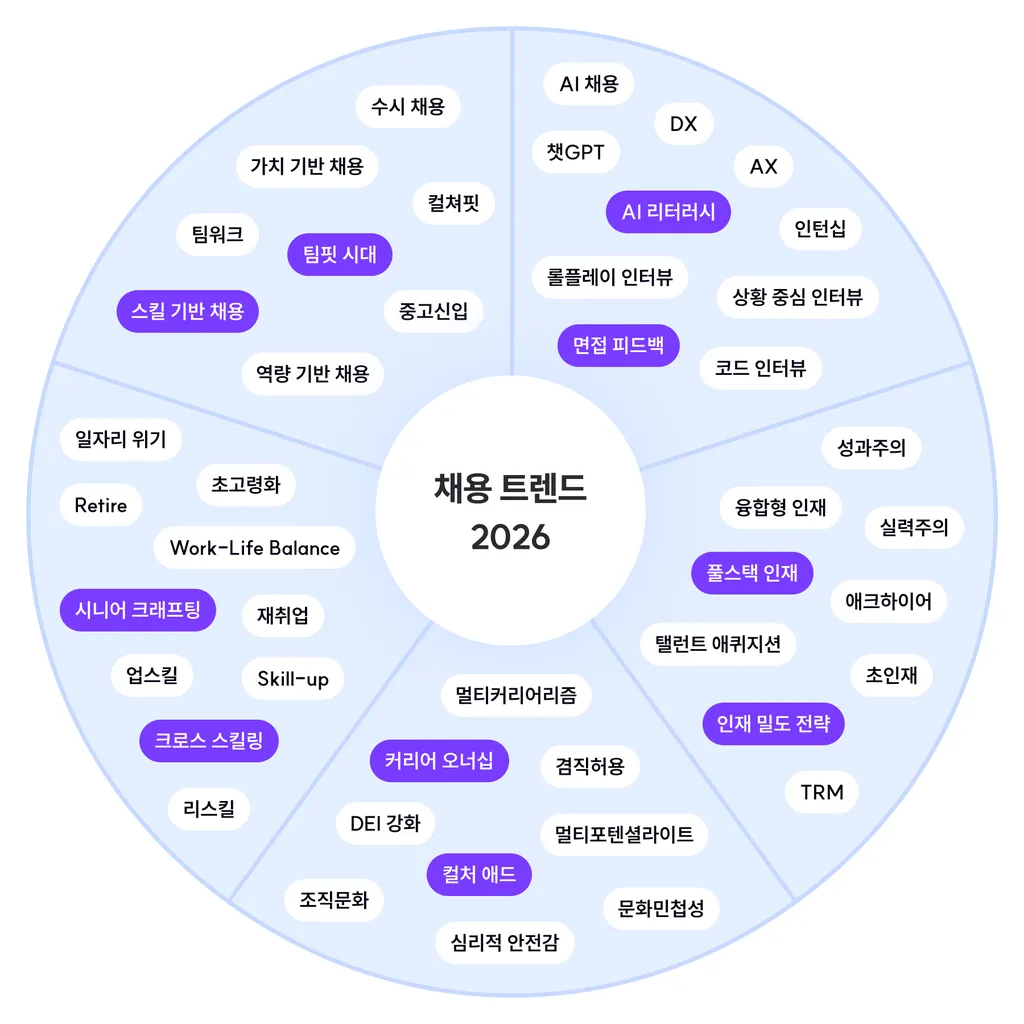
Looking at recent trends in the recruitment market, it is clear where we should move. The 'Pincette Hiring' trend, which began in earnest in the second half of 2025, has reached its peak in 2026. As the economy contracts, companies are selecting a small number of sophisticated talents who can be immediately deployed to solve real-world problems, instead of large-scale open recruitment.
The keywords to watch here are 'Team Fit' and 'AI Literacy.'
- Team Fit and Career Resilience: Companies are now looking for talent with 'career resilience'—those who go beyond being a good colleague and can increase the performance of the entire team by collaborating with AI. The ability to quickly adapt to changes in work methods brought by AI and to use technology as a tool for the team's goals is key.
- The Rise of Hybrid Roles: The boundaries between IT, marketing, and operations are blurring. People who can write code but also interpret the meaning of marketing data, or those who understand business models and can automate them using AI agents, will be 'picked up by the pincette.'
Companies now use evidence-based decision-making to precisely verify how well a candidate has utilized AI as a tool to solve actual problems. In short, rather than "what you know," "what you have created using AI" determines your market value.
3. A 3-step strategy for building a hybrid career
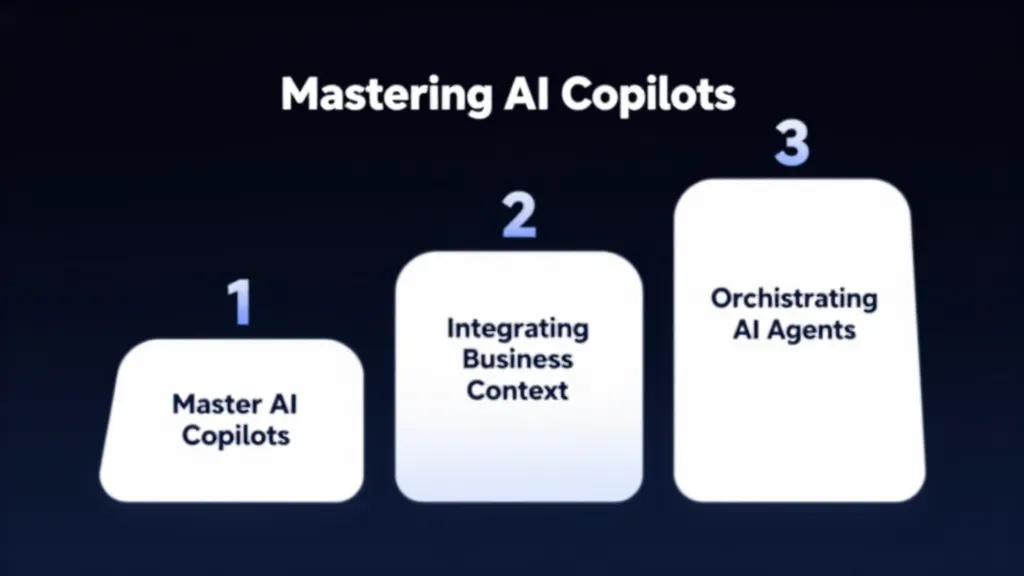
So, what specifically should we prepare? Simply taking AI lectures is not enough. I suggest the following 3-step 'Hybrid Design Strategy.'
Step 1: AI Copilot Orchestration
You must go beyond the level of simply asking a chatbot questions. You need 'Flow Design' capabilities—the ability to organically connect Microsoft 365 Copilots or various AI agent tools.
Starting from personal task automation (email summarization, data analysis), you must contemplate how to design and operate enterprise-level shared agents (ERP integration, workflow automation). Practice the role of a 'supervisor' who clearly recognizes the limitations of AI outputs, catches errors, and modifies them to fit business logic.
Step 2: Combining Business Insight with AI Literacy
The AI Literacy emphasized by IBM is a concept that goes beyond technical understanding. This is the ability to critically review data and insights generated by AI and link them to organizational goals.
For example, instead of simply saying, "Write code for data analysis," you should have the ability to think, "What kind of data should I train the AI agent on to analyze the cause of the rising churn rate in our current service?" While understanding the principles and limitations of the technology, you must raise the 'quality of your questions' to solve business problems.
Step 3: Understanding Integrated Platforms and Governance
Future experts do not use technology in isolation. You must understand how to integratedly manage data, security, and automation within the AI platforms built by corporations (e.g., Ai 365 platforms).
Cultivate an eye to view from a macro perspective how software, hardware, and cloud infrastructure work together. This is the process of evolving beyond a simple developer into an 'AI Solution Architect.'
4. How to prove your value: Professional job skills and data
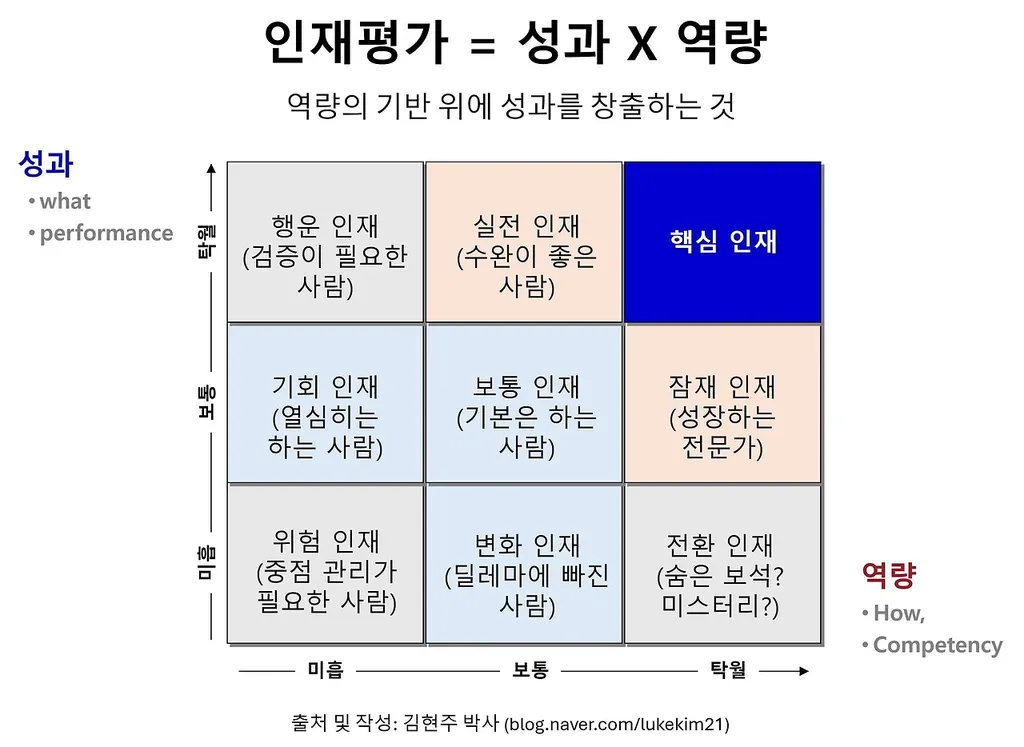
Finally, the most important thing is 'Execution.' The HRD (Human Resources Development) trends of 2025 and 2026 have shifted from 'broad general knowledge' to 'deep professional job skills.'
How will you prove your capabilities? Nowadays, saying "I know Python" will not work. Instead, you must say:
"I used AI Copilot to reduce the data pipeline construction process from 3 days to 2 hours, thereby improving the speed of business decision-making by 20%."
This is exactly the evidence-based competency that companies want. Through Naver's Boostcamp, Samsung Electronics' SW Academy, or corporate-led professional training courses, do not stop at simply learning technology; perform actual projects and build your own 'portfolio data.' The faster the pace of technological change, the more powerful the 'data of your results' will be as your strongest defense mechanism.
Closing: Will you remain the master of the tool, or will you be replaced by it?

The technological environment of 2026 is certainly threatening. However, it is also a field of immense opportunity. The commercialization of AI agents means that a single individual can now possess 'one-person entrepreneurship capabilities,' performing tasks that previously required dozens of people.
Ultimately, the core is 'Integration Capability.' A person who is equipped with the powerful engine of AI, holds the steering wheel of business, and knows how to appropriately supply the fuel of data. For such 'hybrid talent,' 2026 will be a year of career abundance like never before.
How are you utilizing AI right now? Are you at the level of simply inputting commands, or are you designing your own workflows?
What do you think is the 'irreplaceable ability in the AI era'? Please share your thoughts in the comments!
References
- AI 로봇 반도체 BIG3 투자 트렌드 : 네이버 블로그 · blog.naver.com
- 이제는 핀셋 채용 시대: 하반기 채용 트렌드 TOP5 - PUBLY - 퍼블리 · publy.co
- 디지털 전환을 대비하는 기업주도 AI·SW 교육 동향 - SPRi · spri.kr
- AI 리터러시: 인공 지능 기술 격차 해소 - IBM · ibm.com
- ️ 2026년 HRD 기업 교육 트렌드: AI 시대, '진짜' 성과를 만드는 방법 · ablearn.kr
- 엠클라우드브리지, 코파일럿 & AI 에이전트 활용 AI 업무 자동화 통합 ... · instagram.com
- 2025 HRD Trend Report - 한국생산성본부 · kpc.or.kr
- [부트텐트] IT 뉴스레터, 아티클, 개념정리부터 취업꿀팁까지✏️ · boottent.com