In the second half of stoppage time, with his team leading 4–1, a 59-year-old player wearing the captain's armband steps onto the pitch. He may have actually touched the ball for only a few seconds. Yet this brief appearance sets a new record for the oldest player ever to appear in a match in Japan's professional J.League. Kazuyoshi Miura (born February 1967) set the oldest player record in J3 League history on November 7, 2026, at the age of 59 years, 8 months, and 12 days, during a home match against FC Ryukyu in J3 League 1. He had already set similar records in J1 League (54 years and 12 days) and J2 League (52 years, 8 months, and 29 days) during his time with Yokohama FC, thus holding the oldest player records across all three professional divisions of the J.League 1.
Conditions Required for an “Appearance” Record to Be Recognized
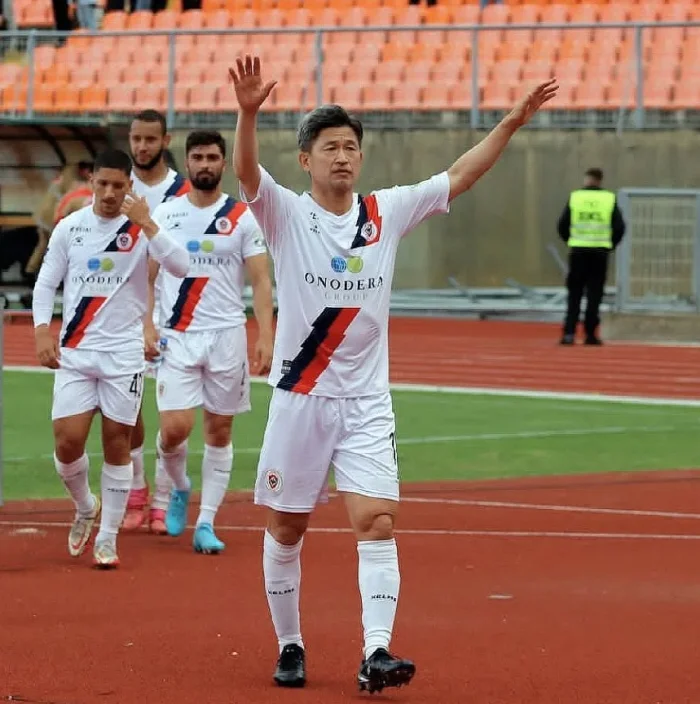
In soccer, an “appearance record” counts every moment a player registered in the match roster sets foot on the field during a game. Actual playing time or performance is not factored into this count. The J.League’s oldest appearance records follow this simple criterion. As demonstrated by the way Miura achieved the record in the match against FC Ryukyu on November 7, 2026, even a brief substitution when the outcome is already decided qualifies as an appearance 1.
Consequently, this record functions less as a measure of physical ability or team contribution, and more as a record of the oldest player who remained on a professional roster and set foot on the field at least once during a match. Its significance in sports history lies in demonstrating how long a particular player could remain active at the professional level.
Twenty Minutes as a Starter, and a New Record in Stoppage Time
The distinction between simply stepping onto the pitch and actually playing in a match becomes clearer through specific examples. On February 7, 2026, in the opening match of the J2–J3 Yonkuso Plan League against Ventforet Kofu, Miura started for the first time in nine years. This marked his return to J.League competition after an absence of 1,795 days (since March 2021), setting a new record for the oldest player to appear in a J.League match at the age of 58 years and 346 days 2.
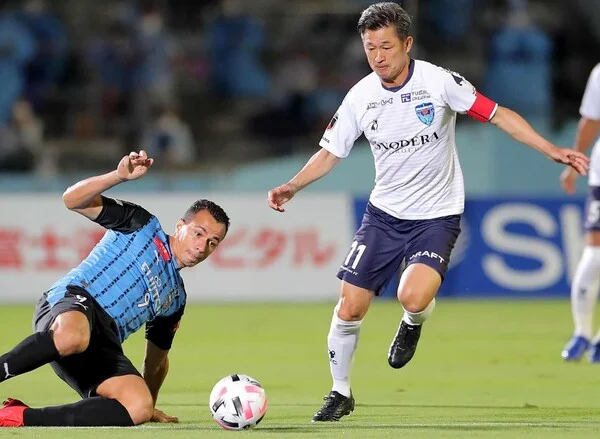
However, the actual course of the match revealed its limitations. Miura attempted active dribbling early in the game but struggled to keep pace with the tempo of the third tier. He was eventually substituted after just 20 minutes without registering a single shot, and his club, Fukushima United, lost 1–4 2. This contrasts starkly with the major record he set through his stoppage-time substitution on November 7 of the same year. One match recorded the lack of results from playing, while the other made history simply through the act of stepping onto the field.
A similar pattern occurred in J1 League. On September 23, 2020, he started as captain at the age of 53 years, 6 months, and 28 days in a J1 match against Kawasaki Frontale (a 2–3 loss) but was substituted in the 56th minute. During this match, he touched the ball 17 times without recording any goals or assists 3.
Miura’s Own Assessment and the Utilization Structure in the Lower Leagues
Miura himself accurately recognizes this reality. During his loan spell at Atletico Suzuka in 2025, he appeared in seven matches, mostly as a late substitute, without scoring. As his loan contract neared its end, he stated, “I regret not being able to help the team over the past year, but this is part of my soccer life,” and expressed his intention to continue his career by saying, “I want to properly accept the results and run toward the future” 4.
The reason he can continue to play despite his age lies in the utilization structures of clubs in the lower leagues. Since 2022, he has been loaned out to lower-league clubs, drawing criticism that financially struggling teams exploit his popularity to attract spectators, while he accepts this arrangement to break records 4. The alignment of the player’s ambition and the operational needs of the clubs allowed him to appear in J3 matches with Fukushima United. Notably, he is reported to be eight years older than his team’s manager, Shuhei Terada 2.
The Timeline of a 40-Year Career and Future Goals
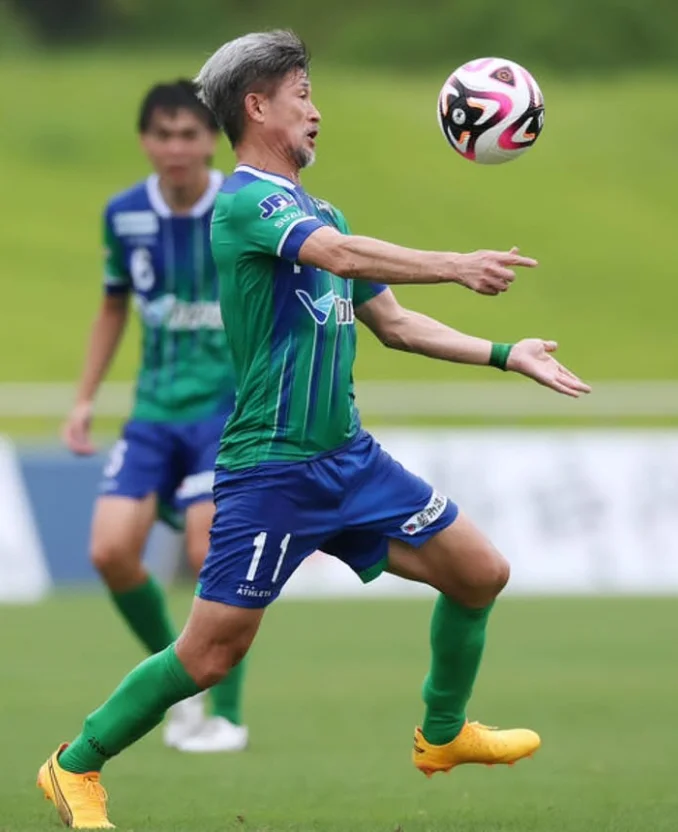
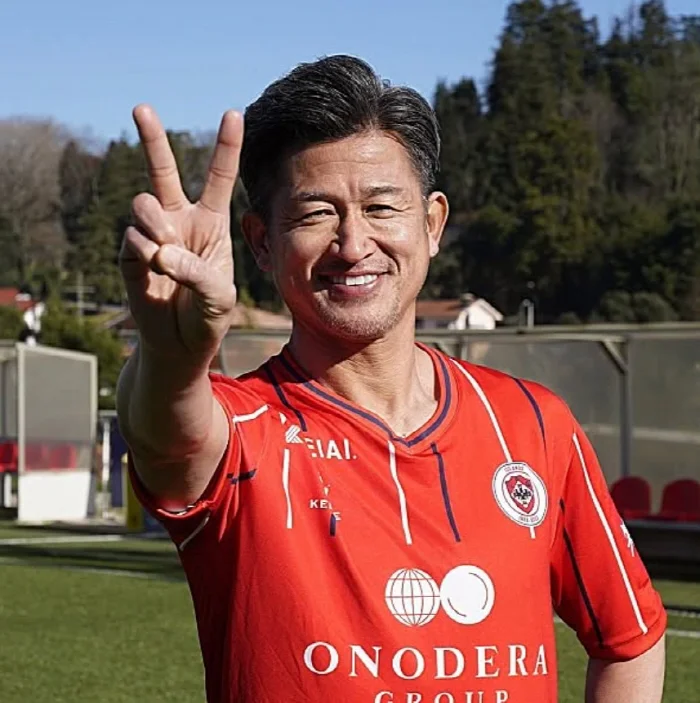
Tracing Miura’s career back further makes it easier to understand the context of these records. He made his professional debut with Santos in Brazil in 1986 and became a representative striker for Japan in the 1990s, scoring 55 goals in 89 A-team matches 5.
There have been opportunities to score. On July 11, 2026, in an Emperor’s Cup match against Iwaki Furukawa, he scored a goal in the 52nd minute when his team was leading 4–0, marking his first official goal in approximately four years 5. This goal, occurring when the match was largely decided, aligns with the context of his recent substitutions.
Starting with the 2026–2027 season, Japan’s J.League will transition to an autumn–spring calendar, with seasons beginning in autumn and concluding the following spring. This schedule change means that Miura will reach his 60th birthday in February 2027 while still an active professional player 5.
Miura’s oldest appearance records in J.League history are set through short substitutions when the match outcome is virtually decided. These records serve as mechanisms demonstrating that he has remained on professional rosters for nearly 40 years, allowing him to step onto the pitch. However, as Miura himself acknowledges the decline in performance, records marking his age and his actual contribution to the team should be interpreted separately.
References
- 서울신문 · seoul.co.kr↩
- 환갑이 다가온 미우라의 노욕, J리그 역대 최고령 경신 · sports.khan.co.kr↩
- 53살 ‘노장’ 미우라, J리그1 최고령 출전 기록 · hani.co.kr↩
- 기어이 환갑 채우나…58세 미우라, 내년에도 현역 의지 "포기하지 않는다" · sportschosun.com↩
- 세계 최고령 프로축구선수 '59세' 미우라 · mindgil.com↩