2026 was a year in Korean sports that demanded structural changes beyond mere results. Professional baseball (the KBO League) and Korean soccer experienced upheavals of different natures throughout the second half of the year. In professional baseball, the regular season saw a razor-thin ranking battle that persisted until the final games, decided by margins of just one or two games, making bullpen management and player stamina management the key variables in the outcome. For Korean soccer, immediately after the bitter taste of the 2026 North-Central American World Cup, September and October marked a critical turning point requiring the team to be reorganized around under-23 resources while reducing reliance on players in their 30s. Currently, both baseball and soccer teams stand at a crossroads, having to address two challenges simultaneously: "immediate results" and "generational transition for the coming era."
Professional Baseball KIA's Short-Series Challenges and the Need for Diversified Offense
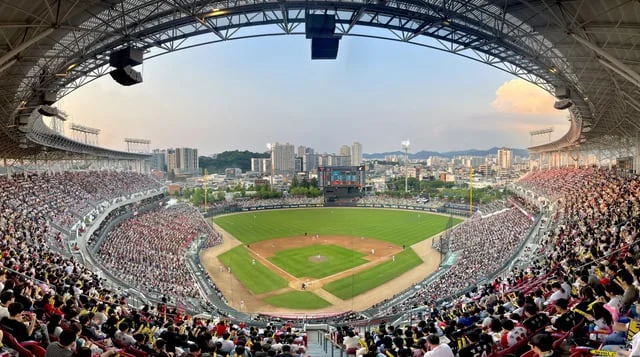
As fall baseball began in October, KIA Tigers' tactical limitations have become clearly apparent. KIA lost 3-8 to the Samsung Lions in Game 2 of the playoff series held at Daegu Samsung Lions Park on October 27, resulting in a 1-1 series tie 1, 2. In the preceding Game 1, KIA secured a 5-1 victory thanks to the strong performance of their cleanup trio, consisting of Kim Do-young, Harold Castro, and Na Sung-beom (dubbed the "DoNas Trio"). However, in Game 2, the team was stifled by the opposing starting pitcher's strong outing, producing a sluggish offensive display of just 6 hits and 3 runs 1.
Although Na Sung-beom drew two walks in the heart of the lineup, the batters preceding and following him went silent, failing to convert those walks into runs. In particular, the top-two batters (the table-setters) and the lower order were unable to break through the opposing battery's focused attention 1. KIA manager Lee Beom-ho had expressed concerns about diversifying scoring routes immediately after winning Game 1, and those concerns became reality in Game 2. The manager acknowledged the limitations of a short-series offensive structure that relies solely on the cleanup trio, stating, "Aside from the core hitters, there are no players currently in good batting form, which is a major concern" 1. Ultimately, for KIA to prepare for Game 3 onward, which will determine the series' outcome, they must resolve the issues of recovering the lower order's form and altering the batting order.
Stamina Management and Foreign Player Variables That Decided the KBO League's Late-Season Landscape
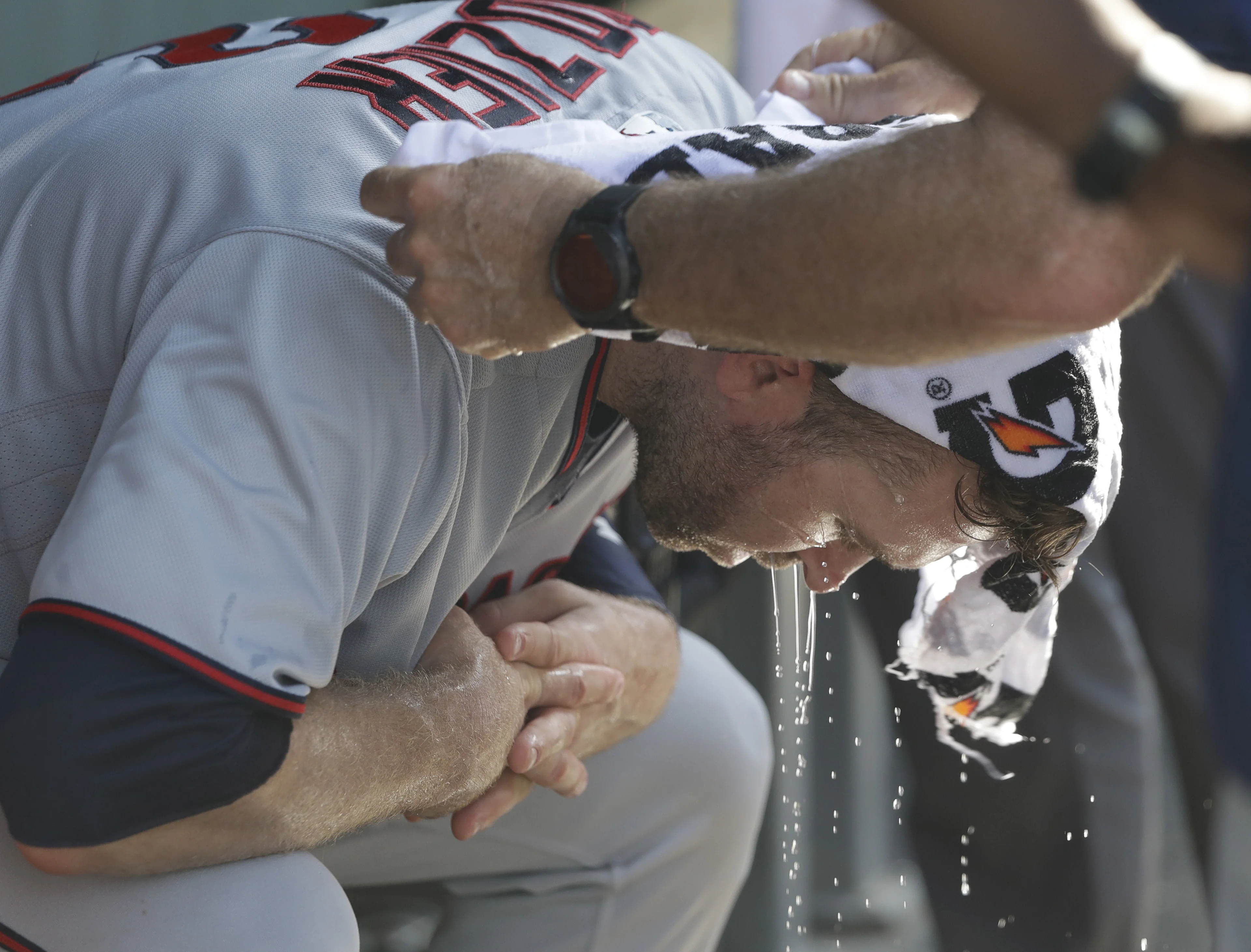
KIA's playoff battle is the extreme manifestation of key variables that ran through professional baseball throughout the latter half of the regular season. The 2026 KBO League was heavily impacted by extreme heat immediately after resuming its schedule on July 16 for the second half of the season. With daytime highs exceeding 35 degrees Celsius and a heatwave lasting more than ten days, fatigue among players, particularly pitchers, became pronounced 2, 3. Under such scorching heat, early starters' exits placed excessive burdens on the bullpen. Doubleheaders were analyzed to increase bullpen consumption by more than 40% compared to normal levels, a fatal factor that determined the magnitude of ranking shifts in August and September 3.
Another axis of the ranking competition when the second half resumed was the early adaptation of new foreign players. In mid-July, after the six-day All-Star break, Samsung threw a gamble by bringing in Chris Flexen, who has a career record of 32 wins in Major League Baseball, while SSG introduced Pedro Avila to reinforce their collapsed starting rotation 2. Doosan recruited switch hitter Yunior Severino to strengthen their lineup. The speed at which these players adapted directly correlated with their teams' win-rate curves. Indeed, until the very end of the regular season, fans expressed regret that an earlier return date for a specific player might have altered a team's qualification for the postseason 4.
The battle for mid-tier rankings was more intense than ever, with four teams from 5th to 8th place tangled together by margins of just 1-2 games, engaging in a dogfight for the final postseason ticket 2, 3. Historical data indicates that teams advancing to the postseason consistently maintained a bullpen ERA below 4.00 and an on-base percentage of 0.380 or higher for the first two batters 3. These metrics precisely align with the offensive structural issues KIA faced in Game 2 of the playoffs, demonstrating that the roles of the lower order and the bullpen are the yardsticks determining the cutting edge of professional baseball.
World Cup Group Stage Elimination and Structural Limits of the Korean National Soccer Team
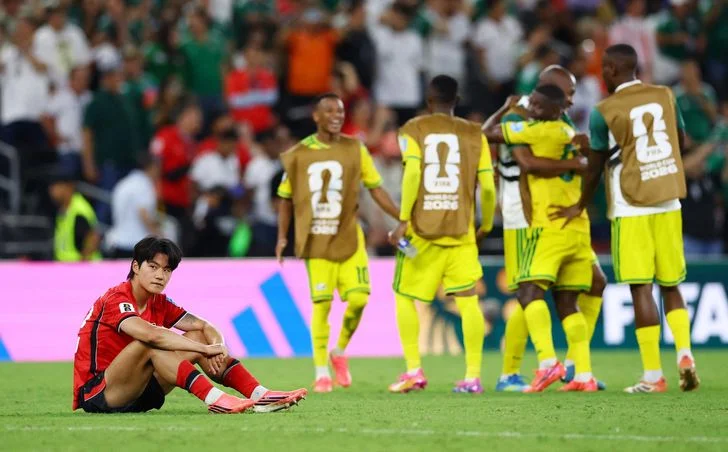
While professional baseball faces challenges regarding internal resource distribution, the Korean national soccer team faces the need for comprehensive reorganization due to delaying the timing of its generational transition itself. In the North-Central American World Cup held in the summer of 2026, the Korean team led by manager Hong Myung-bo was placed in Group A alongside the Czech Republic, Mexico, and South Africa. In their first match against the Czech Republic on June 12, they won 2-1, earning three points and signaling a bright start 5, 6. However, they lost 0-1 to host nation Mexico in the second match on June 19, and suffered another 0-1 defeat in the final group stage match against South Africa on June 25, who had been struggling with one draw and one loss 5, 6.
A draw would have allowed Korea to advance directly to the round of 32 as group runners-up, but Korea finished third in the group with one win, two losses, and three points. Although they held out hope depending on the results of the remaining group stage matches, only one out of nine possible favorable conditions was met. Ultimately, they failed to reach the round of 16, drawing comparisons to their failure at the 2014 Brazil World Cup 5, 6.
Underlying this elimination was an excessive reliance on specific players. The International Federation of Association Football (FIFA) coldly pointed out in its official diagnosis that the team must reduce its dependence on 34-year-old Son Heung-min 5, 6. The failure to blend new blood with an aging squad resulted in a decline in performance, according to a shared analysis by FIFA and experts 5.
The Lee Min-sung Era, Military Exemption, and Prospects at a Career Crossroads
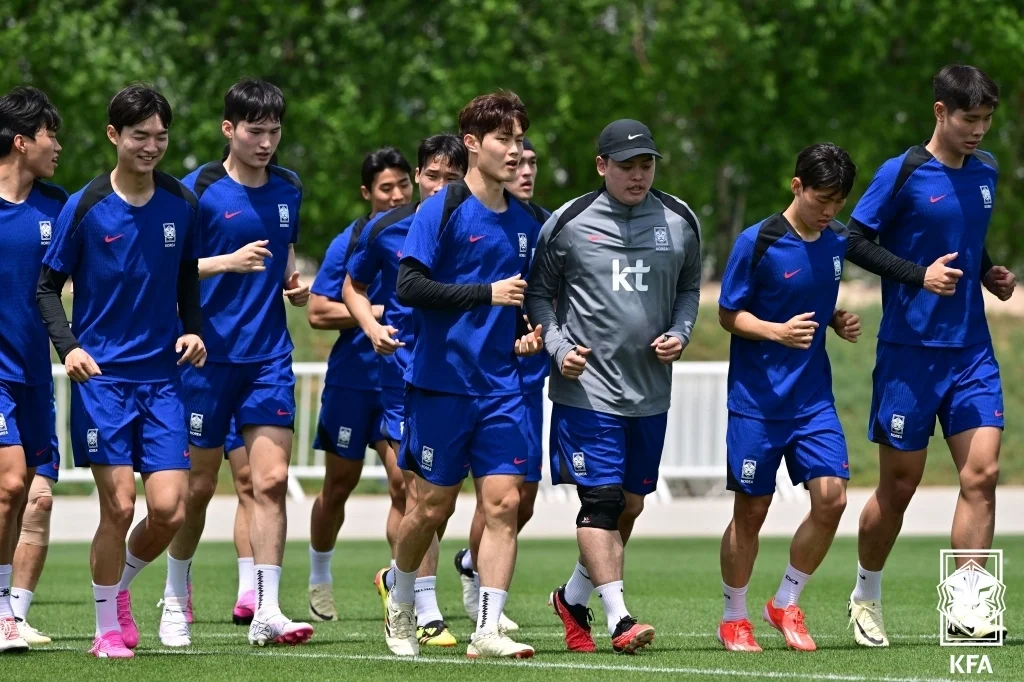
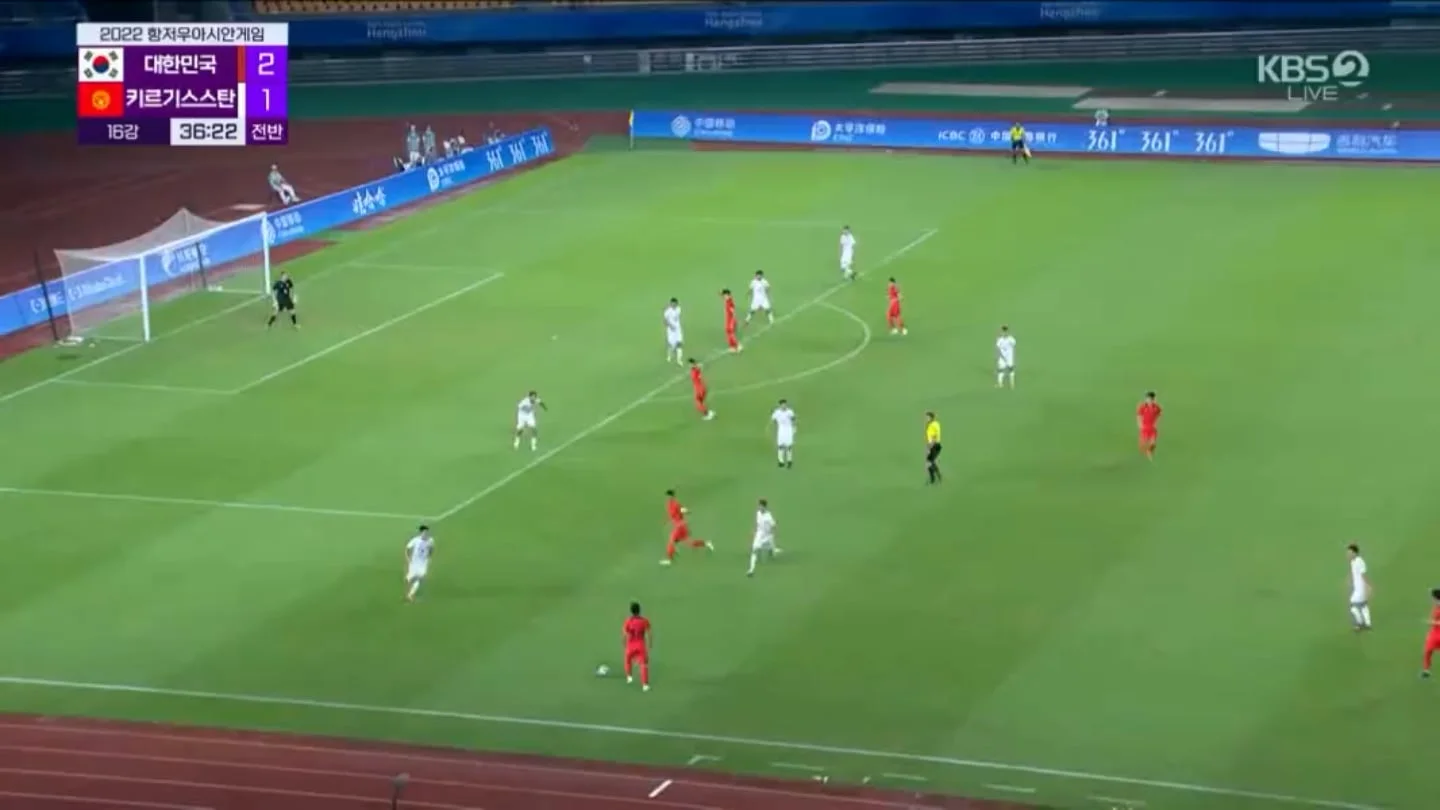
More seriously threatening the long-term future of Korean soccer than the senior team's group stage elimination is the poor performance of the under-23 (U-23) national team. The squad of manager Lee Min-sung, preparing for the 2026 Aichi-Nagoya Asian Games, was assessed as falling far short of expectations. The U-23 national team recorded a lowly record of four wins, three draws, and four losses in the 11 matches played during 2026. Not only did they lose 0-4 and 0-2 to Saudi Arabia and 0-2 to China, but they also suffered the humiliation of a 0-1 defeat to Kyrgyzstan, who is ranked 106th in the FIFA rankings 7.
While rebuilding a senior team centered on Son Heung-min and Lee Kang-in, who compete in the top tiers of FIFA rankings, is a matter of "current competitiveness," the U-23 national team's performance is a matter of "survival of future resources." Players such as Kim Ji-soo, Yang Min-hyuk, Bae Jun-ho, and Lee Hyun-joo, participating in this tournament, are key resources who will lead Korean soccer in the future. For them, winning an Asian Games gold medal goes beyond mere international tournament results; it is directly linked to military service exemption 7.
From the 2014 Incheon Games through the 2023 Hangzhou Games, Korea achieved three consecutive men's football gold medals, laying a foundation for numerous prospects to shed military burdens and grow stably on the European stage. If they fail to win the gold medal at the Asian Games, a chain reaction could occur, shaking their European careers and the entire generational transition plan 7.
The Center of Reconstruction: Lee Kang-in and New Tactical Innovations
Ultimately, for Korean soccer to prepare for the next international tournament, a clear generational transition and personnel overhaul led by Lee Kang-in are required 5. FIFA's clear designation of Lee Kang-in as the core of Korean soccer's reconstruction stems from recognition of his skills proven on the European stage and his youthful leadership 5. Without tactical innovations accompanied by Lee Kang-in anchoring the team, the stifling attacking buildup that caused the World Cup group stage elimination is bound to repeat itself.
Following the resignation of former manager Hwang Sun-hong, the Korea Football Association appointed manager Lee Min-sung as the head coach of the U-23 national team to fill the one-year vacancy in the top coaching position. However, by choosing to maintain the existing system without sufficient verification due to a lack of time, they cannot avoid criticism for causing hollow struggles. While the senior team's slump is introspection directed at the past, the U-23 team's slump is a crisis that could erode the very future of Korean soccer 7.
Whether in professional baseball or soccer, the lessons left by the second half of 2026 are clear. Just as KIA must prepare for changes in the lower order and batting order to break free from an offensive line's reliance on specific players, Korean soccer must break free from the shadow of veterans, grant initiative to young players, and receive systematic support from the association. The reason baseball fans are currently watching the turnaround that KIA's batting order changes might create is the same as why soccer fans anticipate the national team's new tactics centered around Lee Kang-in. Generational transition in sports is, after all, a process of shedding the heavy burden of current results and creating a structure where the protagonists of the next era can dominate the field.
References
- '도나스'만으로는 안 된다! 이범호 우려 현실로... 중심타선 밖이 차갑다 · starnewskorea.com↩
- 프로야구 후반기 16일 재개, 개막전 상대와 4연전으로 순위 싸움 재점화 · alzzaking.com↩
- 8월 KBO 순위 경쟁 총정리 – 폭염·트레이드 변수와 포스트시즌 판도 · ekunblog.com↩
- 2026년 프로야구 9월 요약 · youtube.com↩
- ↩
- 처참한 경기력으로 '요행' 바라선 안 됐다…경우의 수 9개 중 1개 적중... · v.daum.net↩
- [핌 포커스] 월드컵보다 더 큰 위기...한국 축구 미래 걸린 이민성호 · m.newspim.com↩