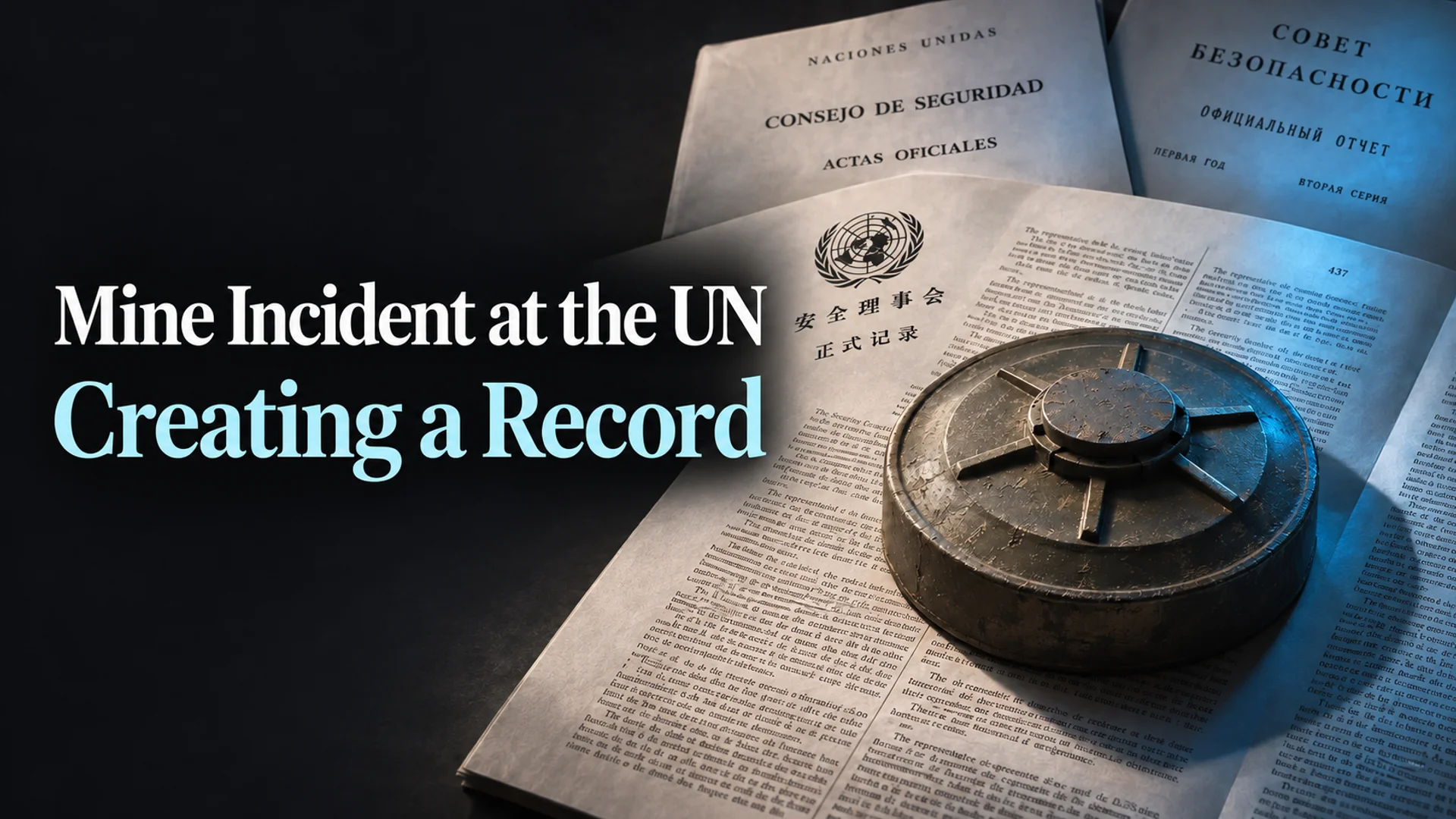
What are the legal arguments and actual effects of the note sent by the South Korean government to the UN Security Council in response to the landmine explosions in the North Korean DMZ? The South Korean government characterized the landmine explosions caused by mines planted by North Korean forces as a “clear violation of the Armistice Agreement” and pushed for their formal documentation at the Security Council. Rather than an immediate resolution condemning North Korea, this served as procedural and documentary leverage to elevate the level of diplomatic response by establishing the incident as an official international record, countering North Korea’s logic of shifting responsibility.
Formal Circulation of UN Security Council Documents and Its Limitations
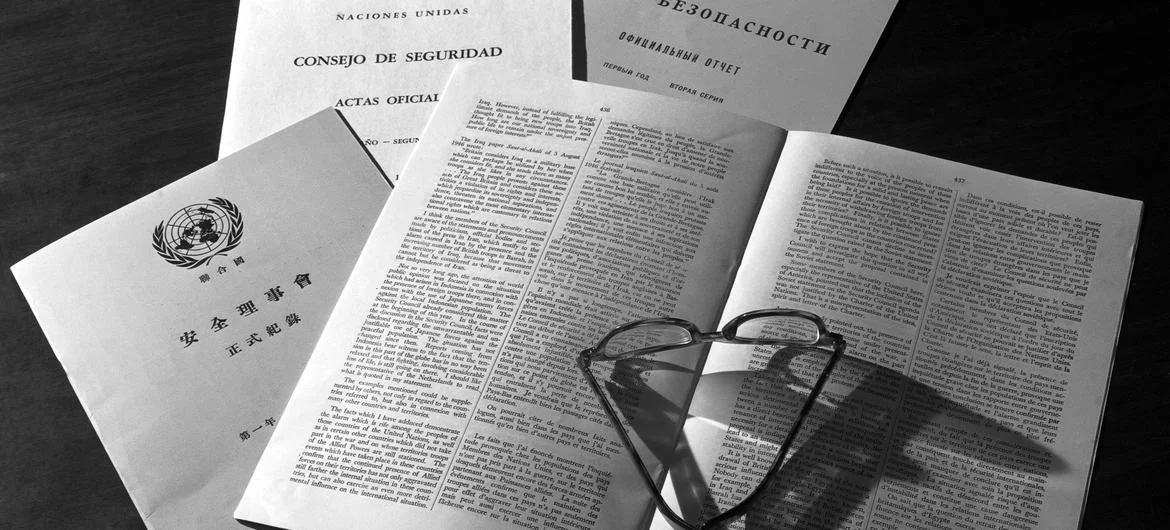
The South Korean government activated diplomatic channels to secure the legal status of the incident. On October 22 (local time), South Korea’s Permanent Mission to the United Nations delivered a letter of approximately two pages, signed by Ambassador Cha Ji-hoon, through Greece’s Permanent Representative to the UN, which held the Security Council presidency at the time 1. The letter contained the findings of the joint investigation stating that the explosion was caused by landmines planted by North Korean forces, and the assertion that this constituted a violation of the Armistice Agreement 1.
The Security Council President authorized the circulation of this letter to member states. This differs from the issuance of a statement, as member states would formally view the contents of the letter, ensuring that the document remains part of the Security Council’s official records 1, 2. However, diplomatic sources analyzed that this measure would not lead to the immediate adoption of a resolution condemning North Korea 1.
Geopolitical factors played a role in limiting the response to sending a letter. The likelihood of opposition from permanent members such as China and Russia was high 3. Rather than forcing the adoption of a resolution, the government focused on clearly informing the international community about the facts of the incident and securing global support through the letter 1. In essence, this was a “intermediate step” aimed at forming diplomatic leverage rather than immediately securing legally binding actions.
South-North Disputes Over Legal Arguments
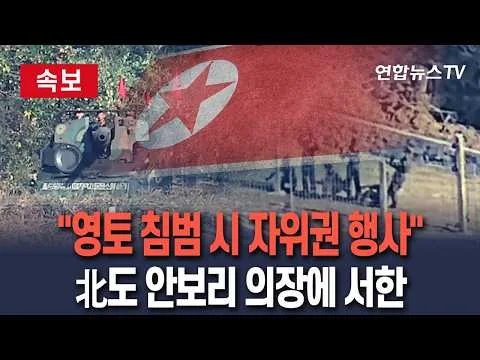
From the exchange of letters, South Korea and North Korea have argued diametrically opposite logics based on the UN Charter. South Korea stated that warning shots fired in the Military Demarcation Line (MDL) area were lawful defensive measures against violations of the Armistice Agreement 1. In response, North Korea refuted the landmine explosions as a “self-staged act by South Korea” in a letter sent to the Security Council President on October 25 4.
North Korea inverted the application of UN Charter provisions. It characterized South Korea’s warning shots as a violation of the principle of the prohibition of the use of force against territorial integrity (Article 2, Paragraph 4), claiming they were provocative acts 4. Conversely, it claimed that its own border fortification work was an exercise of sovereignty, warning that it would exercise its right to self-defense (Article 51) if South Korea intruded 2, 4. Both sides engaged in a frame competition, applying specific provisions against each other to justify their respective military measures.
Delayed Diplomatic Response and Parallel Military Channels
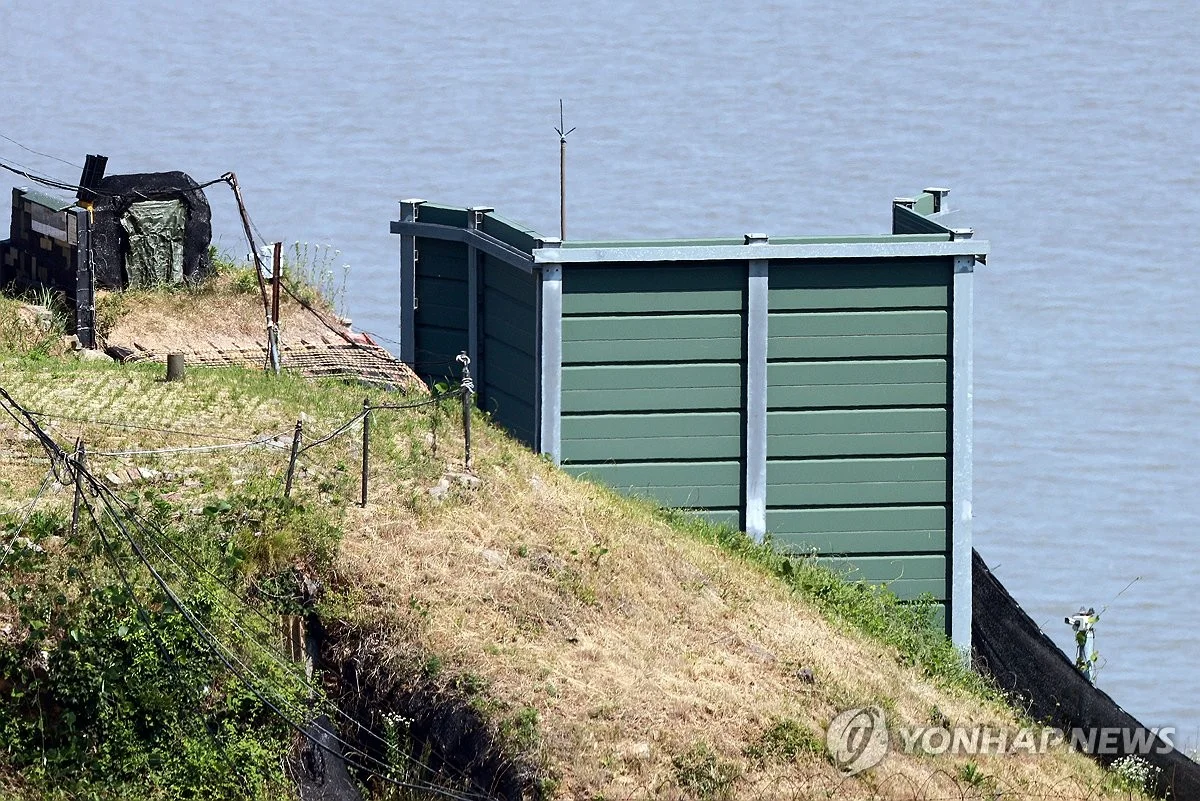
Differences in perspectives among government ministries appear to have influenced the delay in the diplomatic response 3. The letter was sent approximately 31 days after the incident occurred 3. This represents a significant delay compared to the 2015 PM landmine provocation, when a letter was sent within six days. While the Ministry of Foreign Affairs emphasized a firm response through the international community, the Ministry of Unification took a cautious stance, concerned about heightened South-North tensions 3.
This divergence in perspectives was also revealed when Unification Minister Jung Dong-young stated during the National Assembly audit on October 7 that it was “difficult to identify North Korea’s intent to attack.” A North Korean representative cited this remark in their speech at the UN General Assembly, using it to highlight internal disagreement within South Korea and evade responsibility 3.
While diplomatic battles unfolded, military tensions heightened. The Ministry of National Defense proposed resuming South-North military talks on October 23 to prevent accidental clashes in the MDL area 2. It is also considering a three-way meeting including the United Nations Command if necessary 2. This approach simultaneously attempted to block physical clashes and restore dialogue channels while keeping open the possibility of military responses, such as resuming loudspeakers broadcasts toward North Korea.
Diplomatic Justification Becomes a Record
Ultimately, sending the letter did not lead to immediate sanctions or the adoption of a resolution. However, the formal registration of the documents at the Security Council secured the South Korean government’s investigation findings and its assertion of an Armistice Agreement violation as an international record 1. When North Korea attempts to shift responsibility using “self-staged act” and “self-defense” logics, the arguments documented in the Security Council file serve as a verified basis for diplomatic response 1. This measure demonstrates the significance of records in diplomatic and legal disputes.
References
- 정부, ‘북 정전협정 위반’ 유엔 서한…안보리 이사국 회람 승인 · mobile.kbs.co.kr↩
- [🔴속보] "北 영토 1㎜라도 침범하면 자위권 행사"|北도 안보리 의장에 서한 보내 "지뢰폭발은 韓 자작극"…韓 '정전협정 위반' 서한에 맞대응 / 연합뉴스TV · youtube.com↩
- 정부, 유엔 안보리에 北 DMZ 지뢰 도발 규탄 서한 보낸다 - 샌드타임즈 · sandtimes.co.kr↩
- 북, UN 안보리에 “지뢰폭발 한국 자작극” 서한 맞불 · hani.co.kr↩