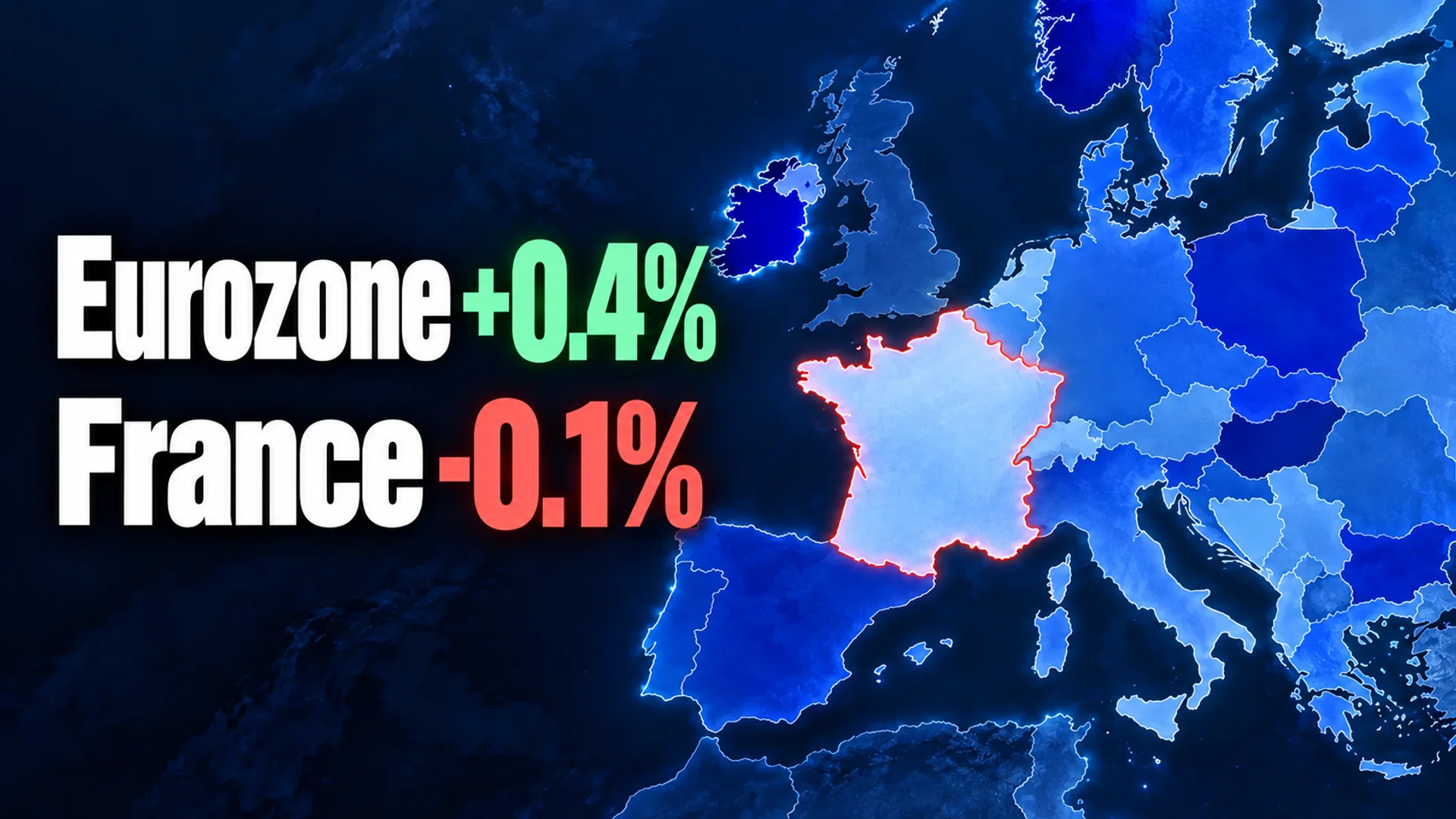
According to preliminary figures released by Eurostat, the European Union's statistical office, on October 30, 2026 (local time), the eurozone's (21 countries using the euro) real gross domestic product (GDP) in the third quarter of 2026 grew by 0.4% compared to the previous quarter. This represents a 1.3% increase from the same period a year earlier 1. While the overall eurozone economy maintained modest growth, there was a clear divergence in economic trends among major member states.
Overall Economic Trends in the Eurozone and the EU
The eurozone's third-quarter economic growth rate came in at 0.4%, lower than the 0.6% recorded in the preceding second quarter 2. The eurozone had shown a flat 0.0% growth in the first quarter of this year before turning to recovery from the second quarter onward. For the entire EU (27 countries), which includes six countries not part of the eurozone, the third-quarter quarterly growth rate was recorded at 0.5%, with a year-over-year increase of 1.5% 2.
Contrasting Performances by Major Countries: France Contracts While Ireland Surges
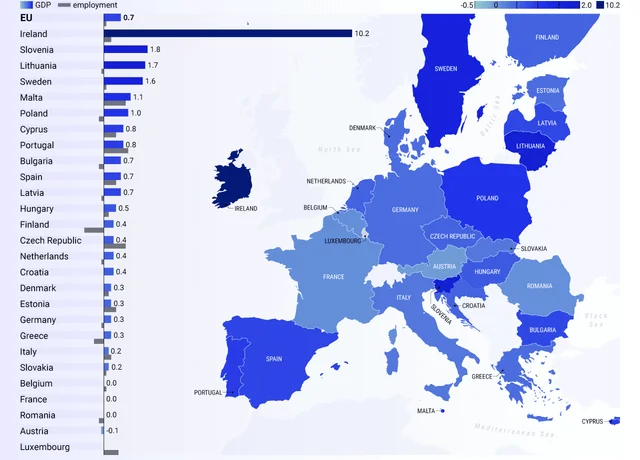
The third-quarter quarterly GDP growth rates among major eurozone countries showed significant disparities by nation 2.
| Country | Q3 Quarterly Growth Rate | Year-over-Year Growth Rate | Notes |
|---|---|---|---|
| Ireland | 5.5% | 3.6% | Maintained high growth after a 10.2% surge in Q2 |
| Spain | 0.6% | 2.7% | Solid growth among major eurozone economies |
| Germany | 0.2% | 1.2% | Continued slowdown from 0.4% in Q1 and 0.3% in Q2 |
| Italy | 0.0% | 0.8% | Stagnant quarter-over-quarter, but growth year-over-year |
| France | -0.1% | -0.1% | Contraction both quarter-over-quarter and year-over-year |
France, in particular, recorded a third-quarter growth rate of -0.1%, along with a -0.1% contraction compared to the same period a year earlier, making it the only major eurozone economy to post negative growth 2. News headlines note that France's contraction occurred amid the aftermath of recent large-scale protests 1.
On the other hand, Ireland posted a high quarterly growth rate of 5.5% in the third quarter. After suffering a sharp contraction of -7.8% in the first quarter of this year, Ireland has displayed extreme volatility, recording a 10.2% surge in the second quarter followed by 5.5% strong growth in the third 2. Spain showed solid growth with 0.6% quarter-over-quarter and 2.7% year-over-year, while Germany's growth slowdown continued with just 0.2% quarter-over-quarter 2. Italy remained stagnant with 0.0% growth quarter-over-quarter but maintained 0.8% growth year-over-year 2.
Comparison of Economic Indicators Among Major Global Economies
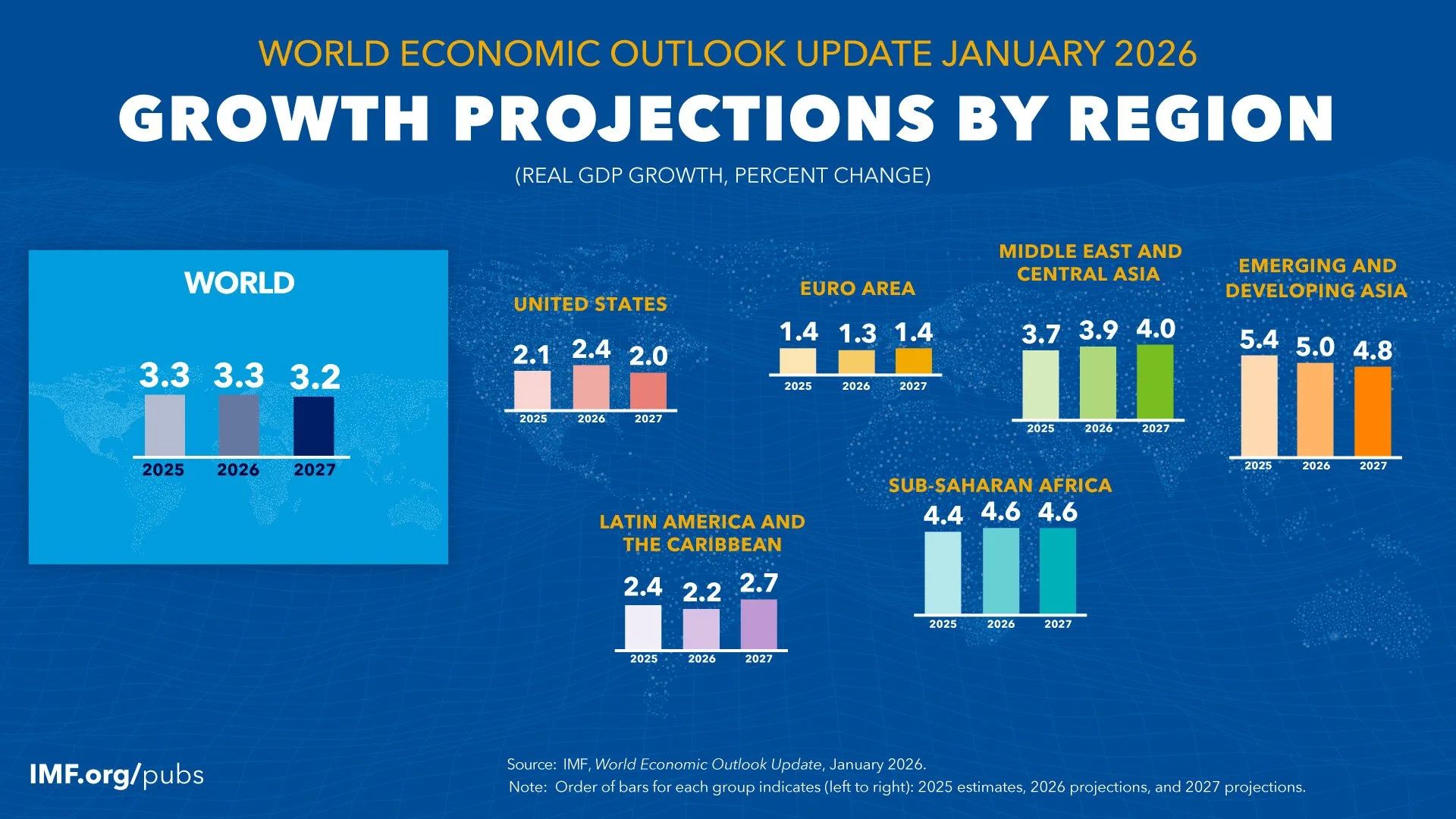
The eurozone's economic performance appears relatively sluggish when compared to other major economic blocs. According to the International Monetary Fund (IMF)'s latest outlook, the eurozone's annual growth rate for this year is projected at 1.1%, similar to the 1.2% recorded last year 2.
- United States: Recorded 0.8% quarterly growth in the third quarter, equivalent to an annualized growth rate of 3.4% 2.
- China: Recorded a year-over-year growth rate of 4.5% in the third quarter 2.
Eurozone Labor Market Conditions
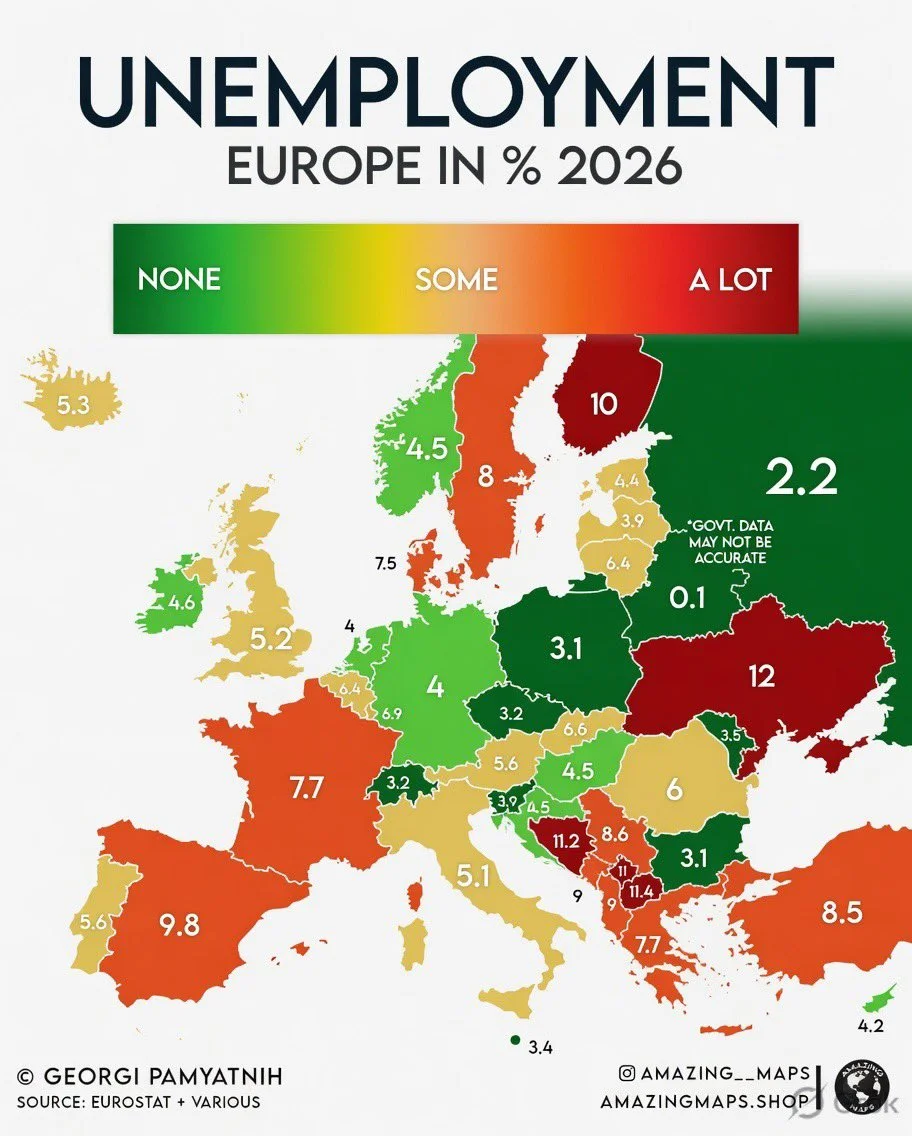
Eurostat also released seasonally adjusted unemployment data on the same day. The eurozone's unemployment rate in September 2026 remained stable month-over-month at 6.5%, unchanged from August. However, it rose by 0.2 percentage points (p) from 6.3% in the same month a year earlier (September 2025) 3. The overall EU's unemployment rate in September also stood at 6.2%, unchanged from the previous month, but up 0.2p from September 2025 (6.0%) 3.
Implications
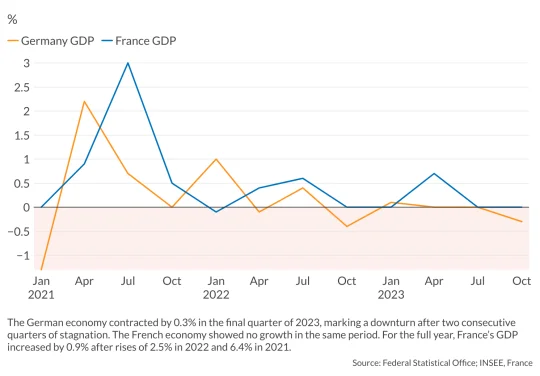
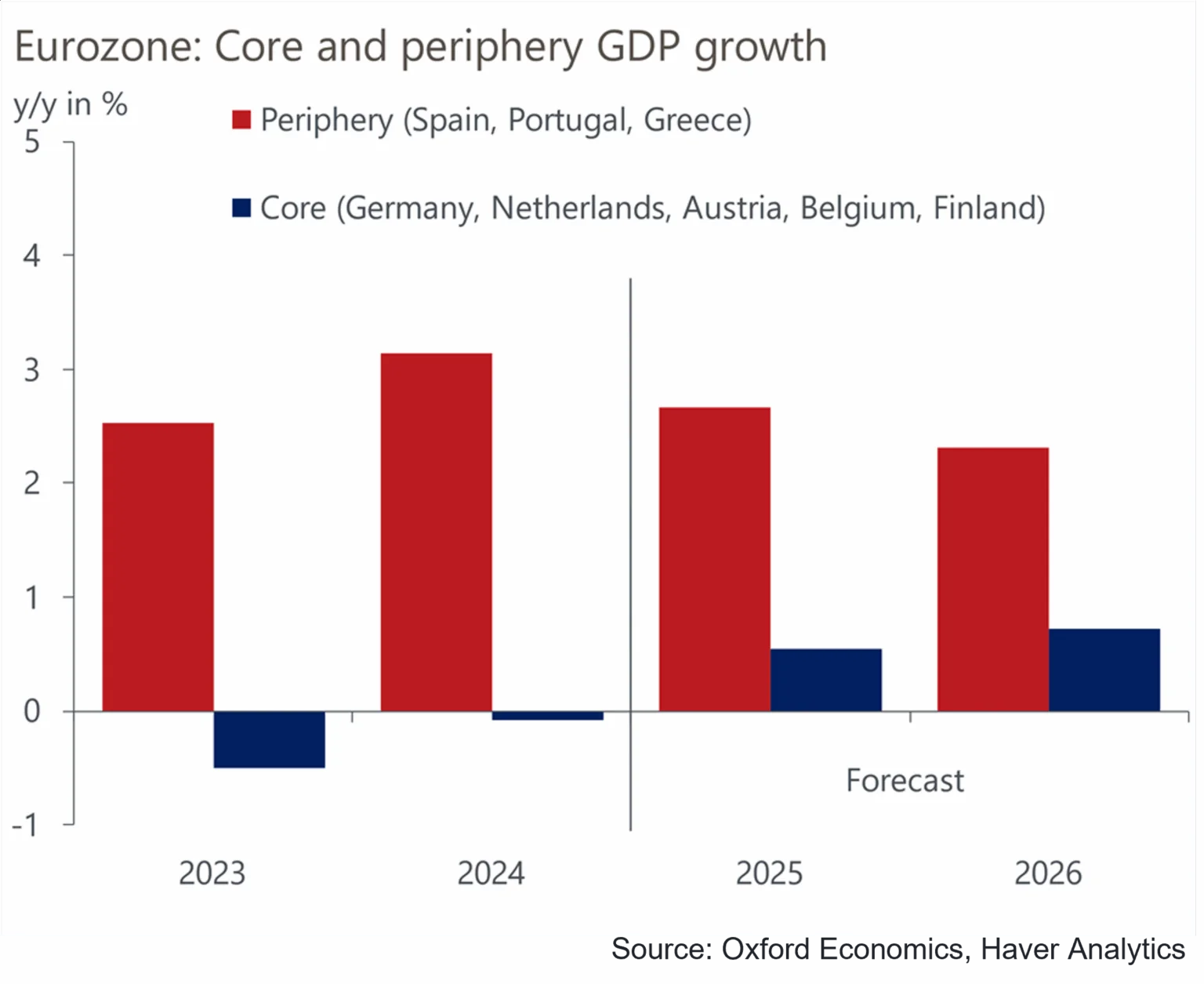
While the entire eurozone continued its recovery with 0.4% growth in the third quarter, outcomes diverged sharply by country. With growth from Ireland and Spain supporting the overall indicator, the persistent slowdown in Germany and France's -0.1% contraction highlight economic vulnerabilities and an uneven recovery pattern within the eurozone.
References
- 다음뉴스 | 홈 · news.daum.net↩
- 유로존 3분기 0.4% 성장…독일 0.2% 이탈리아 0.0% 스페인 0.6% · newsis.com↩
- Euro indicators - Eurostat · ec.europa.eu↩