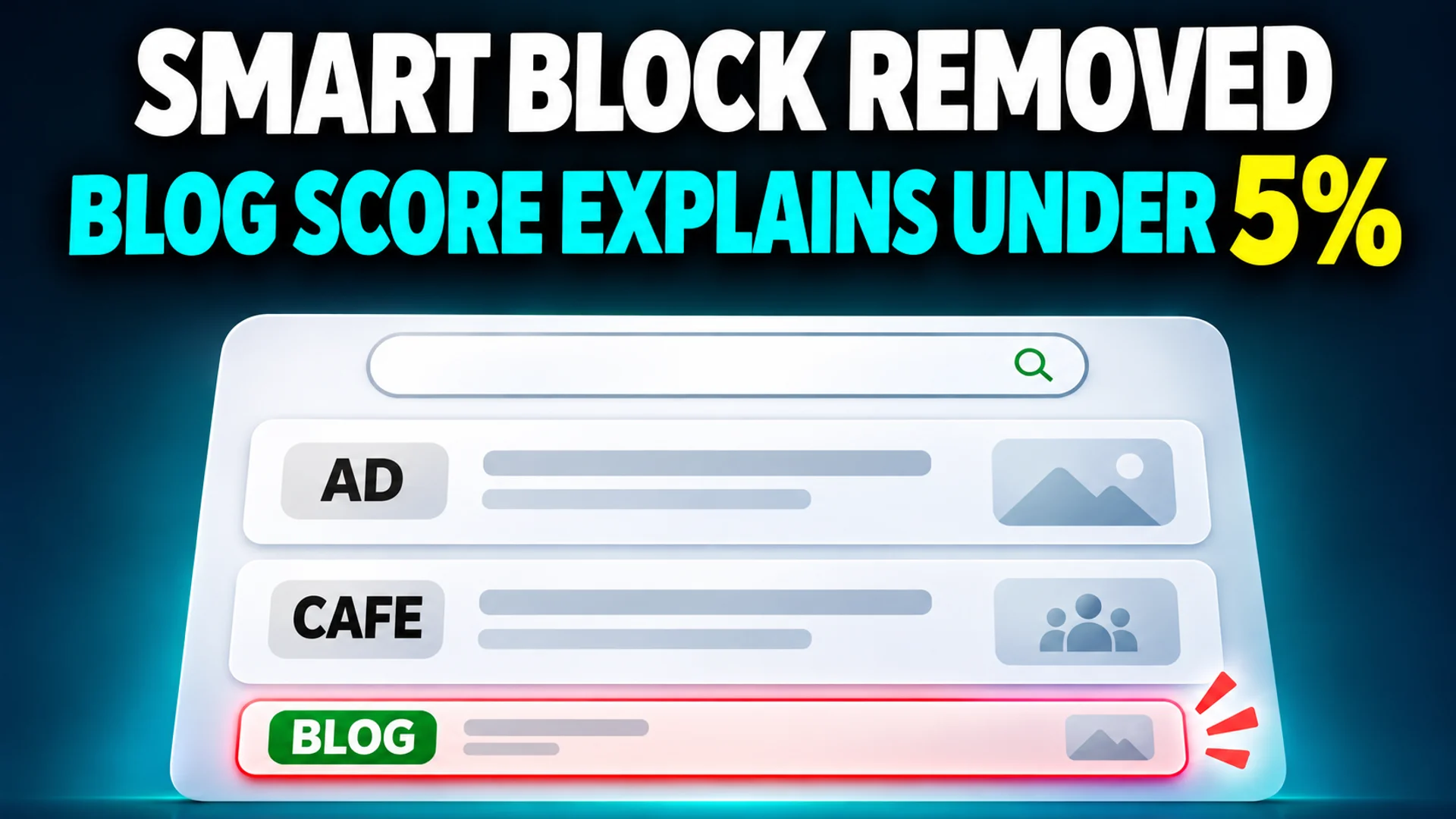
The biggest issue thrown at blog operators in the second half of 2026 is not declining traffic. Rather, it is how to generate revenue in an environment where users no longer 'read' posts. While Naver’s overall blog visitor base remains massive, traffic to individual content has noticeably decreased due to the introduction of AI search summary features. This 'zero-click' environment is shaking the fundamental structure of monetized blogs that previously relied on informational posts that merely listed keywords.
Ultimately, the role of blogs must be redefined from being a stronghold that absorbs traffic in bulk to a 'support channel' that reinforces AI search reliability and aids final purchase decisions. Readers visit blogs to verify information summarized by AI, and the content that survives in this context is not simple facts, but authentic on-site experiences and brand narratives that AI cannot replicate.
The AI Search Reorganization and the Structural Crisis of Informational Posts

With the launch of the AI tab and Naver AI Briefing as part of the Naver Plus Membership pilot service in April 2026, search screens have been completely reorganized around AI summaries. When users input long, sentence-like questions of 15 characters or more, such as "Indoor tourist attractions in Jeju suitable for kids," instead of short keywords like 'Jeju restaurants,' AI immediately summarizes and provides the information at the top of search results.
| Changes in Search Environment | User Behavior Patterns | Impact on Blog Content |
|---|---|---|
| Introduction of AI summaries and briefings | Increase in searches with complex questions of 15+ characters | Sharp decline in original article clicks (traffic) |
| Establishment of a zero-click environment | Satisfaction with top summary information | Decreased trust in keyword-listing posts |
This trend has occurred while Naver Blog maintains a massive ecosystem with total unique visitors exceeding 45 million and 330 million posts published annually 1. Although demand for the platform itself remains, the large volume of sponsored reviews and keyword-repetitive content relied upon by influencer-type blogs is losing readers' trust. As users begin to question "Is this a real experience?", traditional SEO strategies based on simple exposure and click-induction have faced structural limitations 1.
The Evolving Role of Blogs as 'Support Channels' and GEO Strategies
Due to changes in the search environment, Naver Blog is being required to establish new positioning. This is because users refer to AI-recommended information but visit blogs as the final checkpoint to verify reliability before making their final decision. In this process, potential customers with the highest purchase intent carefully scrutinize the detailed information and expertise on blogs to reassure themselves of their choices 2.
| AI Search Engines | Naver Blog Citation Status (As of 2026) | Strategic Implications |
|---|---|---|
| Naver AI Briefing | Recorded a 46% citation rate for specific content | Securing structured on-site information is essential |
| Google AI / Gemini | Ranked first among cited domestic sites | Building data formats preferred by AI |
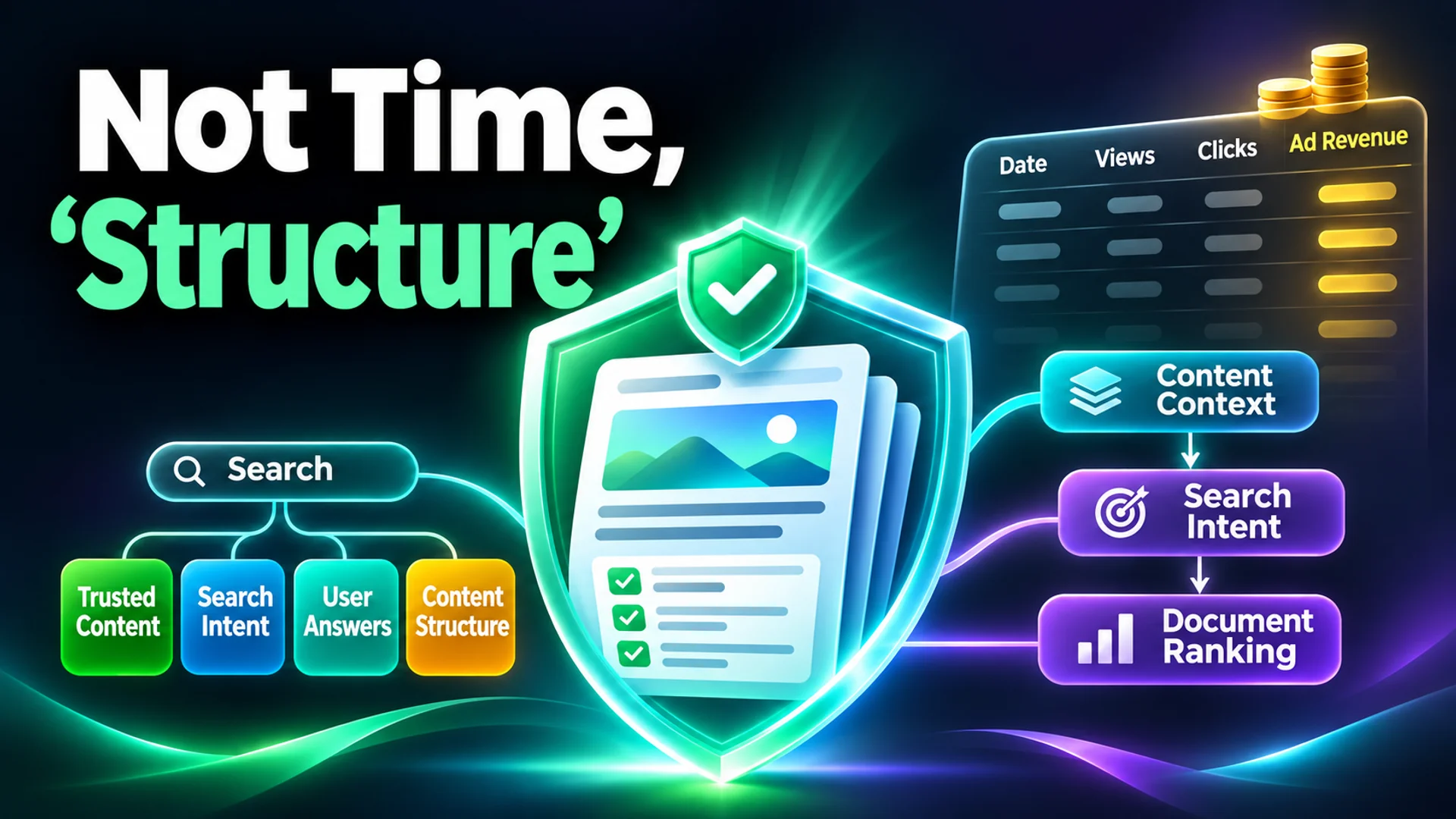
It has been confirmed through data that AI tends to prioritize citing Naver Blog content when generating answers. Analysis of Google AI Overview showed that Naver Blog ranked first in citation frequency among domestic sites, and Naver AI Briefing also showed a high citation rate of 46% 3, 2. Consequently, beyond simple keyword matching, 'GEO (Generative Engine Optimization)'—making content recognized by AI as a trustworthy source—is emerging as a core strategy 3.
To get AI to cite content, technical and strategic preparations beyond simply listing information are necessary. Examples include technical measures such as facilitating AI crawler access and applying structured data to aid information extraction. Pages with schema markup show higher AI citation probabilities, leading to tangible GEO effects 4. In fact, there have been reports that reconstructing own-brand mall content to be AI-friendly and enhancing expertise resulted in an AI answer citation rate rising to 27% within three months 5.
Why Brand Narratives Persuade Both AI and Humans
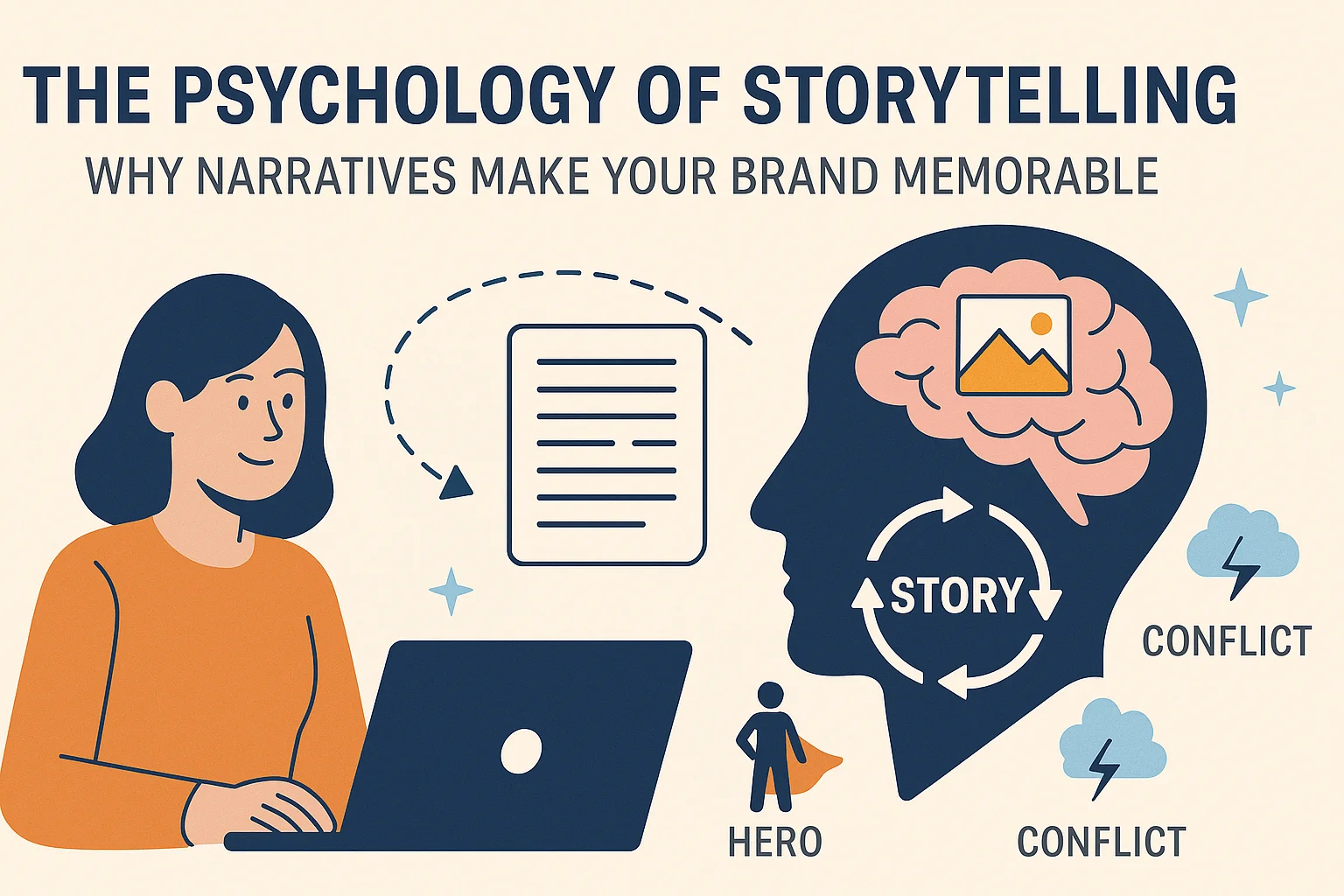
To differentiate in the AI search environment, content must contain 'unique experiences' that AI cannot generically replicate. What AI uses as fuel for its answers includes directly tested empirical data and unrefined User-Generated Content (UGC), which are unique observational records from people 6. Content must weave in a narrative structure that allows the identification of the relationship between the brand and the product—the 'entity'—rather than just providing simple information 4.
| Storytelling Element | Neuroscientific/Psychological Effect | Impact on Business Performance |
|---|---|---|
| Narrative information structure | Activation of the hippocampus and prefrontal cortex (memory enhancement) | 22 times higher retention rate compared to simple facts |
| Authenticity and empathetic narrative | Fulfillment of emotional solidarity and social responsibility | Influences purchase decisions of over 70% of Gen Z |
| Integration with customer participation (UGC) | Formation of spontaneous worldviews through participation | 161% increase in conversion rate compared to self-produced content |
The impact of brand storytelling on profitability is also proven by neuroscientific evidence. Information containing stories is remembered 22 times better than simple facts, stimulating consumer empathy and leading to long-term loyalty 7. Such emotional immersion yields tangible results, boosting conversion rates by up to 30%. In particular, a narrative structure where the customer becomes the hero solving a problem and the brand acts as the mentor assisting them makes users feel like part of the brand, rather than just consumers of content 7.
Diversification of Revenue Models and Trust-Based Expansion
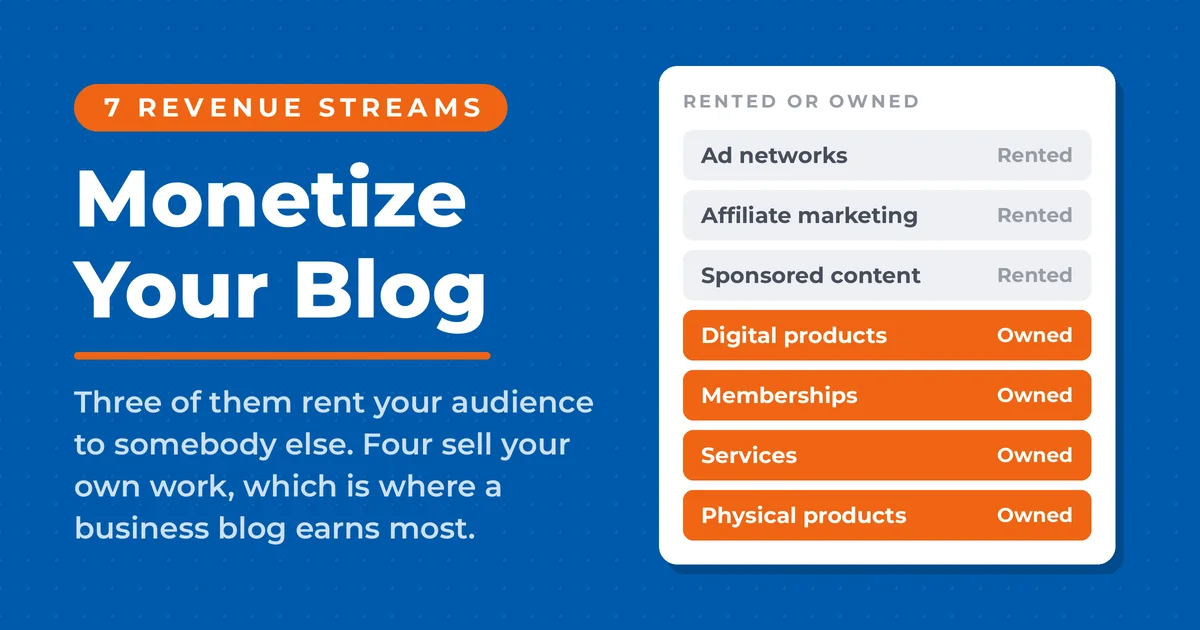
Another pillar of blog monetization in 2026 is platform diversification. In an environment where risks such as algorithm changes and declining ad unit prices persist, models relying solely on a single channel like AdSense are very unstable 8. Therefore, blogs must function as hubs connecting various revenue pipelines such as e-books, knowledge subscriptions, and brand partnerships 8.
At this point, the brand narrative accumulated in blogs becomes a powerful tool for revenue generation. While past informational posts relied on 'clicks', current posts containing brand stories accumulate 'trust assets' that drive purchases. The phenomenon of 'brand mentions,' where a brand is positively and repeatedly mentioned in communities or YouTube without links, serves as a crucial signal for AI to classify it as a trustworthy entity 6.
In actual marketing, metrics such as brand search volume, dwell time, and NPS (Net Promoter Score) have become core KPIs 7. Even if the number of website visitors decreases, if the 'mention frequency' and 'citation ratio' of the brand in AI agents or briefing answers increase, it is evaluated as a successful outcome with a greater impact on potential purchase decisions 6.
Practical Application: Content Clustering Capturing the 'Question Journey'
![Practical Application: Content Clustering Capturing the 'Question Journey']](https://blog.inerit.dev/media/posts/4bde0c57/section_5.webp)
To apply brand storytelling and GEO strategies to blogs, the structure of the content itself must change. Publishing individual posts scattered by keyword, as in the past, should be avoided. It is advisable to design a content cluster encompassing the entire 'question journey,' from buying guides to repair methods and second-hand prices 6.
- Present the background (And) and conflict (But) to encourage readers' brains to focus.
- Record failures and correction experiences from actual on-site scenarios as unrefined data so AI can grasp them.
- Conclude by connecting the resolution (Therefore) process with the brand's expertise and philosophy (archetype).
Posts based on this 'Background-Conflict-Resolution (ABT)' structure not only remain in human memory for a long time but also clearly make AI recognize that "this is the source solving the specific problem" 7, 6. For smaller brands, sharing transparent imperfections and the founder's daily life becomes the strongest weapon for building trust.
Long-Term Investment in Trust Assets for the Second Half of 2026
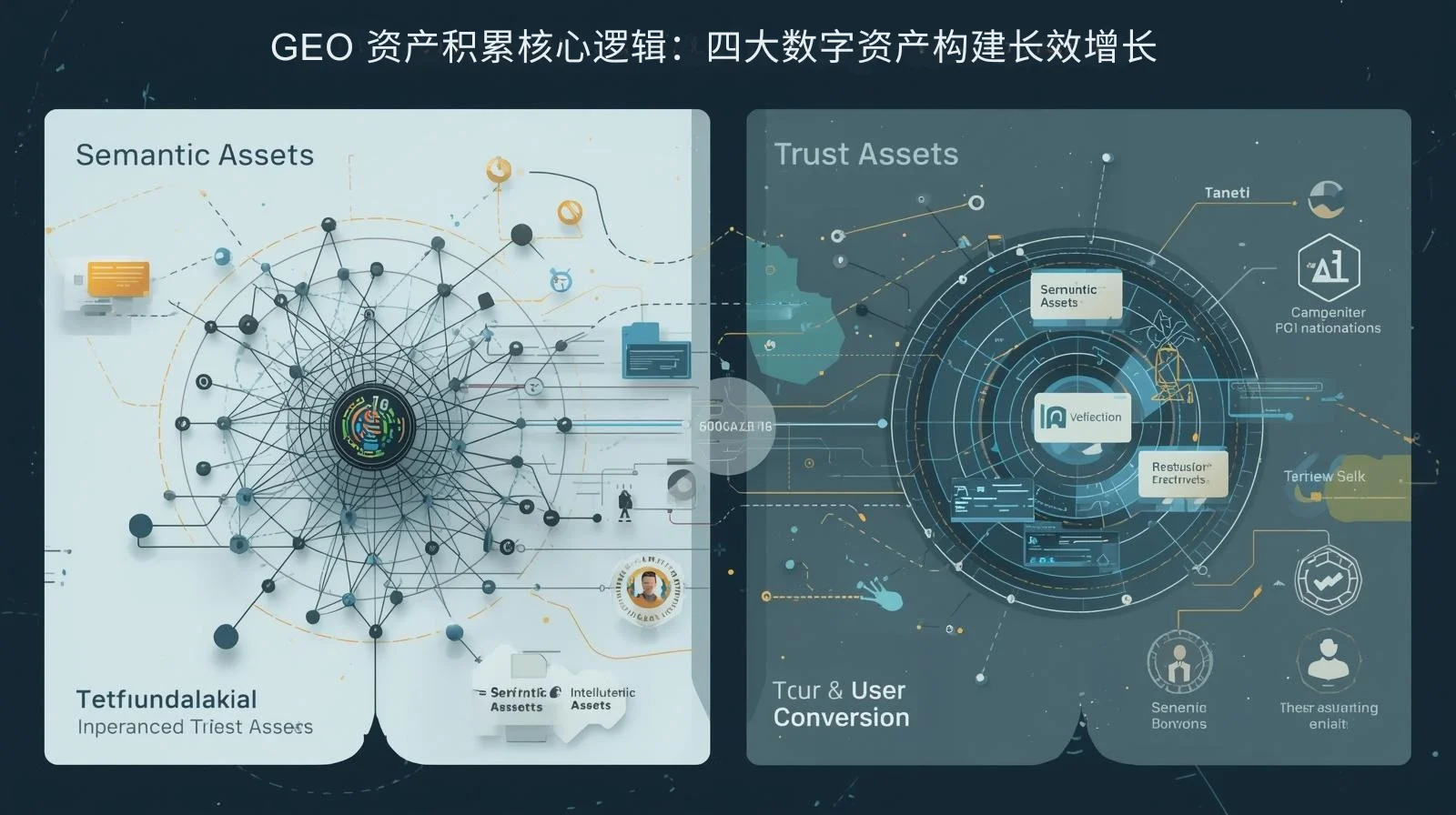
Ultimately, monetized blog trends in the second half of 2026 have shifted completely from 'understanding algorithms' to 'creating value that AI will cite.' In the massive flow of AI search, the standardization of simple information is already over. What remains are unique experiences and observations that only a brand can possess, and customer-centric narratives.
Efforts are required to allow technical access to AI crawlers and apply structured markup to make data easily readable by machines. At the same time, the work of weaving in sophisticated stories that touch human psychology cannot stop. Rather than fluctuating emotionally over short-term decreases in visitor numbers, it is time to refine strategies so that each blog post accumulates as a 'brand asset' that builds AI trust and consumer loyalty.
References
- 네이버블로그 네이버 블로그 트래픽 하락, 인플루언서형 글쓰기의 · thetravelnews.co.kr↩
- ↩
- 2026 SEO 트렌드,‘순위 경쟁’에서 ‘AI 영향력’으로 · ditoday.com↩
- 2026년 기업 블로그 AI 검색 인용률(GEO) 극대화를... — Plurank Blog · blog.plurank.com↩
- 국내 브랜드를 위한 생성형 AI 엔진 최적화 실전 가이드 | 넥스트티 블로그 · next-t.co.kr↩
- 2026 AI SEO 트렌드: 순위 경쟁에서 AI 영향력으로 · openads.co.kr↩
- 브랜드 스토리텔링 전환율 30% 높이는 5단계 방법 | 시그마인 블로그 · sigmine.ai↩
- 2026년 트렌드 변화에 강한 머니파이프라인 플랫폼 다각화 전략 완벽 가이드 · money-pipeline-hub.blogspot.com↩