In the second-half 2026 public recruitment cycle, the 'first sentence' of the self-introduction essay (jaeseo) is not merely an introduction; it is the frontline that must pass through the keyword matching filter of the artificial intelligence (AI) document screening system and capture a hiring manager’s attention within three seconds 1. In an environment where approximately 64.4% of submitted essays are currently written with generative AI, 42.2% of hiring managers penalize essays that clearly show signs of AI authorship 2, 3. Therefore, the first sentence that determines success or failure should exclude abstract expressions like "I will become an enthusiastic talent at your company" or AI-specific writing styles, explicitly state the core keywords of the target role, and immediately reveal the applicant's competencies combined with quantified achievements using a deduction-first (top-down) structure 2, 1. Notably, since the evaluation processes for public recruitment and ad hoc recruitment/internships are fundamentally different, job competency keywords to be integrated into the first sentence and experience-centered narrative strategies must be strictly differentiated according to the recruitment type 4, 3.
The 2026 Recruitment Environment: AI Filtering and the 3-Second Rule
As of 2026, the document review stage of the recruitment process is dominated by automated analysis systems based on natural language processing (NLP) and machine learning. These systems convert applicants' text to analyze the frequency and context of tech stacks or job-related keywords, scoring job fit based on this analysis 5. More than 65% of large corporations already utilize these AI-based systems, achieving the effect of reducing document screening time by over 70% 5. In other words, if the first sentence lacks core keywords that clearly define the target role, there is a high risk that the AI system will assign a low job fit score and classify the application into a lower group.

Even after passing the AI filtering stage, the final evaluation remains the responsibility of human hiring managers. Current hiring managers tend to skim an applicant's self-introduction essay in just three seconds, and if job fit is not clearly revealed within this short timeframe, the application is immediately disqualified 1. In the past, the first sentence was often used to describe motivation for applying or personal background, but in the current environment, the first sentence must serve as a headline that proves the applicant's core value. Generic expressions or copy-paste essays with only the company name changed cannot survive the 3-second scan; one must immediately demonstrate potential contributions to the target role through a deduction-first (top-down) structure 1.
Essential Elements of a First Sentence That Both Hiring Managers and AI Notice
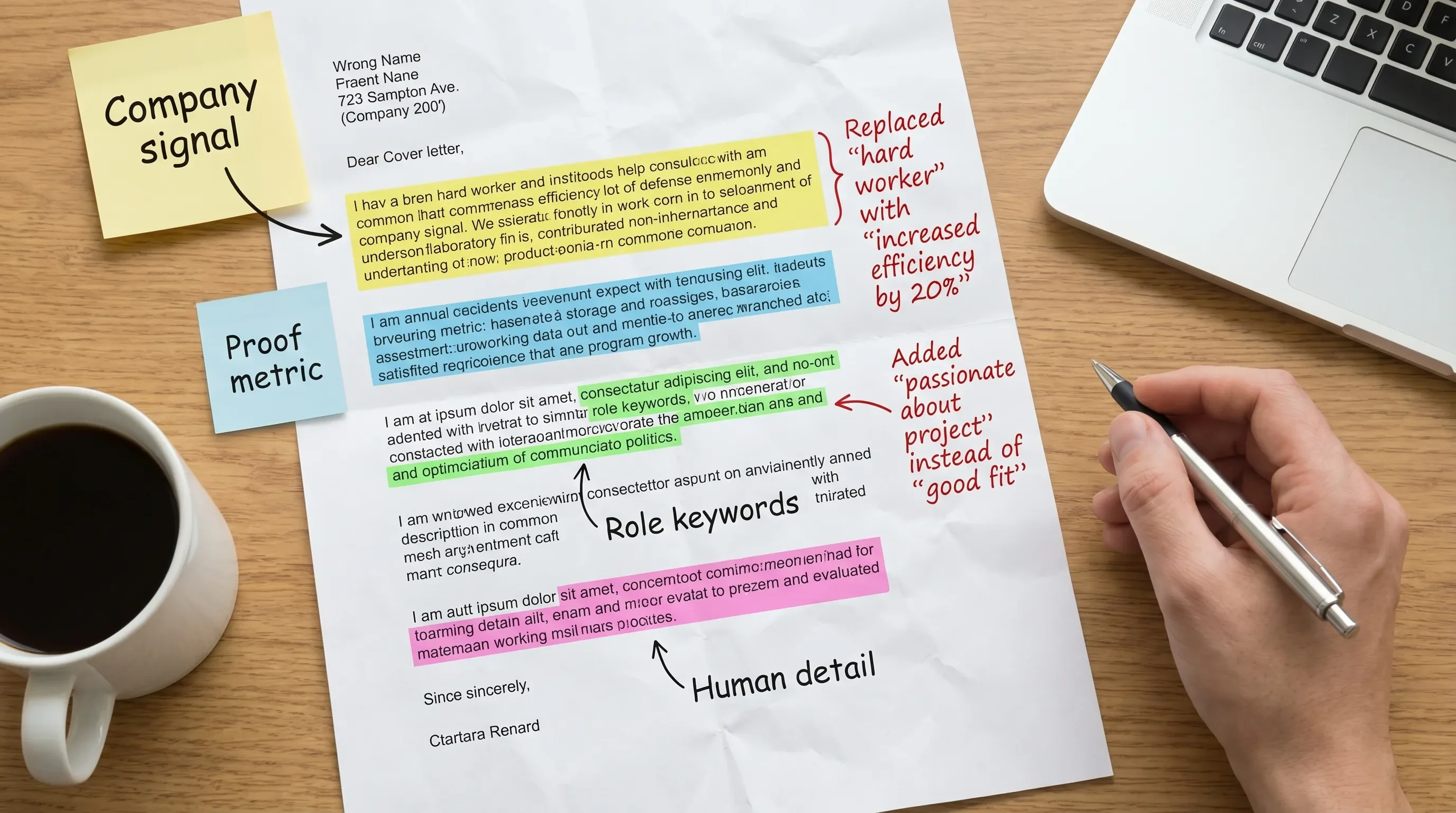
The first sentence must pass through two gates: AI's 'keyword matching' and the hiring manager's '3-second judgment.' The most reliable way to satisfy both simultaneously is to assemble sentences by combining core competency keywords of the role with quantitative performance indicators. Hiring managers look for evidence of how job competencies have been proven numerically, rather than unsubstantiated abstract expressions like passion or responsibility 1, 2.
Specific numbers do not necessarily need to represent grand results. Even if direct sales contribution is difficult to demonstrate, one can prove quantitative impact by using comparative metrics such as 'compared to before' 1. Additionally, if the definition of job competencies for the target career field is ambiguous, it is effective to check the competency units on the official website of the National Competency Standards (NCS) and integrate them into the sentences 1. Below is a table summarizing the structural elements that must be included when writing the first sentence.
| Included Element | Purpose and Role in Writing |
|---|---|
| Job Core Keywords | Securing keyword matching scores from the AI filter and immediately proving job relevance 5 |
| Quantitative Figures/Achievements | Objective evidence of the applicant's contribution that hiring managers verify within 3 seconds 1 |
| Context of Action (Role-Specific) | Avoiding generic expressions (abstract forms) like passion or responsibility that AI easily generates 2, 1 |
Breaking Away from AI Writing Styles: Rewriting Principles for Evading Detection
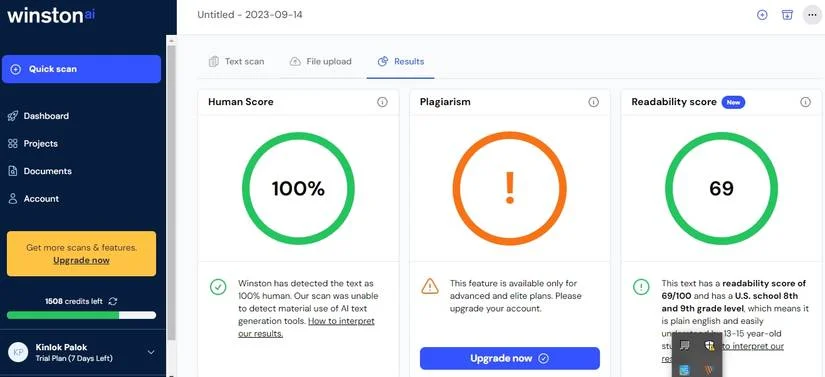
The thing to be most wary of when writing the first sentence is leaving behind the cliché writing style typical of AI. Connective phrases such as 'through' or 'based on this' are typical characteristics of AI-generated writing, and if these patterns remain intact in the essay, they are easily caught by AI detection systems 2. As indicated by statistics suggesting that 64.4% of 2026 essays are estimated to be AI-written, recruiters are highly vigilant about AI writing styles 2, 3.
To break free from the generic draft state generated by AI, 'experience-based rewriting' is essential. You must completely change the context by directly adding your own unique failure experiences or specific time/cost reduction data to the sentence frameworks (such as extracted job keywords) obtained from AI tools 2. For example, rather than simply listing the process of completing a project, you must condense a personal story that AI cannot imitate (e.g., the process of resolving unexpected data errors encountered in a specific project) and weave it into the first sentence 2. Undergoing plagiarism and AI similarity verification in the final review stage is also included as a mandatory checklist item 2, 1.
Principles for Writing First Sentences by Recruitment Type: Public Recruitment vs. Role-Focused Ad Hoc Recruitment
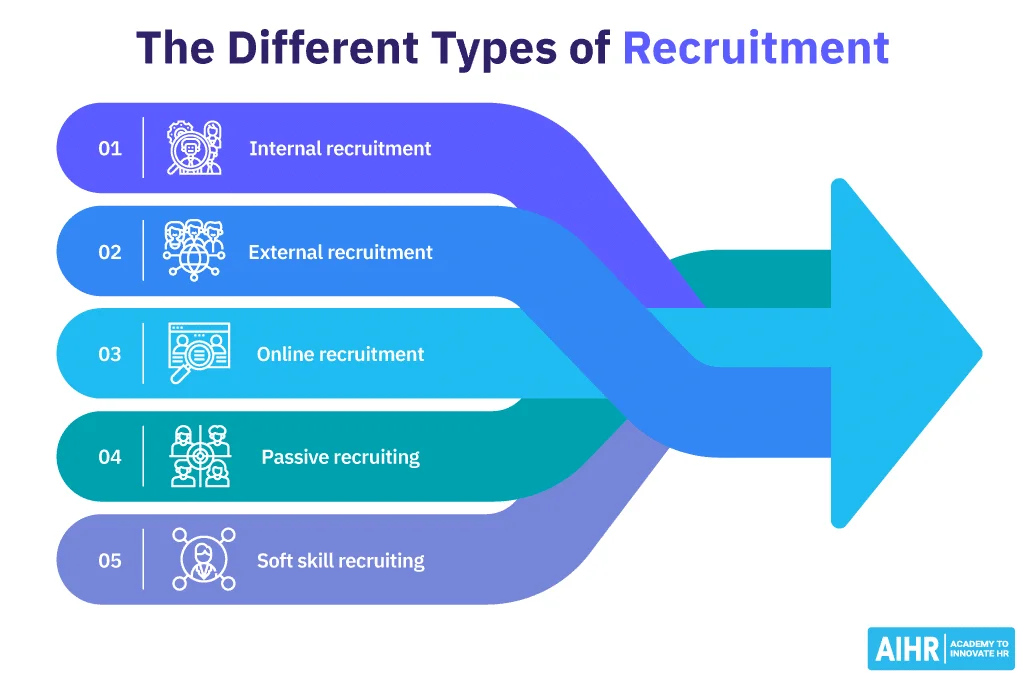
Due to structural changes in the 2026 recruitment market, self-introduction essay strategies must be tailored to each company's recruitment type. Regular public recruitment follows a standardized procedure involving documents, aptitude tests, and interviews, whereas ad hoc recruitment has simplified procedures and prioritizes job fit and practical competencies 4. Consequently, the focus of the value that the first sentence must prove is completely different.
Applicants preparing for public recruitment need sentences that prepare for standardized evaluation criteria, centered on job competency keywords alongside aptitude tests 4, 3. Conversely, as the proportion of ad hoc recruitment in fields like AI and data analysis exceeds 90%, applicants targeting specific positions must premise the first sentence with relevant job experience (portfolios, projects, etc.) 4. The table below compares the differences in approaches by recruitment type when designing the first sentence.
| Category | Regular Public Recruitment (Large Corps, Public Institutions, etc.) | Ad Hoc Recruitment / Job Internships (IT, Startups, etc.) |
|---|---|---|
| Evaluation Environment Characteristics | Large-scale selection, includes aptitude tests, focused on standardized competency evaluation 4 | Quick results within about two weeks, small-scale recruitment, centered on potential for immediate deployment 4 |
| Core Strategy for First Sentence | Explicit job competency keywords, focus on quantitative achievements based on NCS 4, 1 | Proof of direct execution experience for the applied position (portfolios, projects, etc.) 4, 3 |
New Hires and Interns: Converting Lack of Experience into Job Language in the Introduction
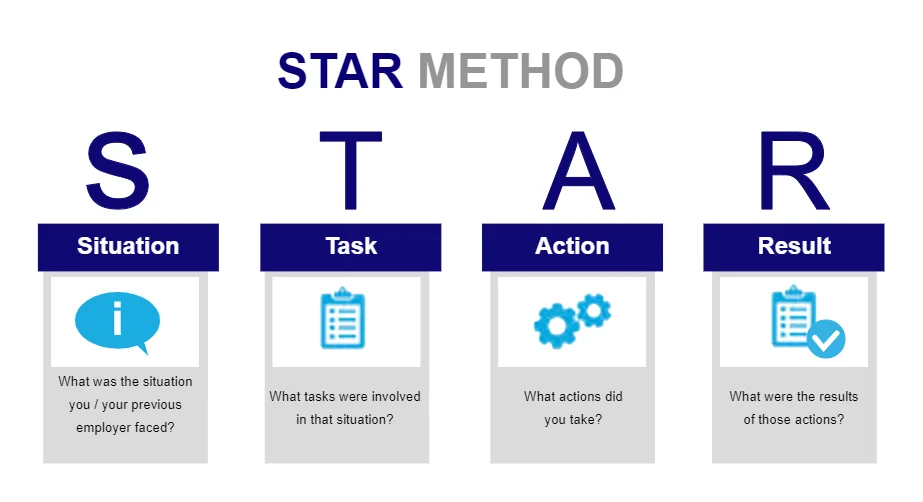
Unlike experienced professionals, applicants for new hire or job internship positions lack overwhelming practical experience data. In this case, the core task of the first sentence becomes how to persuasively connect experiences that may seem weakly related to the job in the eyes of hiring managers 3. Rather than preaching passion due to lack of experience, one must first structure their experiences using strict STAR (Situation-Task-Action-Result) methods, potentially leveraging tools like AI, and then translate them into 'job language' 3.
Even if the experience was a part-time job or small-scale club activity, it is important to interpret it from a job perspective (e.g., cost reduction, process improvement, number of customer interactions). Specific activity examples related to the job from internships, projects, or part-time jobs should be identified, with the majority of the content focused on the Action and Result parts, but these should be quantified and summarized in the first sentence 1. For new hires, the role of AI is not to create experiences, but to reorganize the applicant's fragmented activities around job keywords and job competencies to maintain authenticity 2, 3.
STAR-Based First Sentence Assembly: Condensing Action (A) and Result (R)
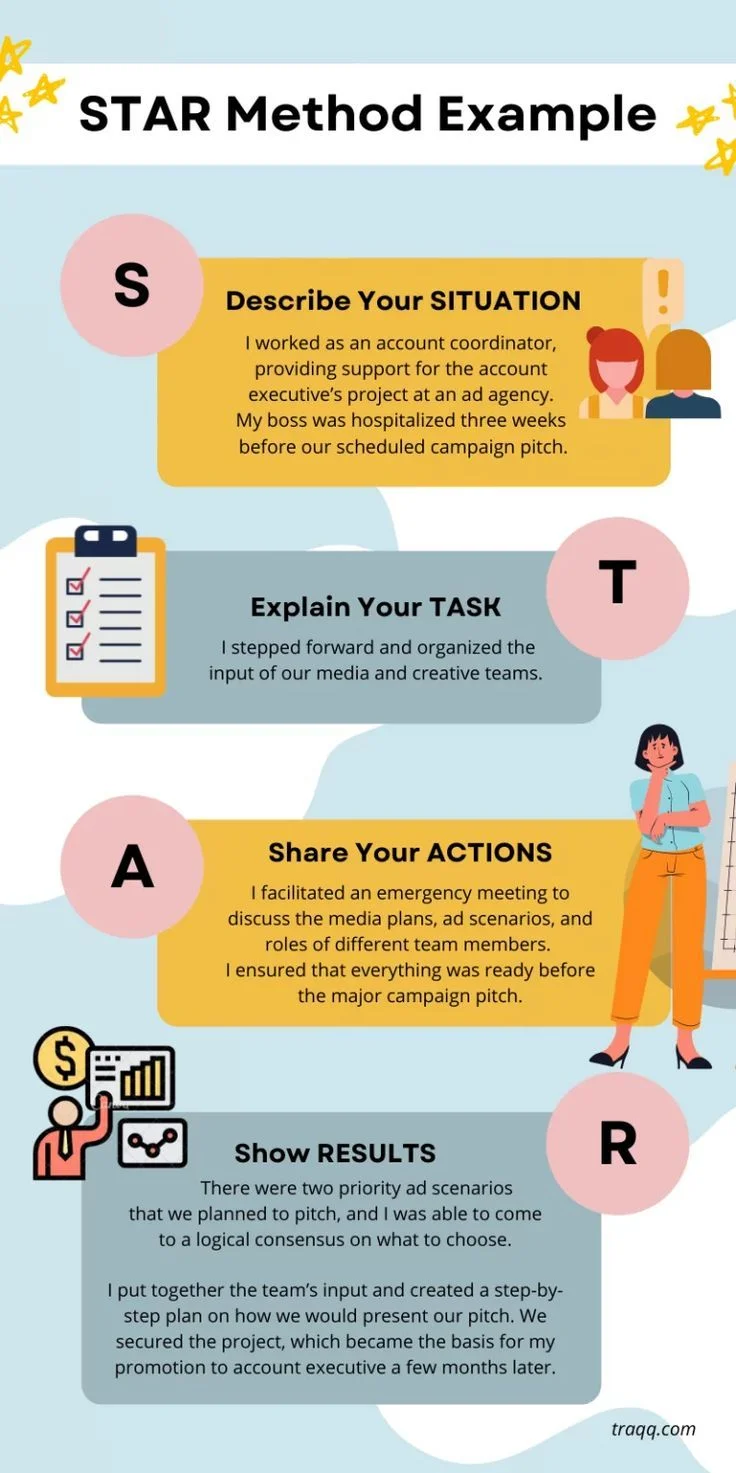
The STAR method applies to writing first sentences for specific self-introduction essay prompts. Applicants often make the mistake of spending too much time on the introduction, which corresponds to 'Situation (S)' or 'Task (T)' in the STAR method 1. Since the first sentence is judged within 3 seconds, it is effective to condense the 'Situation' and 'Task' into minimal context in the introduction and place the most impactful 'Action (A)' and 'Result (R)' front and center.
The Result (R) must always be presented as numbers, and integrating this into the first sentence allows the applicant to immediately prove their problem-solving capabilities and sense of achievement 1. If the first sentence is for a motivation prompt, it can be assembled by connecting the Result (R) of one's own project to the context of the 'company's recent business direction' 1.
Notes for Direct Writing: Below is a conceptual example of framing the skeleton of a self-introduction essay's first sentence using the Action (A) and Result (R) from the STAR method.
- [Situation/Task] (e.g., "In a situation where I had to reduce the initial user churn rate of 30% for Project A")
- [Action + Result] (e.g., "I performed a data-driven redesign of the user journey, reducing the churn rate by 12 percentage points in just two months.")
Condensing action and result into a single sentence structure and placing it in the first sentence is the most realistic strategy for passing the first stage of document screening (keyword filtering and 3-second scan) in the 2026 recruitment ecosystem 2, 1.
Pre-Submission Check: Sentence Structural Geometry and Similarity Verification
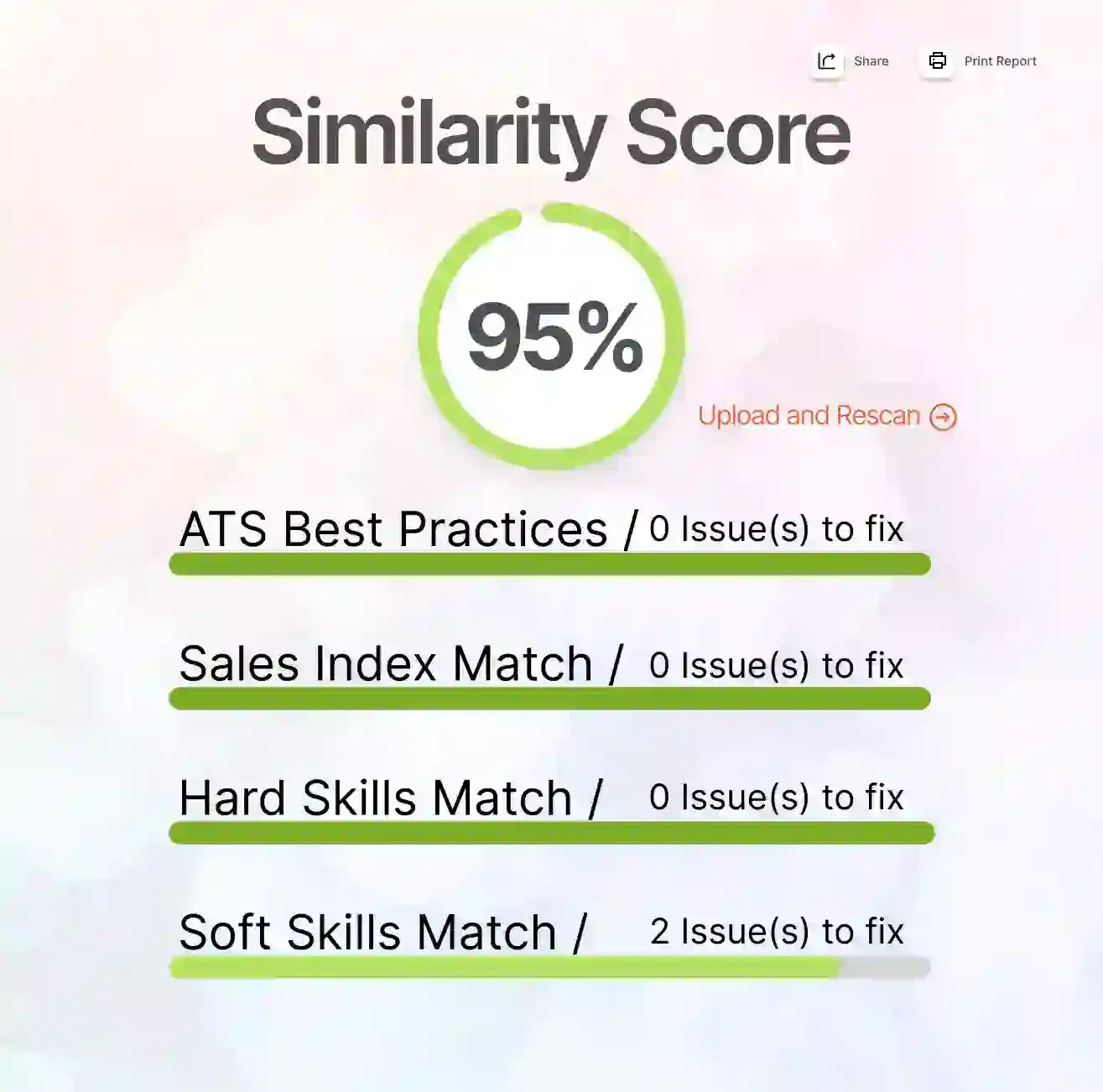
After completing the first sentence, a cold assessment of mechanical structure and stylistic consistency is required before submission. Even if the sentence captures the hiring manager's attention, if it contradicts the rest of the essay or future interview answers, it leads directly to trust issues 3. You must ensure there is no subtle discrepancy between the competencies claimed in the first sentence of the essay and your actual interview answers, such as the difference between 'I led the team' and 'I worked together' 3.
Furthermore, since similarity verification systems can detect AI usage or the reuse of generic sentences copied from others, you must recheck whether the first sentence has been rewritten with your own unique data before final submission 1. To prevent input blockage due to exceeding character limits, adjust sentences to fill 80-90% of the total length, and finally confirm that the core keywords of the target job are consistently present from the first sentence to the final result sentence, and that there are no typos in the company name or job title 1.
References
- 하반기 공채 자기소개서 작성법 2026 — 서류 탈락... - smartlabs.kr · smartlabs.kr↩
- AI 자소서 활용법: 서류 합격률 2배 높이는 이력서 작성 가이드 · airepoto.com↩
- 자기소개서 면접 AI 완전 가이드: 자소서 작성부터... - AceRound Blog · aceround.app↩
- 트렌드픽 · tpick.co.kr↩
- AI 기반 채용 지원서 자동 분석 시스템: 서류 심사 시간 70% 단축, 우수... · blog.ellijobs.com↩