
"Younger generations only care about work-life balance, so they don't produce results."
Have you ever heard something like this in a meeting room or during coffee time? Or perhaps you've seen team leaders sighing, wondering, "Why is our company so stingy with our employees?"
As of 2026, the South Korean business landscape is in a state of greater chaos than ever before. On one side, a hyper-efficiency-driven "Work-Balance" (focusing on work performance) led by AI and semiconductors is being emphasized; on the other side, "Work-Life Balance" (respecting individual lives) is emerging as a condition for corporate survival.
This is not simply a matter of "which side to choose." How we bridge the gap between these two flows will be the key factor determining the success or failure of our companies in 2026.
The Chilling Reality Our Organizations Face: K-shaped Polarization and the "Inactive" Youth
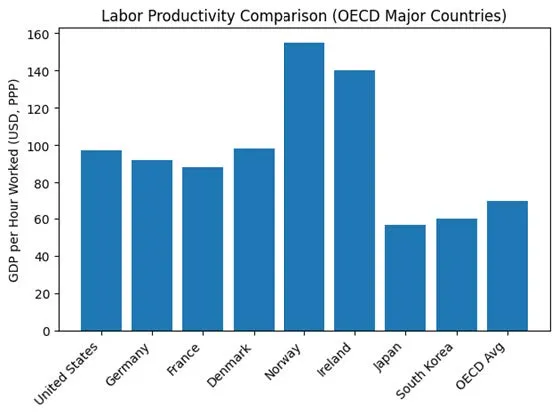
First, we must face the reality we are in. The Korean economy currently stands on the sharp edge of "K-shaped polarization."
Recent statistics show the situation is quite serious. While new industries and large corporations are on a growth trajectory, traditional industries and SMEs are facing the threat of extinction. A particularly eye-opening aspect is the state of the 2030 generation. The news that the "inactive" population (those who are neither working nor looking for work) exceeded 710,000 last year, reaching an all-time high, is not simply because there are no jobs.
It is because talented individuals, unable to find an answer to the question, "What value can I provide in this company?", are being pushed out of organizations. This is not a quantitative growth of employment, but a warning sign that a qualitative collapse of employment has begun.
Why is this happening? The economic structure of 2026 is highly asymmetrical. Certain fields where AI investment is concentrated experience explosive growth, while fields that fail to ride that wave shrink rapidly. This asymmetry is reflected directly in the labor market, creating extreme situations where some workplaces don't even have the luxury to discuss "work-life balance," while others are struggling because they cannot produce "performance."
Why 'Work-Life Balance' Alone is Insufficient, and 'Performance' Alone is Dangerous
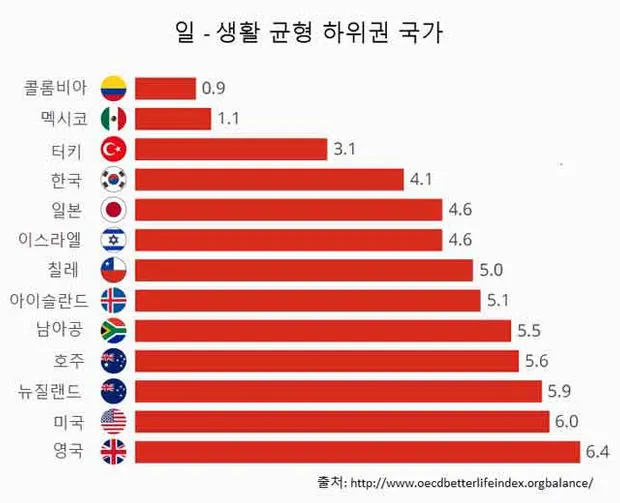
Here, we must ask a fundamental question: Why do the methods of the past no longer work?
In the past, strong, "performance-oriented" leadership was considered a virtue. As seen in the recent movements of companies like Meta in the U.S., methods such as forcing a return to the office and pressuring performance to maximize efficiency may produce numbers in the short term. However, experts like McKinsey warn that such approaches can become a poison that erodes creativity and sustainability in the long run.
That said, shouting for unconditional "work-life balance" is also not the answer. Looking at the analysis by Professor Jan-Emmanuel De Neve of Oxford University, there is an interesting point. Only 20% of employees feel happy at work; the majority find happiness in their lives after work.
There is an important trap here. Looking at the level of work-life balance in Korea, while physical clock-out times might be respected, "substantive work-life balance" remains low. If employees cannot freely express their opinions during work and only experience increased mental fatigue within a top-down culture, that is not true work-life balance.
Ultimately, the problem is not the "quantity of time" but the "quality of work." Providing only time—while employees feel no sense of accomplishment in the work itself or lack the autonomy to utilize their capabilities—is merely pouring water into a leaking bucket for both the company and the individual.
2026: A 3-Step Survival Strategy to Become a Chosen Company
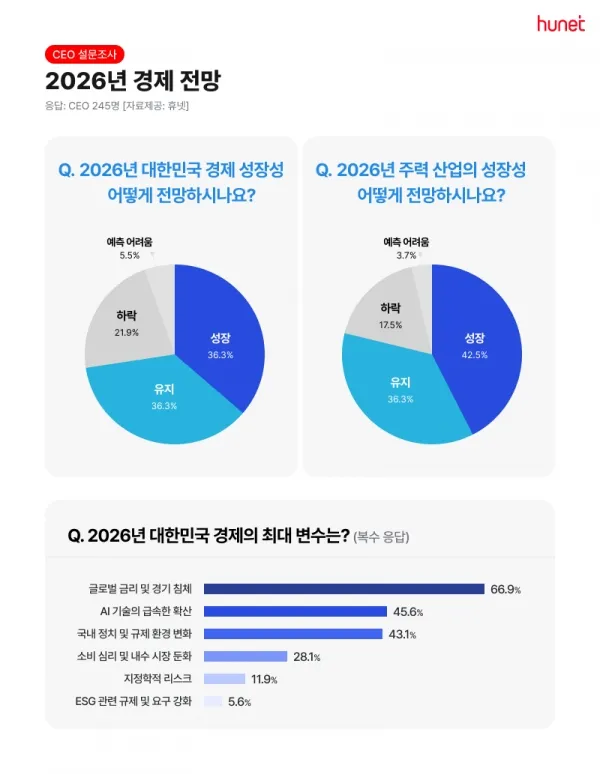
In that case, what path should we walk in this era of chaos? I propose a strategy to win without getting lost between "Work-Life Balance" and "Work-Balance."
Step 1: Redefine Employee Happiness as an 'Investment,' Not a 'Cost'
The first necessary shift in perception is understanding the economics of happiness. As Professor De Neve mentioned, when an unhappy employee finds happiness, productivity increases by about 13%.
The case of Zappos in the U.S. offers great insight. By providing a flexible environment, they enabled employees to provide heartfelt service to customers, which in turn led to the company's explosive growth. Do not view employee well-being as an "expense" in terms of welfare. It is the highest-yielding "investment" to secure future productivity.
Step 2: Build Autonomous Systems for 'Qualitative Work-Life Balance'
Now, we must move beyond simply asking "what time do they leave?" and focus on "how they work." The talents of 2026 crave "initiative" that allows them to demonstrate their capabilities.
The secret to advanced European companies maintaining high productivity while keeping hybrid work models lies in trust-based autonomy. Companies must provide psychological safety so that workers have discretion over their work methods and can make their voices heard. This is the core of the "qualitative work-life balance" that the Korean model should pursue.
Step 3: Implement a Fair Wage System Based on Performance and Job Roles
If autonomy is given, the accompanying responsibilities and rewards must be clear. Much of the conflict currently experienced by Korean companies stems from opaque compensation systems.
As suggested by the Korea Enterprises Federation (KEF), we need to move away from the seniority-based wage system, where salaries increase simply based on years of service, and transition to a wage system based on job value and actual performance. When clear rewards are given to those who perform, and appropriate compensation is provided according to the difficulty of the task, talents pursuing "work-life balance" and those aiming for "performance" can coexist within the same organization.
Conclusion: Will You Lead the Change, or Be Swept Away by It?
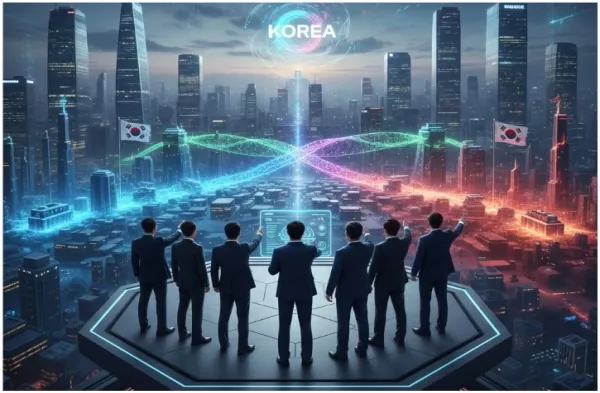
The Korean economy in 2026 is facing rough waves of asymmetrical growth and structural polarization. While the government is providing policy support, calling for the narrowing of labor market gaps and industrial transformation, ultimately, it is the companies and leaders who must navigate these waves on the ground.
To summarize, a successful company is one that places employee happiness at the core of its management strategy (Investment), creates an autonomous work environment (Qualitative Work-Life Balance), and realizes fair compensation based on performance (Completion of Work-Balance).
When these three elements interlock, the "inactive" youth will return to the field, and companies will be able to continue sustainable growth even in an era of asymmetry.
Which path are you preparing for right now? Are you simply pressuring employees for the sake of efficiency, or are you designing employees' lives for the sake of performance?
Is your organization placing more weight on 'Work-Life Balance' or 'Work-Balance'? Please share your concerns and thoughts in the comments.
References
- 2025 조직문화 트렌드 핵심 정리 | 미국·유럽 - YouTube · youtube.com
- 직원 워라밸 챙겨야 성장…이걸 이해하는 기업이 성공한다 | 한국경제 · hankyung.com
- 2026년 고용노동부 중점과제 발표 - 대한민국 정책브리핑 · korea.kr
- '쉬었음 청년' 지난해 71만명 역대최다…중기·일용직부터 시들었다 · mk.co.kr
- [양현상 칼럼] 2026년 한국경제, 비대칭 시대의 생존 전략 · hankyung.com
- [2026 성장전략] K자형 양극화 극복… 청년·지역 동반성장 · yonhapmidas.com
- [2026 경제성장전략]'성장'만 101번 언급한 정부…“양극화 해소 외면” · khan.co.kr
- 우리나라의워라밸 수준은? · oshri.kosha.or.kr