"ChatGPT is flashy, so why is Palantir a terrifying monster?"
Amidst the recent AI investment craze, many people are asking this question. If NVIDIA is the "pickaxe" of AI, Palantir is the "detector" that uses that pickaxe to dig through the earth and find gold, as well as the "vault" where that gold is stored.
Unlike the mainstream ChatGPT, Palantir's name was even unfamiliar to many. However, as of 2026, this company has moved beyond being a simple software firm to reigning as the "heart of data" that dominates national security and the decision-making processes of global corporations. Just what kind of magic does Palantir perform to generate such massive profits? Today, we will dig into that secret.
The magic that makes the invisible visible: The identity of the 4 major platforms
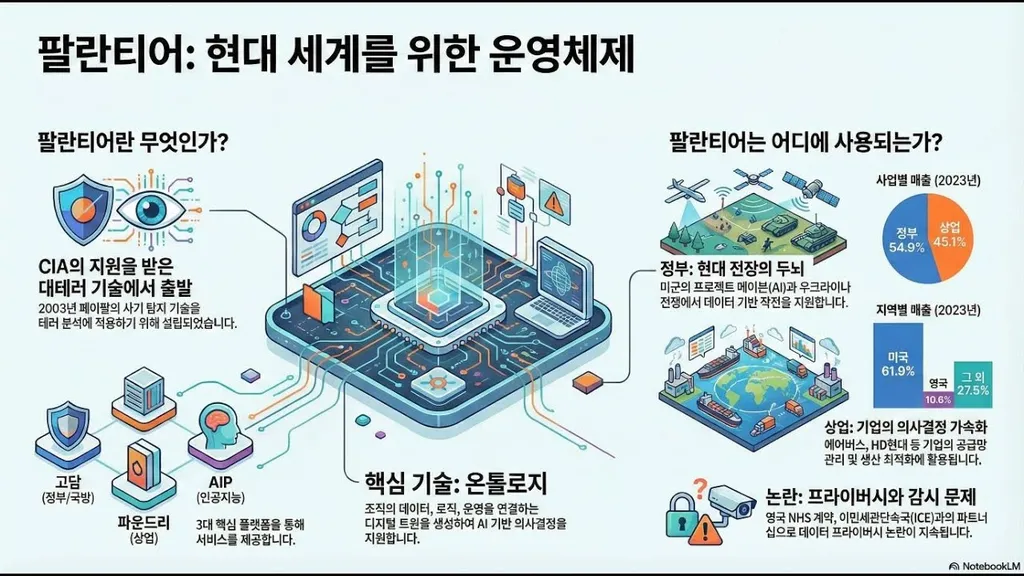
Palantir's name is derived from the "Palantir," the mysterious orb from the movie The Lord of the Rings that can see everything. True to its name, their goal is to find hidden truths within scattered data. They make money through four powerful weapons.
The first one to mention is Gotham. This platform primarily targets governments and defense agencies. Intelligence agencies like the CIA and FBI use it to track terrorists or identify financial fraud patterns. The story that Palantir's technology played a decisive role during the 2011 operation to locate Osama bin Laden is already a legend in the industry. In essence, they are monopolizing a market with very high entry barriers where the demand for national security never runs dry.
Next is Foundry, the relief pitcher for private enterprises. Large corporations in manufacturing, finance, and energy often face problems because they have too much data. Foundry gathers these fragmented data points to create a "Digital Twin." It is like creating an exact replica of a real factory or supply chain inside a computer. This allows companies to perform real-time simulations, such as "What happens if our inventory runs low?" right before their eyes.
Apollo is the operating system that manages these two platforms behind the scenes. It is the unsung hero that automatically updates and maintains the software regardless of whether it is on the cloud or local servers, generating stable subscription revenue.
Finally, the hottest topic recently is AIP (Artificial Intelligence Platform). This is the technology that allows generative AI, like ChatGPT, to be used safely within a corporation's secure environment. It isolates a company's confidential data so that external AI models cannot learn from it, while still allowing the company to extract the full analytical power of the AI. Since 2024, AIP has been the primary driver behind Palantir's explosive growth.
Overturning the SI industry: "Earning money with software, not people"
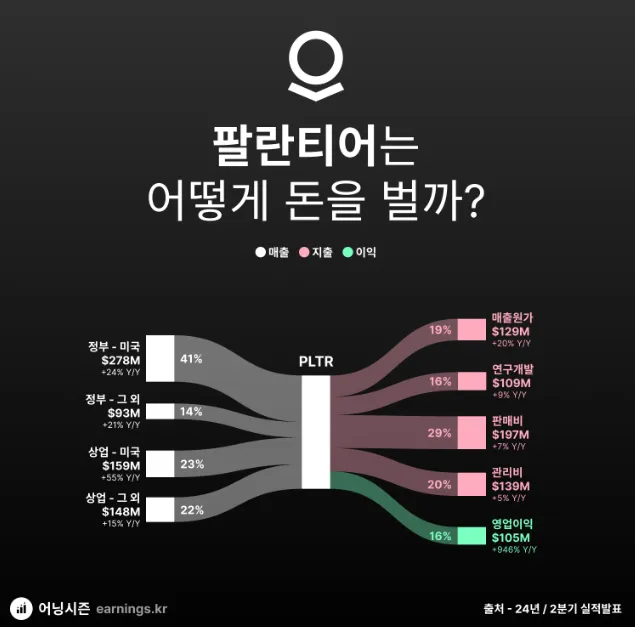
Many people look at Palantir and ask, "How is this any different from existing SI (System Integration) companies?" You are right. In terms of sending engineers to a client's site to solve problems, it resembles the SI model. However, in the fundamental structure of revenue generation, Palantir is walking a completely different path.
Traditional SI markets, including South Korea's, usually charge based on "manpower input." They bill customers saying, "10 developers worked for 6 months, so pay us this much." This is called "Man-Month" based billing. However, this method has a fatal weakness in the AI era. If one skilled developer uses AI to do the work of 10 people, the company faces the paradox of having to reduce its revenue.
In contrast, Palantir earns money through a "software product." Initially, they send engineers to the field to solve problems and integrate the customer's data into their platform (acquisition). Once the data is accumulated on Palantir's platform and becomes established as the organization's operating system, it becomes nearly impossible for the customer to migrate to another system. This is called the Lock-in effect.
Once a system is built, the structure is designed so that the customer pays more as the data scale grows and the number of users increases. In other words, because they charge based on the value of the software rather than the number of people, Palantir can record operating profit margins in the mid-30% range, which is incomparable to general SI companies (6–9%). Their core revenue strategy is selling an "intelligent platform," not human labor.
Practical data technology solving real-world problems
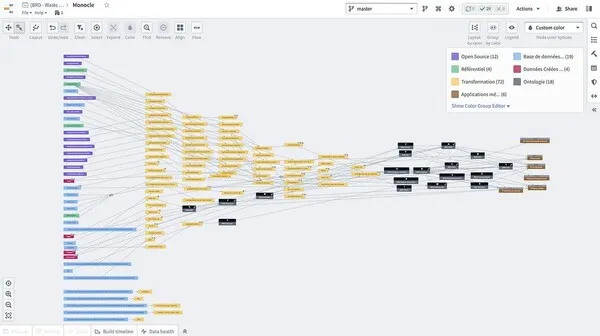
If Palantir's technology were limited to mere theoretical data analysis, it would not be recognized for such high value. Their technology becomes the flesh and blood of actual industrial sites.
One of the most dramatic examples is supply chain optimization. Palantir's digital twin technology shines in solving chronic problems faced by global companies, such as "inventory shortages" or "logistical bottlenecks." For example, a US defense company used Palantir's platform to increase its efficiency in responding to supply shortages by a staggering 200 times.
The case of the food company Wendy's is also fascinating. To solve the problem of syrup shortages across its 6,450 stores, dozens of employees previously had to spend all day working on it. However, after implementing Palantir's system, this problem was solved in just 5 minutes. They essentially saved millions of dollars.
This is possible thanks to Palantir's unique Ontology technology. Data is merely a sequence of numbers and letters, but Ontology assigns "meaning" and "relationships" to this data. It is the process of teaching the AI the context, such as "This number is not just an inventory level, but a material that directly impacts our store's sales." Thanks to this, the AI goes beyond being a simple chatbot to become a powerful assistant that supports the decisions made by corporate executives.
Palantir's Future: Between opportunity and risk
Of course, Palantir's future is not entirely rosy. As of 2026, the challenges they face are significant.
The biggest threat is the pursuit by competitors. Not only giant IT behemoths like IBM, Microsoft, and Oracle, but also specialized data companies like Snowflake and Databricks are eyeing Palantir's territory. The massive capital and cloud ecosystems of these giant corporations are always a threat to Palantir.
Additionally, ethical and political risks cannot be ignored. The fact that Palantir's technology is deeply involved in a nation's precision military operations or surveillance systems causes constant attacks from human rights organizations and regulatory authorities. The fear of a surveillance society brought by AI technology acts as a double-edged sword for Palantir's brand image.
However, Palantir has already established its position as an unrivaled "decision infrastructure." The ability to go beyond simply showing data and provide a "guide" so that humans can make decisions is an area that other companies cannot easily imitate.
Ultimately, Palantir is not a company that builds warehouses to simply store data, but a company that builds an "intelligent engine" that reads and decides the world through data. From government security to corporate efficiency, wherever their platform reaches, data is directly linked to money and victory.
Today, we looked at how Palantir gathered fragments of data to build a massive revenue model. Palantir is proving in person that the value of a company is determined not by the flashiness of its technology, but by how that technology contributes to actual decision-making.
Which company do you think will be the true winner in the AI era? A company that possesses technology, or a company that solves problems with technology?
References
- AI시대의 숨은 강자, 팔란티어는 어떻게 돈을 버는가? - 브런치 · brunch.co.kr
- SI와 비슷하지만 다르게···팔란티어가 돈 버는 방식 · sisajournal-e.com
- 인공지능(AI)의 숨은 강자, 팔란티어는 어떻게 돈을 버는가? AI ... · blog.naver.com
- 팔란티어(PLTR)는 어떻게 돈을 벌까?(2024.8.27.) - 미주동석스 · zzipzukk.tistory.com
- 팔란티어(PLTR) 4대 플랫폼(고담, 파운드리, 아폴로, AIP)의 특징 · zzipzukk.tistory.com
- 09화 2.2 팔란티어의 방식 - 브런치 · brunch.co.kr
- 팔란티어 파헤치기: 기술, 시장, 그리고 성장 이야기 - 네이버 블로그 · m.blog.naver.com
- 떠오르는 팔란티어, AI 활용해 비즈니스 가치 극대화 | 중앙일보 · joongang.co.kr