"I failed again..."
I still remember the sight of my junior sitting in the corner of a cafe yesterday, staring at job postings on the monitor with sigh-filled eyes. They were someone who took pride in having surpassed their target TOEIC score, collected quite a few certifications, and worked hard on maintaining their GPA. However, the result was always the same cold word: 'Rejected.'
That friend asked me, "Senior, what more am I supposed to prepare? I did everything everyone else did, so why won't companies look for me?"
This question doesn't belong to my junior alone. In 2026, countless job seekers are hitting the same wall. It is because the 'formula for specs' we once believed in is completely collapsing.
A Twist Found at the Edge of a Cliff: The Naked Truth of the 2026 Job Market
In fact, only one or two years ago, the job market was a literal 'frozen wasteland.' In 2025 alone, new recruit announcements from large corporations plummeted by a staggering 43% compared to the previous year, burning the hearts of job seekers. As AI began to replace tasks and the economy contracted, companies were feeling skeptical about hiring entry-level employees altogether.
However, in February 2026, the atmosphere flipped 180 degrees. Looking at the Blue House announcements and recent statistics, we can see a surprising fact. The number of new hires from the top 10 large corporations reached 51,600, an increase of 2,500 compared to the previous year. In particular, the fact that the hiring confirmation rate skyrocketed from 54% in 2025 to 87.3% in 2026 is a very powerful signal that companies are opening their doors again.
But, there is a trap we must point out here.
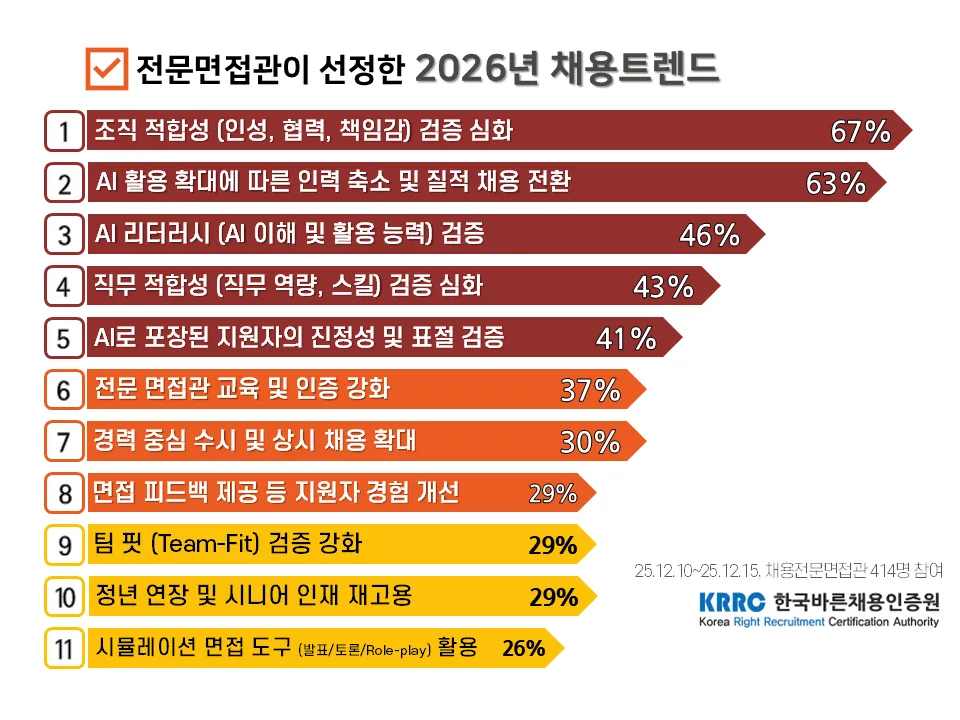
Just because the scale of hiring has increased doesn't mean the door is open to everyone. Companies say in unison, "Even if we want to hire, there is no one worth hiring." In other words, while the numbers have increased, people who can prove they are worth hiring are extremely rare. The 2026 job market has become a battlefield where not quantitative expansion, but a thorough 'qualitative reorganization' is taking place.
The Shell of 'Spec' and the Core of 'Skill'
The old ways no longer work. In the past, recruiters looked at the 'shell' (Spec)—"Which university did you graduate from?" or "What is your language score?"—but now we are in the era of 'Skills-based Hiring.'
This term might sound unfamiliar, but it is very clear. Instead of asking, "What did you learn?", they ask, "What can you do?" In fact, 63% of recruiters responded that they now prioritize 'expertise in one's own field' over academic background.
The key to this change lies in portfolio demonstrability.
The era of embellishing oneself with thousands of lines of self-introductions is over. Recently, even in roles where service mindset is crucial, such as flight attendants, a method has emerged where people visualize their capabilities through 'three photos' instead of written essays. The logic is that one photo of solving a problem while communicating with a customer on-site carries much more power than saying "I am kind" a hundred times.
This is not just a trend. From a company's perspective, it is a very practical survival strategy that increases talent placement efficiency by 107%. In an era where AI writes text and code, companies want to identify 'what someone can do' as quickly and intuitively as possible.
The Weapon of the Victor: Customized Portfolio Strategies by Job Role
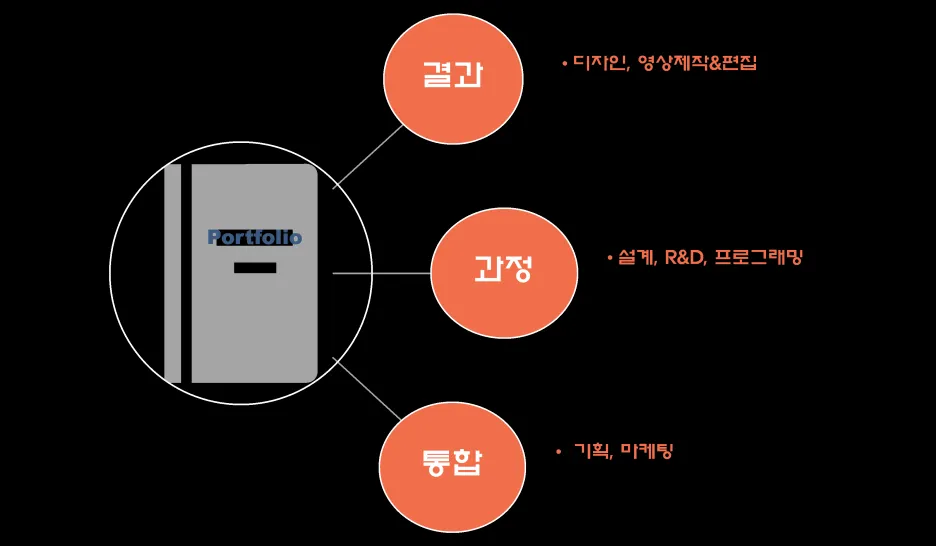
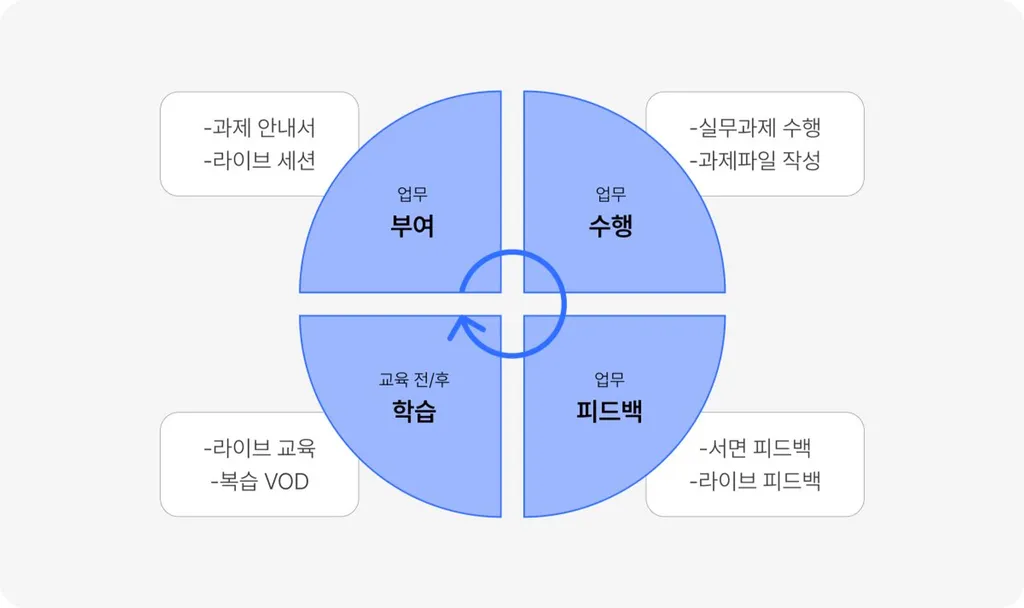
So, what should we prepare? A simple list of "I worked hard" will only head straight to the trash bin. A 2026 portfolio must be a documentary capturing the 'journey of problem-solving.'
The strategy must change completely depending on the job role.
- If you are a Developer? Beyond simple function implementation, you must include the code recorded on GitHub, traces of your thought process regarding 'why you chose this tech stack,' and your troubleshooting experiences.
- If you are a Marketer? Instead of saying "I have good sense," you must prove your results based on figures such as ROI (Return on Investment) and conversion rates.
- If you are a Planner? Along with logical service planning documents, you must show the process of how you made decisions based on data.
Remember these three most important principles: First, speak in numbers. Vague adjectives have no power. Second, show the process. How you dealt with failure is just as much a demonstration of your true ability as a successful result. Third, include authenticity. Rather than trying to look perfect, it is much more attractive to honestly record your own growth.
Experts advise not to delay in order to create a perfect portfolio. If it is about 70% complete, just start. The attitude of a 2026 job seeker is to update and refine it in real-time.
The Second Half of 2026: The 'Golden Time' You Must Seize

Are you feeling overwhelmed about where to start right now? Then follow these three roadmaps.
- Ride the industry trend: The only growth engine in the current job market is the semiconductor and electronics industry. As demand for AI data centers and server memory explodes, the hiring confirmation rate in this field is overwhelmingly high. When choosing target companies, prioritize these industry groups.
- Collect 'experience': There is little room for 'pure entry-level' candidates now. Internships, team projects, or even small contract positions are fine. Create practical experiences so that you can confidently say, "I have done this" in the interview room.
- Deliver concisely and clearly: Just like Instagram or TikTok, recruiters also want to grasp the core quickly. Boldly cut out lengthy descriptions and compress your core competencies into concise and clear sentences.
The 2026 job market is not just about an increase in numbers; it is about the 'door toward prepared talent' opening again. Don't waste time making a flashy package called 'spec.' Instead, pour all your energy into building a portfolio that proves your real, hands-on skills.
If a resume is your entry ticket, a portfolio is your winning ticket.
So far, we have looked at the trends and survival strategies of the volatile 2026 job market. The key ultimately boils down to 'proof, not words.'
Are you currently preparing your own powerful 'evidence'? Or are you still wandering in the endless cycle of building specs?
What does the 'most powerful portfolio' look like to you? Please share your concerns or strategies in the comments!
References
- 2026년 채용시장 대반전 | 지금 여러분이 해야 할 것 - YouTube · youtube.com
- 자소서 끝났다! 사진 3장으로 뽑는 승무원 채용 : 네이버 블로그 · blog.naver.com
- 포트폴리오가 이력서를 이긴다, 2026년 스펙이 아닌 실력으로 말하는 ... · headhunterbrandon7528.tistory.com
- 2026년 하반기는 이렇게 쓰세요 짧고 명확하게 설명드립니다 #취업 ... · instagram.com
- 합격한 포트폴리오 제작기(3탄) + 실제 예시 공유 - 브런치 · brunch.co.kr
- 직무별 포트폴리오 구성 방법: 신입 취준생을 위한 실전 가이드 (2025 ... · autoboyman.tistory.com
- 2026년을 위한 가장 효과적인 10가지 채용 전략을 준비하는 방법! · kr.linkedin.com
- 2026년 채용 시장 '훈풍'… 대기업 적극적 신입 채용 - 머스트 뉴스 · mustnews.co.kr