
"What did I just see?"
Have you ever stopped your finger, which had been incessantly scrolling up the smartphone screen, and thought to yourself: "What did I just see?" 15 seconds, 60 seconds, or three minutes at most. Intense visual information and beats that embed themselves into the brain in a fleeting moment. In the year 2026, we are not simply watching videos; we live in an era of ultra-short-form video nomads drifting through the flow of imagery.
This article is not trying to tell the cliché story of "Kids these days only watch short videos." Instead, I want to delve into the deep psychological "sore spot": why Gen Z is rebelling against the perfect recommendation systems built by algorithms, and why their language is beginning to resemble the rhythm of fragmented videos.
The Comfortable Prison of the Algorithm, and the Rebellion of 'Random Digging'
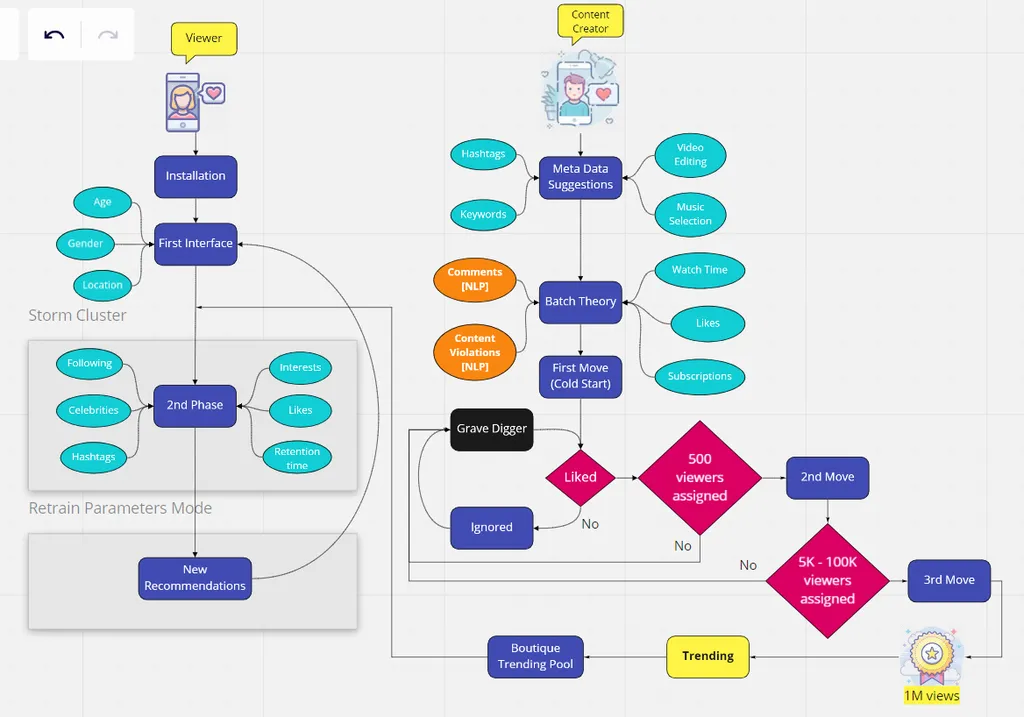
We stand at the pinnacle of the era of hyper-gap AI in 2026. Today's AI is eerily intelligent. It reads everything—the videos I watched yesterday, the images I paused on for three seconds, even changes in my heart rate—as data to perfectly predict "what you might like."
However, a paradox arises here. When everything becomes predictable, humans instinctively feel bored. While perfectly optimized recommendations provide convenience, they simultaneously strip away the 'serendipity' we might encounter. It is like having an AI deliver the exact same nutritional meal every day without you ever having to worry about choosing a menu.
This is why the Random Digging culture has emerged. This trend, which gained significant momentum in mid-2025, is a form of 'digital resistance movement' by Gen Z to break free from the control of algorithms. They intentionally search for videos completely unrelated to their usual tastes or ignore recommendation lists to explore unfamiliar categories.
Why do they do this? It is to find Serendipity. Within the information bubble created by the algorithm—the 'Echo Chamber'—one only sees what they want to see, causing thoughts to become rigid. Random Digging is a highly active movement to break out of this bubble, encounter unexpected information, and construct 'one's own narrative.'
When the Rhythm of TikTok Reconfigures the Brain: The Emergence of Fragmented Language
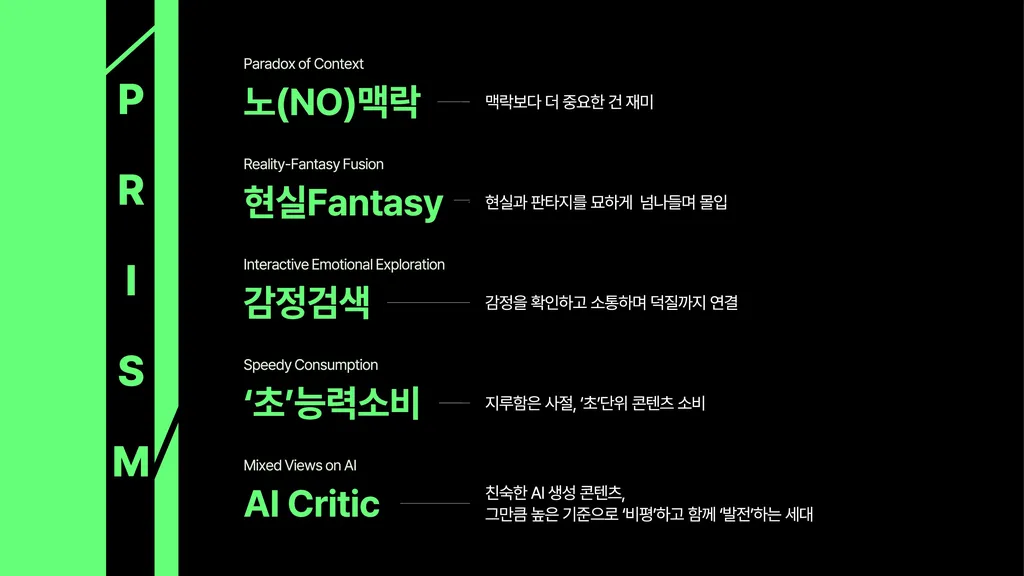
When videos become shorter, the units of thought also become shorter. Ultra-short-form video platforms like TikTok or Shorts are not mere tools for media consumption. They are reconfiguring human linguistic structures and cognitive methods.
If the language of the past had a logical structure with a beginning, middle, and end, communication in 2026 is based on 'contextless connections' and 'visual memes.' A short joke in a video, the beat of a specific song, or a eye-catching caption can convey a more powerful message than a long sentence.
An interesting side effect is observed here: the change in literacy. As people become accustomed to reading the flow of a video and providing immediate reactions instead of reading text and grasping its structure, the ability to decode complex sentences or write logical prose is relatively weakening.
In fact, as many rely on autocorrect features or AI's sentence generation capabilities, concerns are rising that the 'muscles' for independent thought and expression are atrophying. However, it is difficult to dismiss this merely as a problem of 'illiteracy.' It is more accurate to say that they are choosing 'intuition made of images and rhythm' over 'logic made of text.' Rather than language dying, it might be more accurate to say that the form of language is being broken down into the frame units of video.
How Brands Treat the 'Protagonist': AI Advertising and FOOH

So, how should brands and companies targeting these ever-changing nomads move? In 2026, marketing no longer works through one-sided preaching like "Our product is this good."
The recent trend of 100% AI-generated advertisements, such as those showcased by LG Uplus, or Fake Out-of-Home (FOOH) advertising that overlays surreal elements onto real-world spaces, accurately captures this movement. Consumers now react to 'fake things that look real' or 'wondrous moments created by technology.'
Particularly noteworthy is the collaboration with AI characters. Instead of perfect human models, major corporations are now joining hands with AI creators who already possess fandoms. This is because Gen Z places much higher trust in content that blends naturally into their play culture rather than the authoritative messages of a brand.
Brands must no longer be assistants that provide the 'correct answer' to consumers. Instead, they must provide a 'playground' where consumers can create their own stories. Consumers do not want to be passive objects controlled by an algorithm; they want to be the protagonists who lead trends and express their own identities.
The Changing Grammar of Communication: From 'Pangyo Dialect' to 'AI Roast'
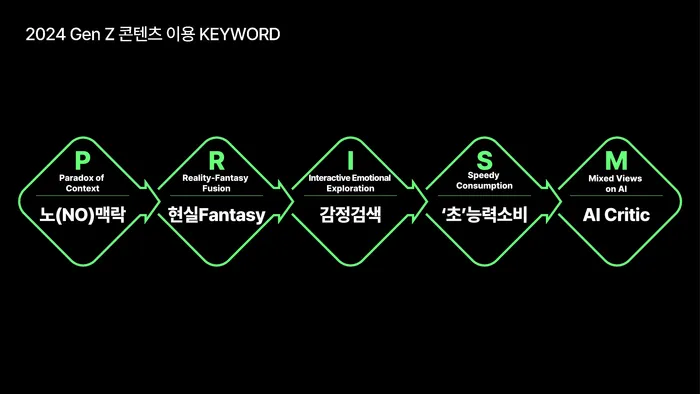
Our everyday way of speaking is also changing. Phenomena such as the 'Pangyo Dialect' that started in the IT industry or the 'Human-Borg' style used to maximize work efficiency are examples of how rapidly language can change based on social roles and technical environments.
Furthermore, the 'Roast' play—using AI to caricature or criticize oneself—symbolizes the unique method of self-expression held by digital natives. Rather than pursuing perfection, they use technology to consume and enjoy even their own vulnerabilities as content. While this might be baffling to older generations, it is also one of the most sophisticated forms of self-directed communication.
Ultimately, digital culture in 2026 culminates in the 'redefinition of humanity.' In an era where AI calculates and predicts everything, humans paradoxically try to confirm their existence through uncertainty, serendipity, and fragmented sensations.
To Summarize
Today, we have looked at how TikTok scrolling is not merely killing time, but a process of forming new language and identity.
- Random Digging: An attempt to secure self-directedness through 'accidental discovery' by escaping the control of algorithms.
- Fragmentation of Language: The spread of short, intuitive communication methods that resemble the rhythm of video, creating a new cognitive structure different from traditional literacy.
- New Marketing: Brands must exist not as commanders, but as 'tools' and 'playgrounds' that assist the consumer's narrative.
In the end, as technology advances, we will seek something more 'human.' Whether that is unpredictable serendipity or a short laugh within a fragmented video.
Did you follow the path recommended by the algorithm today, or did you start your own 'Random Digging'?
What do you think?
References
- 초격차 AI시대 新소비트랜드: 인간다운 '서사'를 갈망하는 디지털 역린 ... · blog.naver.com
- 시사기획창 공식계정 (@window.sisa) - Instagram · instagram.com
- MZ 세대, 베타 세대 : 네이버 블로그 - Naver Blog · blog.naver.com
- Z세대: 여러분, 여러분 세대가 심각한 문맹 문제를 가지고 있다는 거 ... · reddit.com
- 마케팅연구소, 소마코 · blog.socialmkt.co.kr