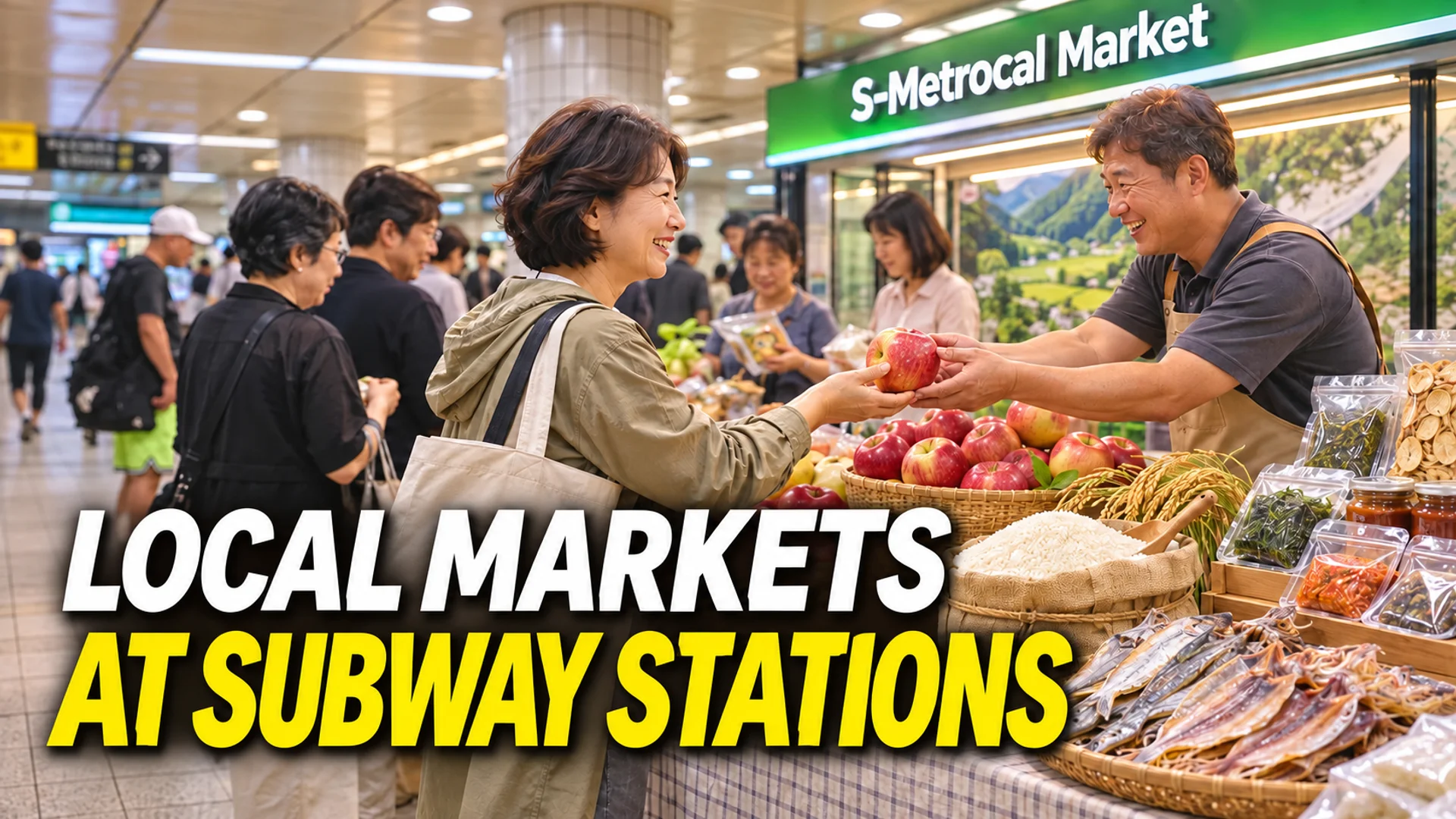
Even without planning a new travel route, there is a way to have a fresh experience. During the 2024 Chuseok holiday, the Seoul Metro opened the “S-Metrocal Market,” bringing regional specialties such as Chungju apples, Cheorwon Odae rice, and Wando seaweed into vacant commercial spaces within subway stations 1, 2. Daily commutes or tourist routes normally taken for granted temporarily transformed into places where visitors could see and select seasonal food products directly from their regions of origin.
A structure where vacant shops become the stage
Subway station local markets are not artificially constructed tourist products. The stage consists of normally vacant “empty shops.” An empty shop refers to a space within a building that is currently unoccupied because no store is operating there. The Seoul Metro utilized these neglected idle spaces to open markets connecting Seoul and the provinces 2.
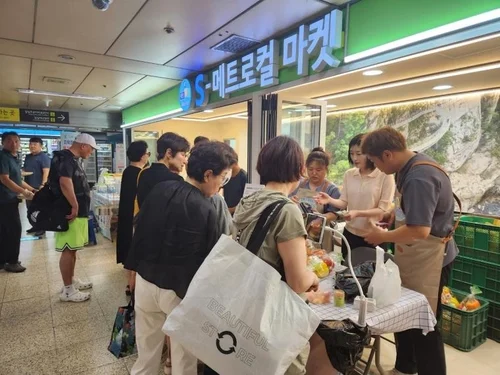
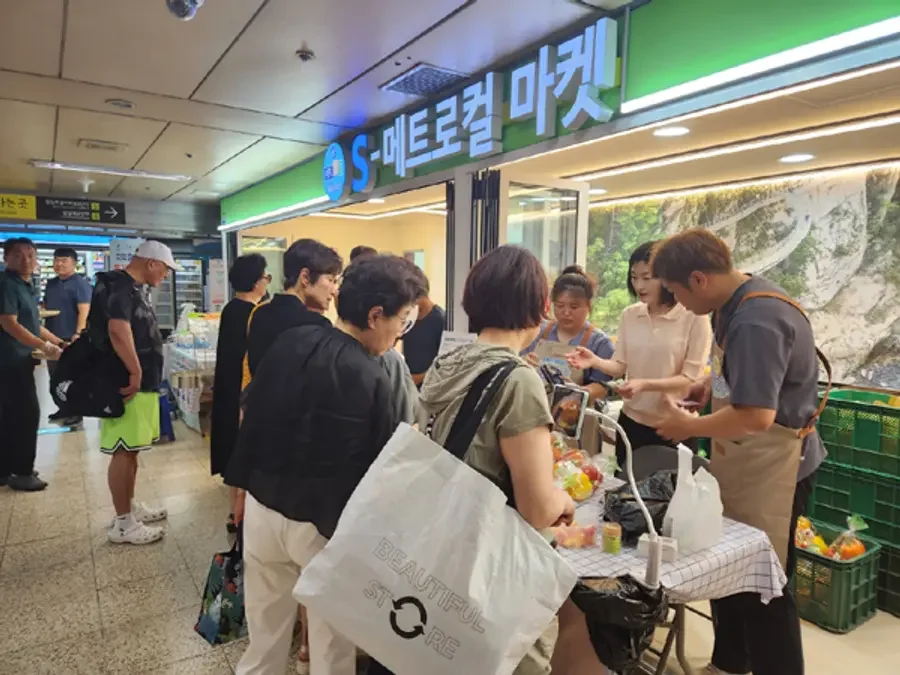
According to reports by Yonhap News and Sl News, the Seoul Metro transformed vacant spaces in Jamsil, Hapjeong, Apgujeong, Nowon, and Amsa stations into sales booths for agricultural, marine, and specialty products, with participation from nine local governments, from September 2 to 27, 2024 1, 2. This allowed commuters to encounter products from their regions of origin right in the middle of a subway station—the most efficient mode of transportation—without having to search for traditional markets in unfamiliar cities.
Products and schedules that create accidental discoveries
The transformation of the space is completed only when specific products are introduced. According to the 2024 event schedule released by Sl News, local governments featured representative food products at designated stations on set dates 2.
Chungju City sold apples and local foods at Jamsil Station, while Cheorwon County sold Odae rice and processed foods at Nowon Station 2. For those interested in marine products, the destination was Hapjeong Station. Wando County offered gopchang gim (laver), seaweed roots, and dried anchovies for broth at Hapjeong Station, while Yeonggwang County presented premium dried yellow croaker and dried yellow croaker in red pepper paste in the same space 2. Hadong County sold regional food products such as plum extract, red pepper paste, and platycodon syrup at Hapjeong and Nowon Stations, and Jangseong County introduced Shine Muscat grapes and salted seafood at Apgujeong and Jamsil Stations 2.
The appeal of this event lies in its “rotation.” Each local government operated for a maximum of five days and a minimum of two days at a single station. While some, such as Hadong County and Jangseong County, moved between two stations, most remained at one station while another local government took over the same station afterwards 2. This means that a store at Hapjeong Station passed today might be filled with specialties from a different local government tomorrow. Such temporarily changing displays add accidental discoveries to ordinary transit routes.
A connecting link for public transit users
The Seoul Metro set a goal to grow this market beyond a simple direct sales marketplace into “urban-rural co-prosperity content.” Kim Jeong-hwan, then Head of the Strategic Business Division at the Seoul Metro, stated that they would develop the market into a venue for diverse content for urban-rural co-prosperity, serving as a connecting link between Seoul and the regions beyond a simple direct sales marketplace for agricultural products 1, 2. The Corporation expanded the venues and scale for the September event after receiving positive public response at the inaugural event in June 2.
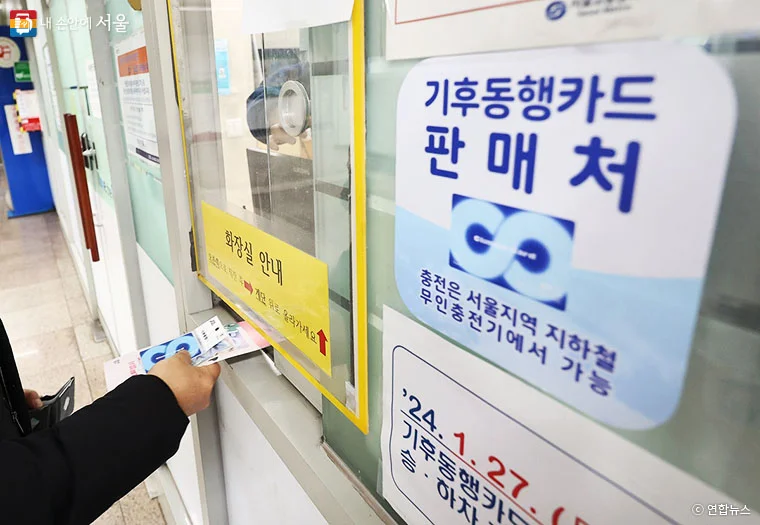
Substantial benefits were also provided to public transit users. The Corporation planned discounts and prize events for holders of the Climate Companion Card (a monthly pass allowing unlimited use of public transportation) 1, 2. The intention was to simultaneously provide sales channels for producers and reasonably priced regional food products along with transportation cost compensation for consumers.
Why participation information should be checked as of 2026
Local markets of this format continue in 2026. A notice titled “SeoulPick-Seoroitda Local Market” guide was posted on the Seoul Metro’s announcements on November 2, 2026 3. However, what can currently be confirmed is only the fact that the event is being prepared or is underway.
Whether vacant shops are being utilized as in the 2024 case, and which items are displayed at which stations now, must be checked through separate guidelines 3. The true enjoyment of subway station local markets lies not in designated tourist spots, but in seasonal produce accidentally encountered along transit routes. If you wish to participate, we recommend first checking the specific locations and duration in the announcements.
References
- 지하철역서 만나는 제철 농산물…추석맞이 'S-메트로컬 마켓' · sportschosun.com↩
- 지하철역 산지직송’추석맞이 농산물 직거래 장터 S-메트로컬 마켓 열린다 · slnews.co.kr↩
- 서울교통공사 · seoulmetro.co.kr↩