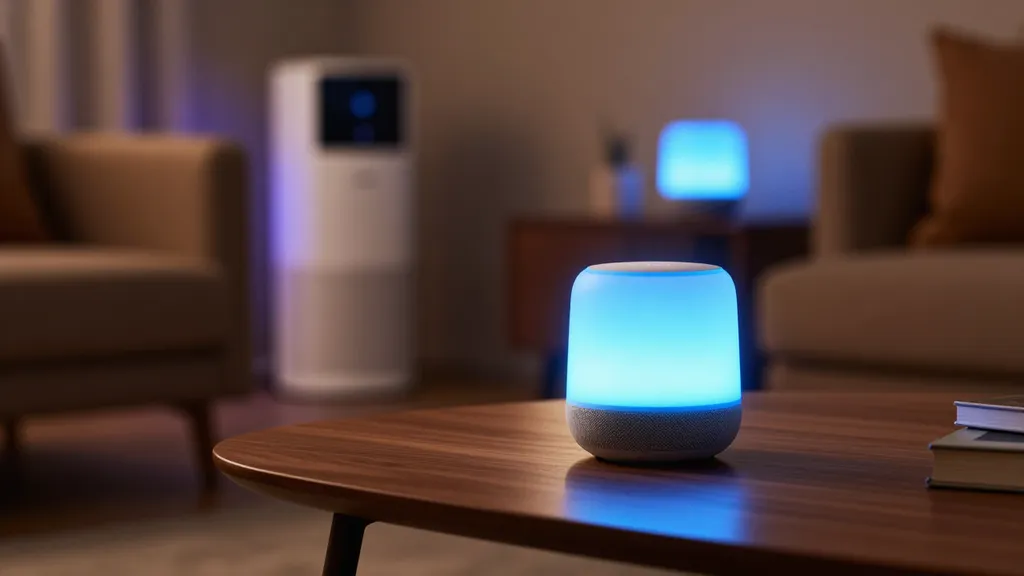
When you say, "Hey Google, turn off the lights," but instead of an answer, random music starts playing or it simply repeats, "I didn't quite catch that," how do you feel?
You clearly brought a 'secretary' into your home to make your life easier, but seeing a device that stares blankly at you when you actually need it naturally leads to the doubt: "Is this thing actually smart?" In 2026, we have placed these small devices in the middle of our living rooms, believing that AI will change the world, yet a sense of thirst remains.
In this article, moving beyond a simple spec-heavy review, we will dive deep into why we have been disappointed with AI speakers so far, and how today's Generative AI is turning that disappointment into excitement.
Why were our AI speakers 'smart fools'?
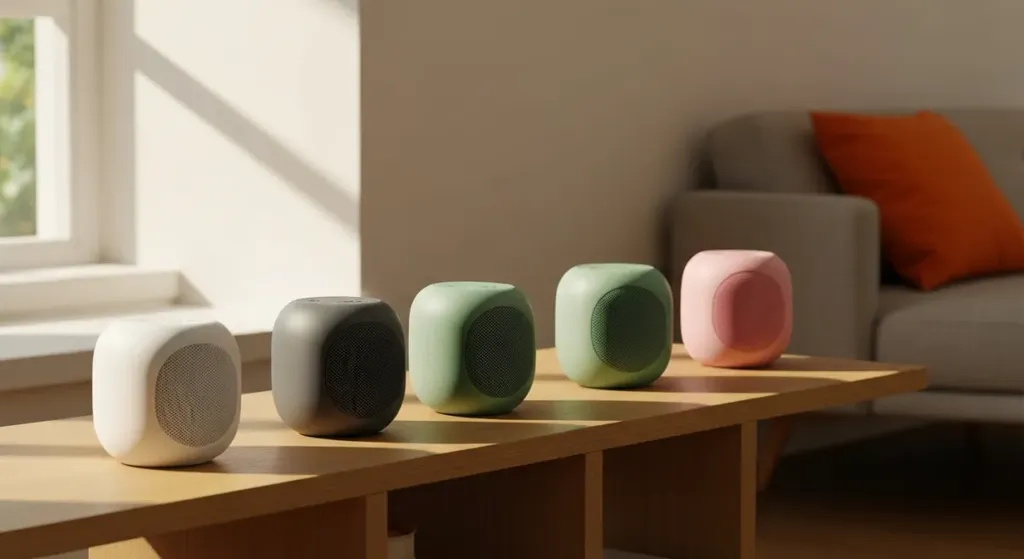
To be honest, the smart speakers we experienced over the past few years were nothing more or less than 'music players' or 'speakers with timer functions.' They say technology has advanced, so why did we still have to input commands into a fixed framework?
The fundamental cause lay in the absence of context. Traditional AI relied on matching specific keywords rather than grasping the intent behind the user's question. For example, it could answer "How is the weather tomorrow?", but it would often falter at a question like "Would it be good for a picnic tomorrow?" because it couldn't read the context.
Furthermore, fragmentation between devices was a major barrier. Since the living room speaker, the bedroom light, and the kitchen refrigerator spoke different languages, the 'brain' meant to unify them could not perform its role. Additionally, privacy concerns regarding devices that suddenly activate without being spoken to, and the limitations of voice recognition in failing to distinguish one's voice amidst ambient noise, were decisive factors that eroded user trust.
Ultimately, past smart speakers remained 'passive tools' that performed only set commands, rather than 'companions' that understood the flow of our lives.
2026: A Massive Paradigm Shift Brought by Generative AI
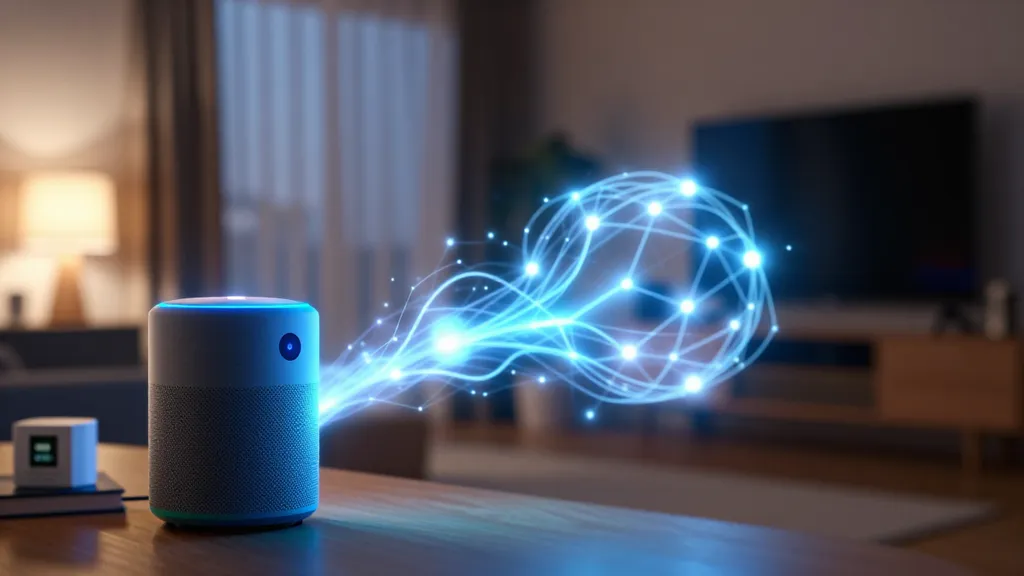
However, as of 2026, the situation has completely changed. Because the powerful engine known as Generative AI has been implanted into smart speakers, the era of a true secretary that 'understands what you say' has finally opened.
Companies have now entered an era where they are not just selling hardware, but selling software intelligence. Shall we take Amazon's Alexa Plus as an example? While the original Alexa was limited to short answers, it is now equipped with Large Language Models (LLMs) to understand complex user requests. If you say, "Help me plan a trip this weekend," it doesn't just tell you the weather; it provides an integrated experience ranging from travel recommendations to creating packing lists and even adding items to a shopping cart.
Google is also completely redefining Google Nest speakers through Gemini for Home. Google's powerful AI model acts as a 'conductor' coordinating all IoT devices in the home, learning the user's lifestyle patterns to optimize the environment autonomously.
Apple is also strengthening its smart home ecosystem, solidifying its role as a smart home hub that controls the entire house beyond being a simple voice assistant. AI speakers are no longer just devices you say "play music" to; they have become the core of Ambient Intelligence that predicts and responds to our daily lives.
4 Strategic Criteria for Choosing an AI Speaker Without Regret

As the market grows rapidly, projections suggest the voice-controlled smart home market will reach a staggering $1.58 trillion by 2035. With so many options available, what criteria should we use to choose a product? Buying an expensive product blindly is the strategy to avoid most.
1. Ecosystem Compatibility The first thing to check is what your smartphone and home appliances are. If you are already using thousands of appliances through Samsung's SmartThings, choosing a device based on the Samsung ecosystem is the wisest move. Conversely, if you primarily use Google services or Apple devices, you should prioritize the integration capabilities provided by each brand's AI. Although the 'Matter' protocol is spreading to break down brand walls, the seamless connectivity enjoyed within a single ecosystem is still an undeniable factor.
2. NLP (Natural Language Processing) Performance It is not always the case that models from global corporations are the absolute answer. Actual satisfaction is determined by how naturally they understand region-specific languages like Korean, and how well they accept the diverse accents and everyday terminology of our families. While most 2026 models have significantly improved this by incorporating Generative AI, nuances in language models still vary by brand.
3. Personalization & Routines Look beyond simple information retrieval and see how well it supports your daily routine. Check if it includes 'intelligent services' that can proactively suggest actions by learning user habits, from morning wake-up routines to adjusting lights at night.
4. Total Cost of Ownership It is a mistake to only consider the device price. Recently, many AI assistant services have adopted subscription models in exchange for providing advanced features. You must calculate not only the initial purchase price but also the monthly cloud usage fees or premium feature subscription fees to make a choice without regrets.
Conclusion: A Partner That Changes Your Lifestyle, Not Just an Appliance

Ultimately, the AI speaker of 2026 is no longer a 'obedient machine.' Having gained a soul through Generative AI, these devices have evolved into true AI assistants that understand our context, coordinate all appliances in the house, and even suggest conveniences we hadn't thought of.
Of course, issues like privacy security and complex device integration remain challenges to be solved. However, technology is not stopping, and we are getting closer to the 'dream home' than ever before in the midst of this change.
What kind of AI assistant do you dream of? A speaker that simply plays music, or a smart companion that reads your mind?
What is the most important criterion for you when purchasing an AI speaker? Let us know your thoughts in the comments!
References
- 생성형AI로 부활 노리는 스마트스피커 | 티타임즈 - Daum · v.daum.net
- AI 스피커 2025: 가성비 폭발 7대 비교 — 후회 없는 궁극 선택법 · medium.com
- Generative AI는 스마트스피커를 구원할 수 있을까? - 이바닥늬우스 · ebadak.news
- 음성 제어 스마트홈 시장 동향 및 성장 전망 (2035년) - Research Nester · researchnester.com
- 스마트 스피커 시장 규모, 점유율, 동향 | 성장 [2034] · fortunebusinessinsights.com
- 인공지능(AI) 가전제품 문제점 및 개선방안 · kca.go.kr
- '손 하나 까딱 안 하고 살 수 있는 집'. 100여 년 역사를 가진 가전이 ... · instagram.com
- 미국 스마트 홈 시장 규모 및 예측 보고서 2031 - Mordor Intelligence · mordorintelligence.kr