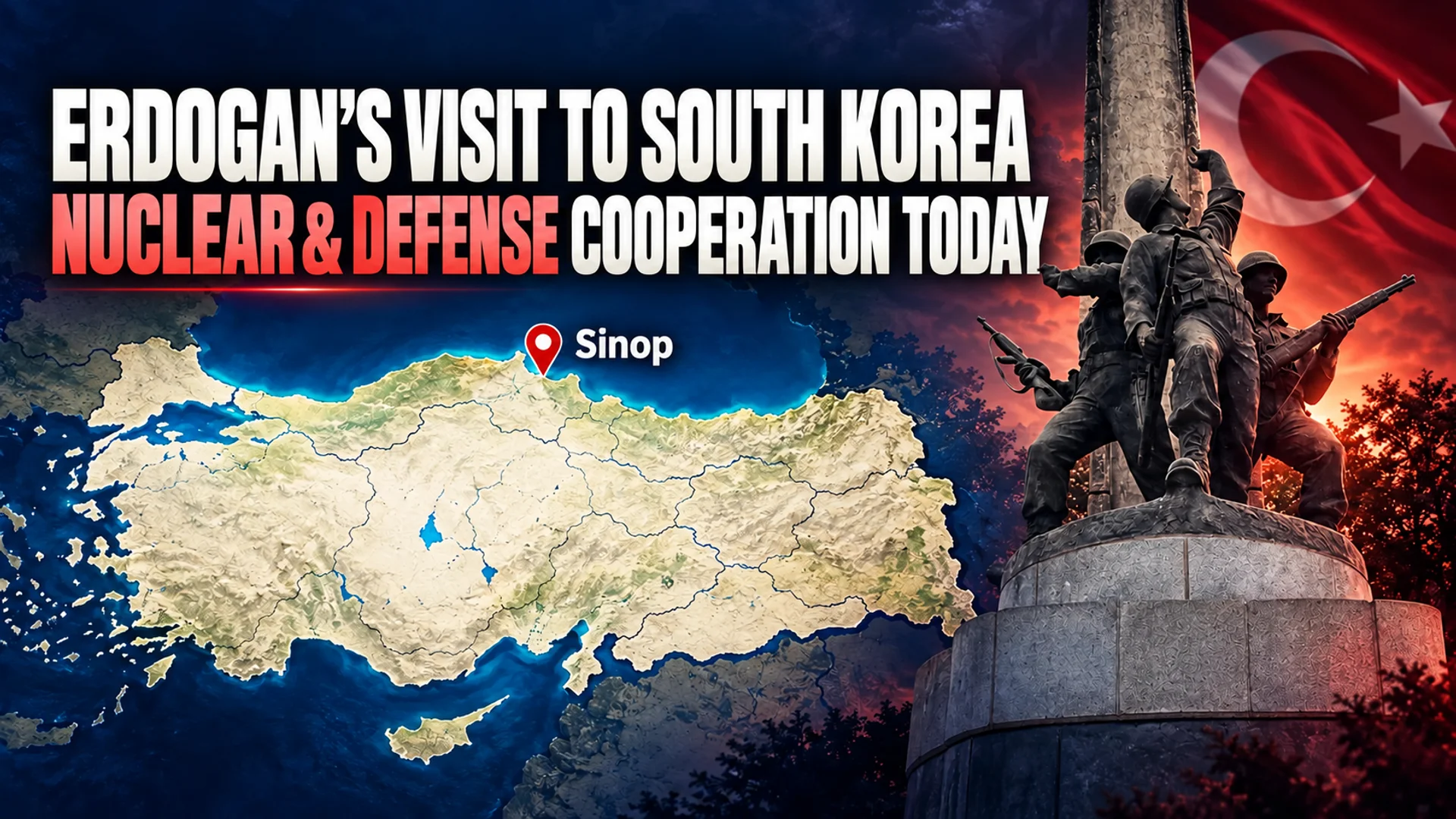
Turkish President Recep Tayyip Erdoğan will visit South Korea as a guest of state from November 2 to 4, 2026, for three days. This visit will center on a summit with President Lee Jae-myung and is regarded as a key diplomatic schedule aimed at deepening the strategic partnership between the two countries 12. Attention is particularly focused on whether concrete cooperative outcomes will be produced in the areas of national core assets, namely energy security and the defense industry.
This state visit is expected to serve as an opportunity to move beyond merely ceremonial diplomacy and to substantively implement and institutionalize matters agreed upon during President Lee Jae-myung’s visit to Turkey in November 2025 32. This article analyzes the substantive progress in bilateral relations, focusing on the current status and past cases of nuclear power and defense industry cooperation, which are the main agendas of the upcoming summit.
State Visit After Eight Years and Deepening of Strategic Partnership
President Erdoğan’s current visit to South Korea marks the first state visit by a Turkish president since 2018, after an eight-year gap 12. This visit follows a bilateral summit with President Lee Jae-myung in Turkey last November, approximately one year ago, demonstrating the active operation of communication channels between the leaders of the two countries 12.
This visit is interpreted as an expression of the will to elevate bilateral relations to a higher level ahead of the 70th anniversary of the establishment of diplomatic relations between South Korea and Turkey in 2027 32. In the previous summit, the two countries agreed in the ‘Joint Statement on the Strategic Partnership’ to deepen cooperation based on mutual respect and trust, and this visit to South Korea is part of the procedure to materialize this agreement 3.
Sinop Nuclear Power Project and Laying the Groundwork for South Korea’s Participation
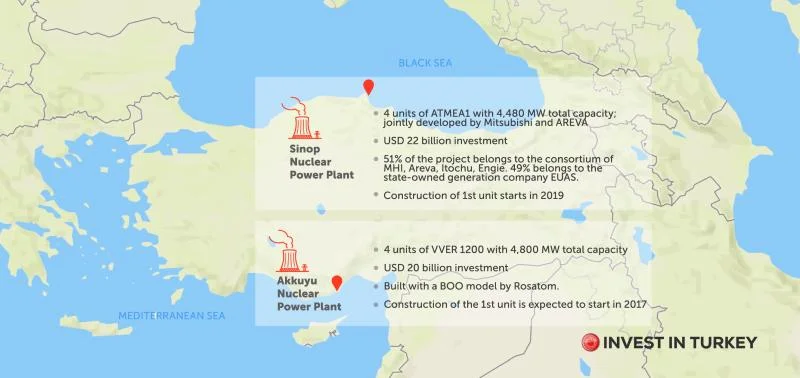
A key economic and energy agenda of this summit is cooperation on Turkey’s second nuclear power plant, the ‘Sinop Nuclear Power Plant’ project. The Turkish government approved the site for the Sinop Nuclear Power Plant, located in the İnceburun region, in April 2024, and the project is being pursued with a capacity of up to 8,400 MWe 4.
During President Lee Jae-myung’s visit to Turkey in November 2025, South Korea and Turkey signed a ‘Memorandum of Understanding (MOU) on Nuclear Cooperation,’ creating an institutional basis for Korean entities such as Korea Electric Power Corporation (KEPCO) to participate in the Sinop Nuclear Power Plant project 31. Turkey is considering South Korea, China, and Canada as potential negotiation partners for the Sinop Nuclear Power Plant project, and the South Korean government is seeking to expand cooperation based on its nuclear technology capabilities and safety management expertise 51.
In a written interview during a previous visit to South Korea, President Lee Jae-myung emphasized South Korea’s experience in successfully completing the United Arab Emirates (UAE) nuclear power project ‘within the scheduled time and budget,’ highlighting it as the optimal partner for Turkey’s nuclear power projects 5. He also expressed his intention to expand cooperation beyond mere construction participation to strengthening the overall nuclear ecosystem, including professional workforce development and infrastructure construction 5.
Altay Tank Cooperation Model and Expansion of the Defense Industry
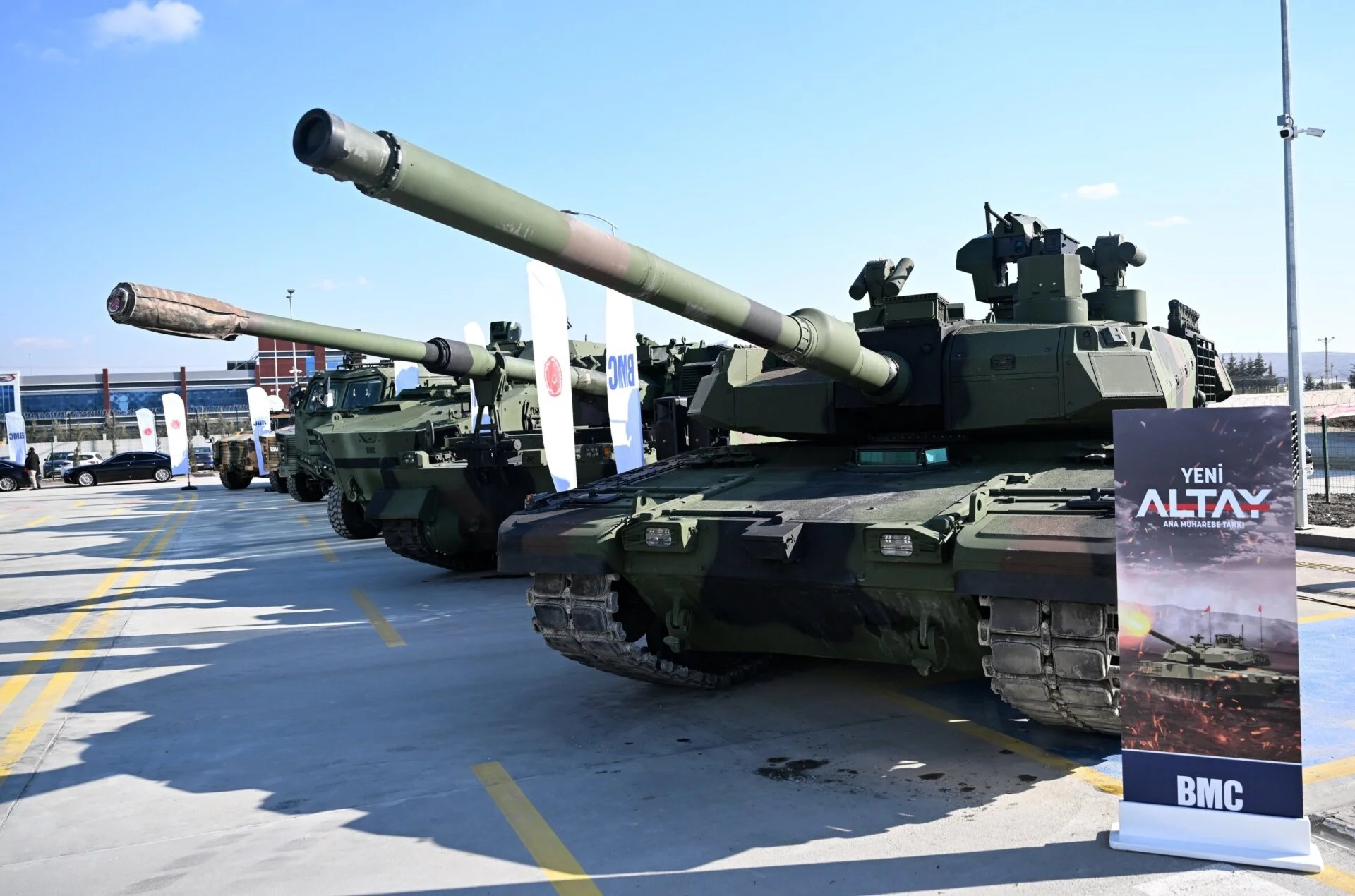
The defense industry is an area where substantive cooperative achievements between the two countries have already become visible. At the center of this is the ‘Altay’ main battle tank project. The Altay tank is a joint development case in which Turkey designed and developed the tank, supported by technology transfer and engine supply from South Korea’s Hyundai Rotem and Doosan 53.
This cooperation model is evaluated as a representative success case based on trust and technological capabilities, and full-scale mass production began in 2025 5. In a previous interview, President Lee Jae-myung analyzed that Turkey possesses global leadership in the unmanned aerial systems (UAS) sector, while South Korea holds advantages in tanks, artillery, and maritime weapon systems, making the two countries complementary to each other 5.
During the 2025 summit, the leaders of the two countries also agreed to continue cooperation in the defense sector based on mutual trust, including joint production, technology cooperation, and training exchanges 3. In this summit, discussions are expected to focus on how to expand cooperation into next-generation defense technology sectors building on the success of the Altay tank cooperation 53.
Institutionalization of Economic Exchange and Other Areas of Cooperation
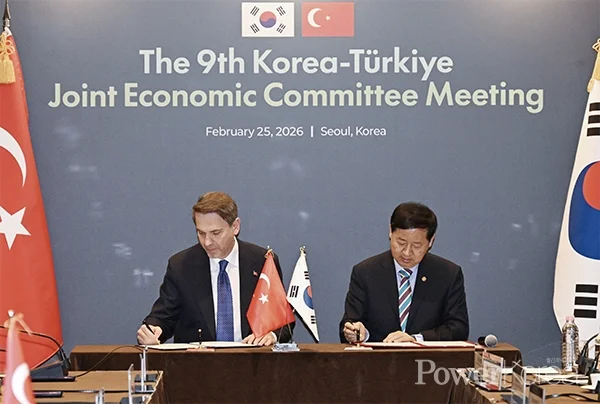
Beyond energy and defense, there are also signs of institutionalizing general economic exchange. The two countries have agreed to restart the ‘Joint Economic Committee’ after ten years since 2015 to expand trade and industrial cooperation 32. The Turkish government hopes that discussions on amending the free trade agreement (FTA) between the two countries will be addressed within the Joint Economic Committee 3.
Furthermore, foundations for cooperation in the fields of bio, infrastructure, and renewable energy were also established during the previous summit. A contract was signed for the participation of South Korean company SK Plasma in Turkey’s blood product self-sufficiency project, and MOUs were exchanged for road construction cooperation and wind power generation 3. Cooperation in advanced technology and manufacturing, such as Hyundai Motor’s commencement of electric vehicle production at its Izmir factory in Turkey, also constitutes an important axis of bilateral relations 3.
| Sector | Key Cooperation Details and Status | Notes |
|---|---|---|
| Nuclear Power | MOU signed for participation in Sinop Nuclear Power Plant | Turkey is considering South Korea, China, Canada, etc. 531 |
| Defense | Joint production and mass production of Altay tanks | Technology and engine support from Hyundai Rotem and Doosan; mass production started in 2025 53 |
| Economy | Restart of Joint Economic Committee (first time in 10 years) | Includes discussions on FTA amendment 32 |
| Others | Bio (SK Plasma), infrastructure, renewable energy | MOUs signed during the 2025 summit 3 |
Sublimating Historical Solidarity into Security Cooperation
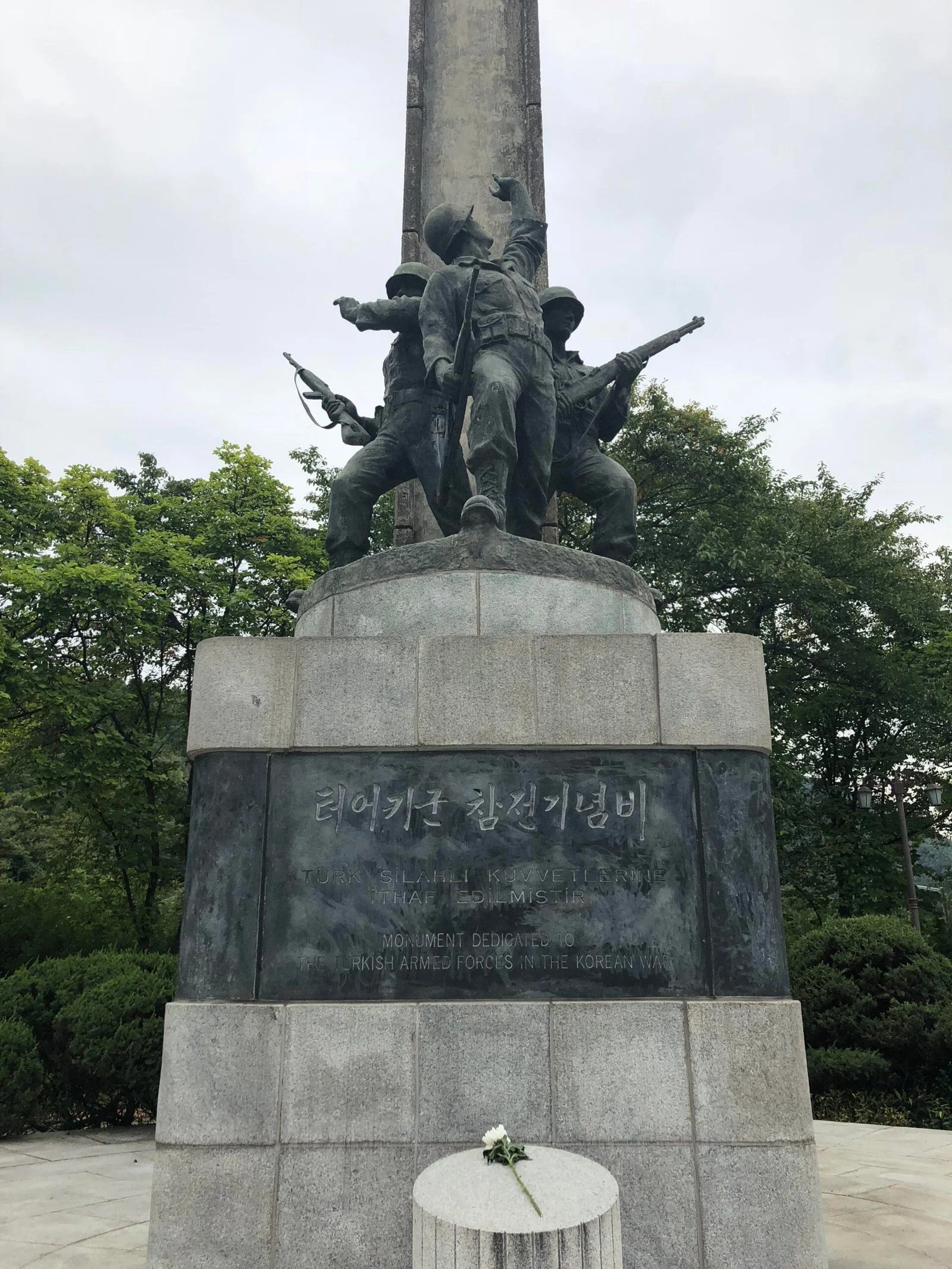
At the foundation of South Korea-Turkey relations lies the historical bond formed by Turkey’s participation in the Korean War. Based on this historical connection, the two countries are also strengthening security and veterans’ affairs cooperation. During the 2025 summit, a ‘Memorandum of Understanding on Veterans’ Affairs Cooperation’ was signed to enhance support for the families and descendants of Turkish veterans of the Korean War 3.
Prior to his visit to South Korea, President Lee Jae-myung paid tribute at the Turkish Veterans’ Memorial Tower and met with surviving veterans and their bereaved families 3. This cooperation in veterans’ affairs serves to confirm the historical solidarity between the two nations while contributing to the accumulation of political and social trust capital for security and industrial cooperation in areas such as nuclear power and defense 3.
President Erdoğan’s state visit to South Korea will serve as a testing ground for linking the various MOUs and agreements made between the two countries into concrete projects and outcomes. Whether South Korea will strengthen its position in the bidding competition for the Sinop Nuclear Power Plant, and the scope of expansion of defense industry cooperation following the Altay tank project, are the key points of interest for this diplomatic schedule.
References
- 韓·튀르키예, 원전·보훈 MOU…'시놉 원전' 수주 발판 마련했다 · joongang.co.kr↩
- 서플 - 요즘 뉴스에 대한 의견이 궁금할 때 · supple.kr↩
- 원전·바이오·에너지 전방위 협력… 전략적 동반자 된 ‘형제의 나라 · segye.com↩
- Sinop Nuclear Power Plant · ndk.gov.tr↩
- 이 대통령 “방산 협력 더 넓힐 것…한국, 튀르키예 원전 최적 파트너” · news.kbs.co.kr↩