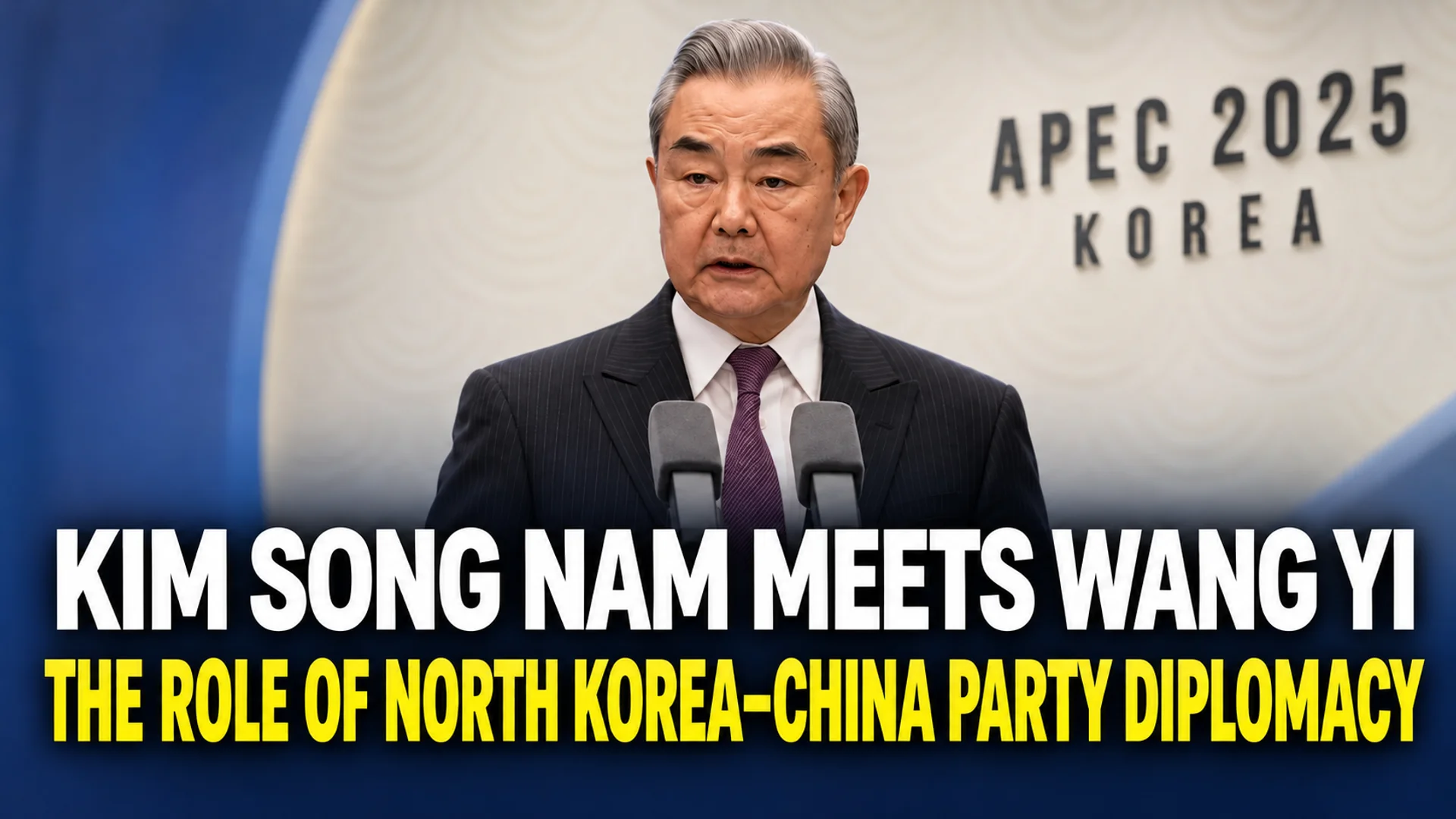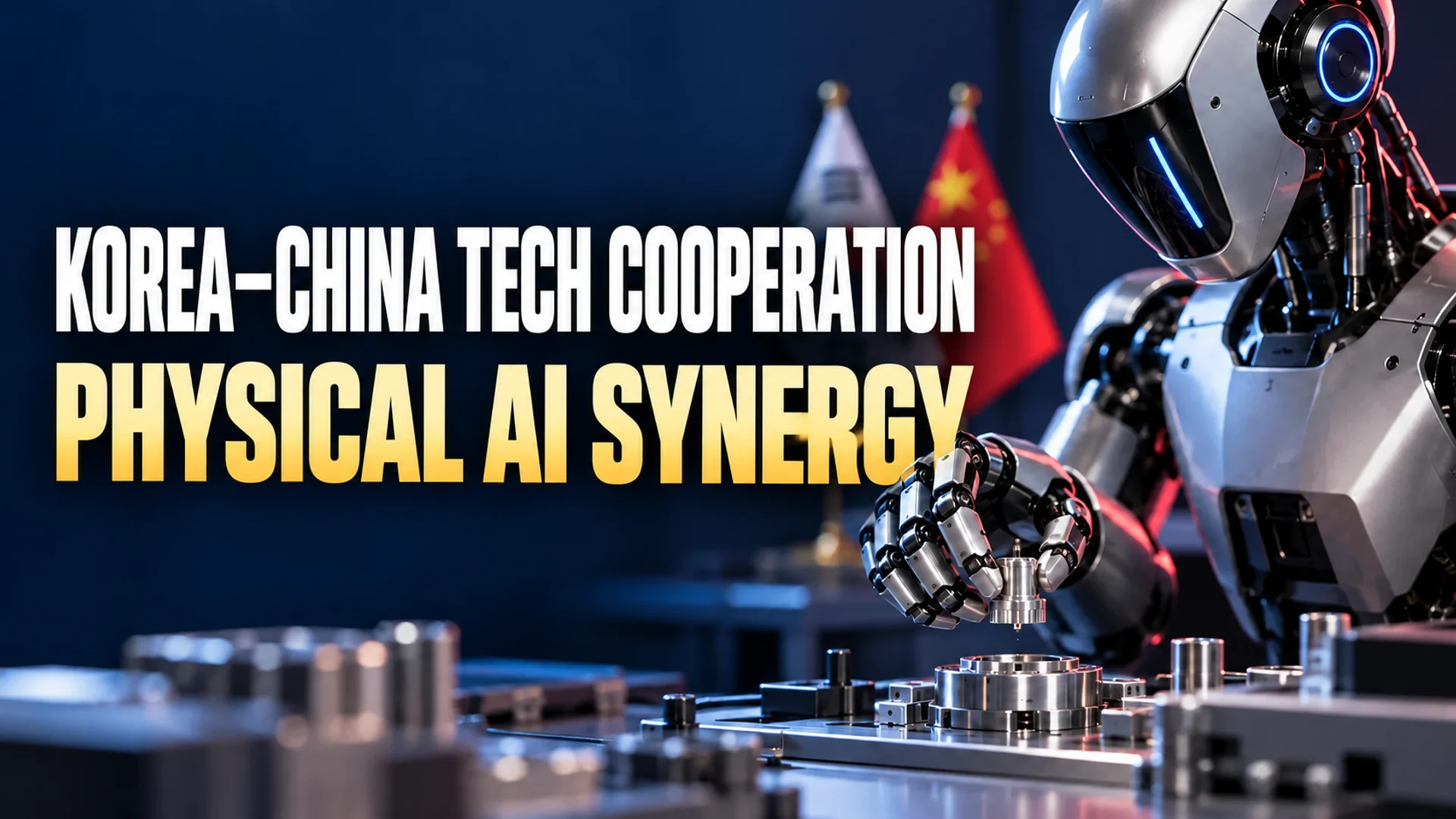
Ambassador Dai Bing emphasized the mutual complementarity between South Korea and China, underscoring the importance of cooperation in artificial intelligence (AI) and physical AI at a Korea-China science and technology event held in Seoul. His specific mention of the synergies that could arise from combining China’s AI talent with Korea’s application innovations drew particular attention.
Ambassador Dai Bing Stresses Korea-China Science and Technology Cooperation
On October 28, 2026, the ‘2026 Korea-China Future Dialogue on Science and Technology’ was held at The Shilla Seoul Hotel in Jung-gu, Seoul, under the theme ‘Smart Connections, Innovations Shared by All.’ At the event, Ambassador Dai Bing delivered opening remarks highlighting the cooperative potential of Korea-China relations and shared challenges in the field of science and technology 12.
In his address, Ambassador Dai Bing stated clearly that "combining China’s rapid development and Korea’s international network, along with China’s artificial intelligence (AI) talent and Korea’s application innovation, can create synergies that accelerate the advancement of physical AI" 12. This was interpreted not merely as diplomatic rhetoric but as a concrete proposal for a cooperation model that specifically identifies the comparative advantages held by both nations.
He further noted that "the continuous creation of significant scientific and technological achievements in China stems from the government’s will for innovation, which not only provides global public goods in science and technology but also actively seeks new areas of cooperation with Korea" 12. He emphasized that "seizing the opportunities of the new scientific and technological revolution and industrial transformation, and solving development challenges through innovation, is the shared responsibility of all countries in the world," adding that "international cooperation and open sharing have become more important than ever before" 2.
Concrete Direction for Physical AI Cooperation: Mutual Validation and Openness
The event introduced specific cooperation methods and technological cases that support Ambassador Dai Bing’s remarks. A direction was proposed to resolve challenges that are difficult for a single country or company to solve alone through Korea-China cooperation 2.
The core mechanism proposed was ‘mutual validation and openness.’ This approach, described as "validating Chinese products in Korea and trying out Korean technologies in China," suggests it can serve as a practical channel not only for science and technology but also for industrial and economic trade cooperation 2.
Underlying Ambassador Dai Bing’s mention of ‘physical AI’ cooperation are the following technical definitions and current status:
Definition of Physical AI and Cooperation Points
| Category | Content and Examples | Source |
|---|---|---|
| Core of Physical AI | Building ‘physical intuition’ that interacts with the physical world, rather than simply scaling up large language models (LLMs) | 12 |
| China’s Role | Development of intelligent robotics technology, physical intuition learning, and possession of large-scale manufacturing data and talent | 12 |
| Korea’s Role | International networks, application and service innovation, and provision of validation environments | 12 |
Zhang Yufeng, founder of Aniverse Dynamics, explained that for physical AI, "the key lies in building physical intuition, not expanding large language models," and assessed that "the innovative field of intelligent robots is an opportunity provided by the AI era" 12. This provides the logical basis that combining China’s technological infrastructure with Korea’s software and app innovation capabilities can accelerate the development of AI that understands the physical world.
Technological Cases Applied in the Field and Cooperation Bases
Specific cases illustrating how China’s physical AI technologies are being applied in actual industrial settings were introduced at the event.
- Robot Band ‘Casbot’: Xu Xuping, Vice President of Zhong Ke Hui Ling, introduced the four-member robot band ‘Casbot,’ explaining that the robots "produce rhythms like humans who have performed together for a long time" 12. This serves as an example demonstrating the sophisticated manipulation intelligence of humanoid robots.
- Industrial Automation: Cases of robots working in hazardous mining environments on behalf of humans, as well as in shoe manufacturing factories, were shared 12.
- Next-Generation Cooling Materials: Ni Wenting, General Manager of Shanghai Xinqiao Technology, introduced a next-generation chip cooling solution to address the high heat issues in AI computing. Diamonds, being researched at Shanghai Jiao Tong University, possess high thermal conductivity, making them ideal thermal management materials, but they have the drawback of being difficult to process. Efforts are underway to develop equipment processes that allow these diamonds to be applied to semiconductor wafers 12.
- Regional Cooperation Hub: Wang Kang, Representative of Yantai Fenghuang Shu, reported that based on Yantai’s geographical advantages in Shandong Province and the existing foundation for Korea-China industrial exchange, cross-border innovations and commercialization results in AI technology have been achieved 12.
These technological advances are analyzed to have originated from the dense human resources and active exchanges in Zhongguancun, often referred to as ‘China’s Silicon Valley.’ A documentary unveiled at the event, ‘Chinese Robots, Out of the Laboratory,’ showed how highly talented individuals concentrated in a small space create innovative ideas through continuous exchange 2.
Will for Cooperation: "Innovations Shared by All"
Ambassador Dai Bing’s address conveyed the will that both countries must acknowledge each other’s strengths and cooperate. Kim Tae-nyeon, Chairman of the Korea-China Parliamentary Union of the National Assembly, also quoted the ancient saying "Two hearts united can cut through gold (二人同心, 其利斷金: If two people unite their hearts, they can sever even metal)," emphasizing that "if both nations unite their hearts to prepare for the future, today’s connections will surely lead to ‘innovations shared by all,’ felt by citizens of both countries" 1.
Ultimately, Ambassador Dai Bing’s remarks went beyond political rhetoric regarding Korea-China relations, presenting the potential to jointly lead the physical AI market through the specific complementarity of China’s AI talent and development speed with Korea’s networks and app innovations 12. The core message of this dialogue is that technical challenges must be overcome jointly through the mechanism of mutual validation and openness, and that a model of science and technology cooperation experienced by citizens must be created.
References
- 한국 앱 혁신·중국 인재 ‘시너지’… 피지컬 AI 날개 단다[2026 서울미래컨퍼런스-한중과학미래대.... · m.go.seoul.co.kr↩
- 휴머노이드 로봇 춤사위로 연 한중 대화… “혁신은 함께 가는 길”[SFC2026] · m.go.seoul.co.kr↩