"I'm going to visit five European countries in just seven days this vacation!"
Only a few years ago, such a statement sounded like a badge of honor for a winner. "Checklist tourism"—taking proof shots in front of landmarks, checking train schedules to rush to the next city, and heading to the next destination without even getting proper sleep—felt like a marathon that had to be completed. But how did life feel once you returned? I'm sure I'm not the only one who has experienced feeling physically exhausted, remembering nothing but the backs of landmarks and an excessive number of photos.
Last summer, I too went on a trip that was devoured by the monster called "efficiency." I woke up at 7 AM to stand in line for museums, spent two hours waiting for a famous restaurant for lunch, and collapsed into my hotel bed at night, exhausted. I definitely went on a trip, so why did a greater sense of "vacation burnout" hit me afterward?
While searching for the answer, I encountered a new travel philosophy permeating the world in 2026: Slow Travel.
What Becomes Visible Only When You Drop the Checklist

Why were we in such a hurry? Perhaps it was the illusion that "seeing more means gaining more." However, the travel trends of 2026 directly reject this old formula. Now, people are starting to focus not on "seeing," but on "feeling."
Slow Travel is not simply traveling at a slow pace. It is an "intentional travel" where one deliberately slows down the speed of the journey and takes deep root in a single place. It can be seen as an extension of the spirit of the Slow Food movement started by Carlo Petrini in 1989 into the realm of travel.
Instead of rushing through three cities in four days, recent travelers choose the "Single Base Setting" method, staying in one city for 7 to 10 days. Instead of seeing one more landmark, they choose to become "temporary neighbors" by greeting the barista at a local regular cafe or cooking with ingredients bought at a local market.
This shift is not merely a matter of taste. It is closer to a survival strategy chosen by modern people, exhausted by the era of digital overload and hyper-productivity, to achieve a "Mental Reset." The movement to fully feel the wind, sunlight, and local air right before one's eyes, rather than the flashy scenery on a smartphone screen, is changing the travel map of 2026.
2026: Slow Travel Destinations to Fill Your Soul
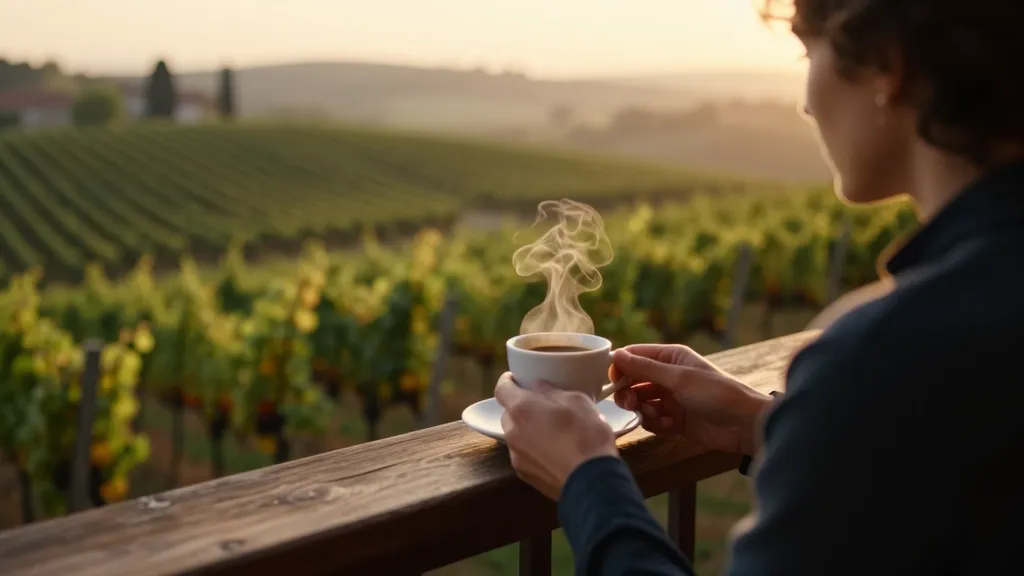
So, where is the best place to implement this "aesthetics of slowness"? As of 2026, the places attracting those dreaming of slow travel each hold their own unique philosophy.
The first is Italy. Italy has the concept of La dolce vita, or "the sweet life." Spending time staying at an "Agriturismi" (farm stay) accompanied by freshly harvested olive oil and wine is the essence of Italian-style slow travel.
The second is Portugal. This place is permeated with the sentiments of Saudade and Sossego. These words, meaning an unfillable longing and tranquil rest, provide the perfect backdrop for travelers who enjoy the margins of life while spending leisurely time in wine regions.
Lastly, Japan infuses the philosophies of Ma (the beauty of empty space) and Ichigo Ichie (once-in-a-lifetime encounter) into travel. A journey that moves away from crowded cities to stay in a temple or spend quiet time in a hot spring, realizing the preciousness of "this moment, this encounter," shows the pinnacle of slow travel.
Interestingly, this trend also creates a virtuous cycle for the environment and the economy. Instead of flying between multiple countries, using trains or staying in one place for a long time enables sustainable travel that reduces carbon emissions. Furthermore, by using small shops run by local residents instead of giant hotel chains, travelers' money delivers direct warmth to the local economy.
Digital Detox: The Courage to Turn Off the Screen and Face the Real World
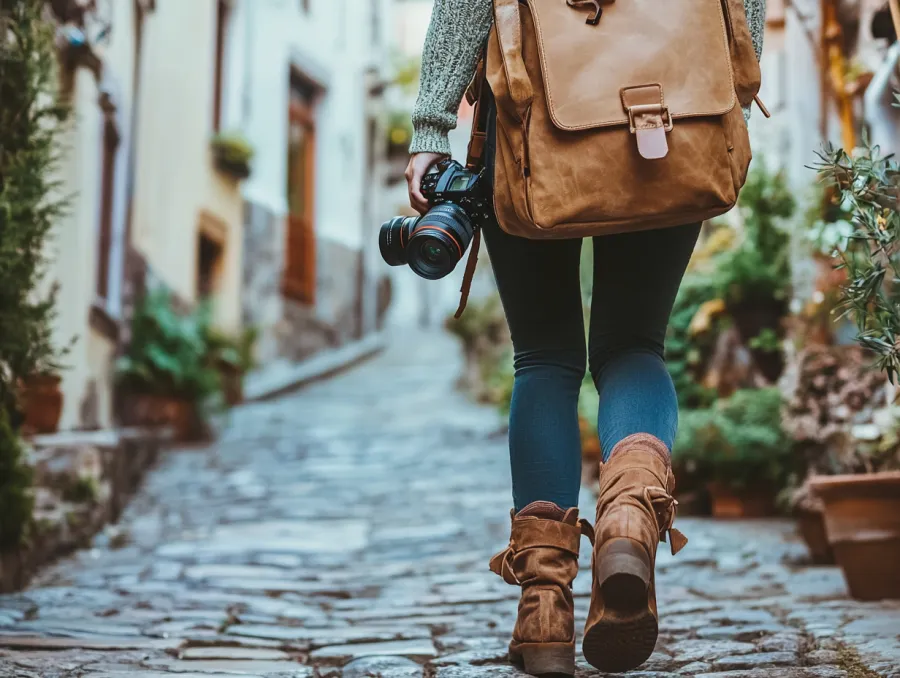
There is a keyword that cannot be omitted when talking about slow travel: Digital Detox.
Paradoxically, travelers in 2026 crave the most analog ways during the most technological era. Instead of choosing filters to get a "life shot" for Instagram, they enjoy the patience of pressing the shutter of a film camera and waiting for the result. In fact, a significant portion of the 18–24 age group in the US responds that they prefer "analog travel," where they don't even use a digital camera during their trip.
In the space where smartphone notifications stop, local sounds step in. The joy of walking following the gestures of a local elderly man instead of a Google Maps arrow, or discovering a small bookstore at the end of an alley instead of a TikTok "hot place." This goes beyond simply distancing oneself from devices; it leads to Self-discovery. This is because once you turn off the screen that captures the gaze of others, you finally begin to see what you want to see and what sounds you want to listen to.
Of course, slow travel does not always have only advantages. This method requires much more time and careful planning than traditional package tours. For those with a personality that "wants to see many things quickly," the time spent doing nothing might actually cause anxiety. Additionally, not all travel destinations are optimized for slow travel. One must consider that in places with lacking infrastructure or limited transportation, "slowness" may feel like "inconvenience."
A 'Slow' Guide for Your Next Journey
For those of you who have just become interested in slow travel, I suggest a few practical tips for a 2026-style slow journey.
- Stay in one place for a long time: Make one city or one region your base for at least 7 days. Even just saving the energy used to unpack and repack will change the quality of your trip.
- Leave 50% of your schedule empty: Do not fill all your time with plans. An accidental festival met in an unplanned alleyway or a beautiful cafe encountered suddenly can become the true highlight of your trip.
- Live like a local: Head to a cafe where locals eat breakfast rather than restaurants reserved for tourists. Staying in an Airbnb in a residential area and buying ingredients at a market will transform you from a "tourist" into a "temporary resident."
- Practice digital distancing: Keep your smartphone deep in your bag for a certain amount of time each day. You will realize that the scenery before your eyes has a much higher resolution than the world inside the screen.
Slow travel is not simply about reducing speed, but is an act of increasing the density of life. In 2026, at what speed is your journey flowing?
If a trip where you visit many places is satisfying, that is also your way. But if you are struggling with the emptiness that rushes in after a trip, why not put down your watch for a moment this time and walk to the heartbeat of that place?
Which do you value more when traveling: 'seeing many things' or 'feeling one place deeply'? Please share your travel philosophy in the comments!
References
- Why Slow Travel Is the Biggest Vacation Trend of 2026 · newsobserver.com
- 에어비앤비, 2026년 여행 트렌드 전망 공개 - Airbnb Newsroom · news.airbnb.com
- 2026 여행 트렌드! 요즘 뜨는 여행 스타일과 추천 여행지 - 트립닷컴 · kr.trip.com
- 내 방식대로 즐기는 여행: 2026년 주목해야 할 여행 트렌드 · booking.com
- 지역의 성장과 경제 다각화의 벡터, 슬로 관광 - Genius Loci · geniusloci.com
- [미국] 슬로우 트래블 (Slow Travel) - 한국관광 데이터랩 · datalab.visitkorea.or.kr
- (미국) 스마트기기로부터 해방, 디지털 디톡스 여행 - 한국관광 데이터랩 · datalab.visitkorea.or.kr